A horse blanket that doesn’t fit properly isn’t just an inconvenience. It is a source of genuine physical harm. A blanket that is too small creates constant friction across the shoulders and withers, producing rub marks that progress from hair loss to raw sores within days. A blanket that is too large shifts and rotates during turnout, tangling around legs and creating safety hazards that can cause panic, tripping, and injury. Both problems trace back to the same root cause: not knowing how to measure a horse for a blanket correctly before making a purchase.
The good news is that the measurement itself takes less than five minutes. No specialised equipment is needed. No veterinary expertise is required. You need a soft measuring tape, a helper, flat ground, and a single straight line measurement from the center of the horse’s chest to the point of the buttock beside the tail dock. That one number, recorded in inches, tells you exactly which blanket size your horse needs.
This guide covers everything you need to know about how to measure a horse for a blanket in 2026, including the essential tools required, a detailed five step measurement process with exact anatomical landmarks, a size conversion chart, brand specific sizing guidance, body type considerations for non standard builds, the most common measuring mistakes and how to avoid them, and best practices for confirming the blanket fits correctly once it is on your horse.
Quick Summary: What Every Horse Owner Should Know Before Measuring
1. A soft measuring tape or string is essential as rigid carpenter’s tapes cannot follow the horse’s body contour and produce measurements that are two to four inches too short
2. Flat surface and proper positioning are critical because uneven ground shifts the horse’s posture and changes the chest to buttock distance by one to two inches
3. Assistance for accurate measurement is required since solo measuring almost always results in a number that is one to three inches short due to tape slippage
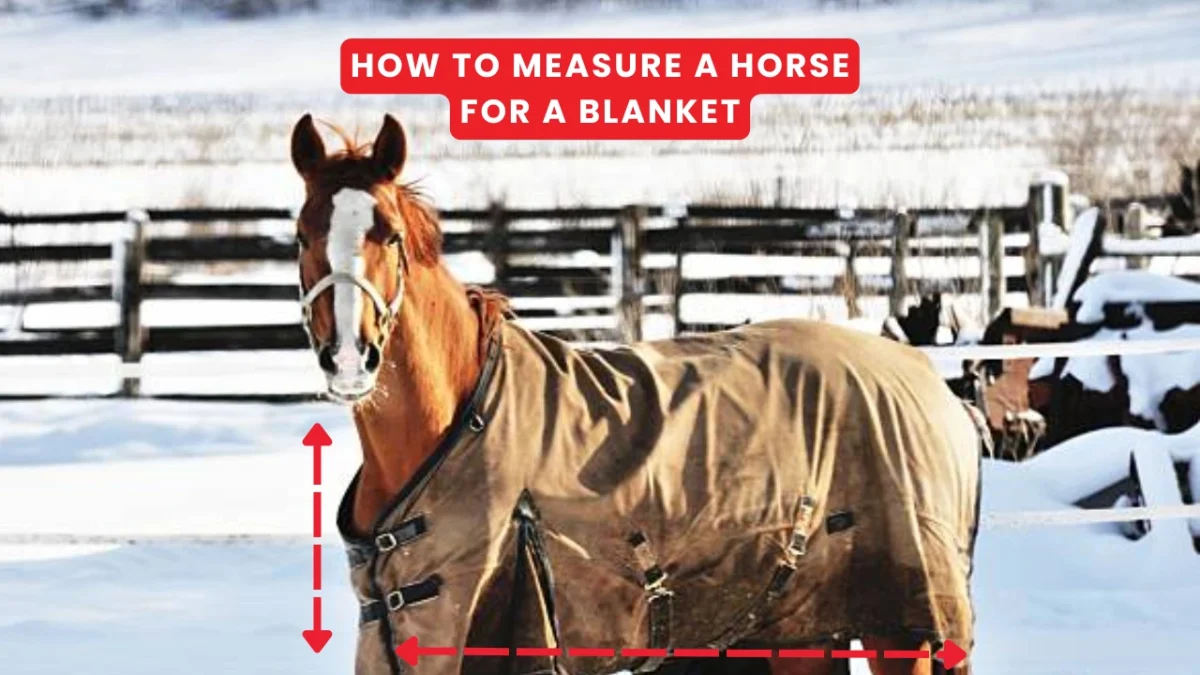
4. The measurement runs from the center of the chest to the point of the buttock beside the dock area, following the widest point of the barrel
5. Record the final measurement in inches and always measure twice to verify accuracy before purchasing
6. Blanket sizes are sold in even numbers (72, 74, 76, 78, 80, etc.) with odd measurements rounded up to the next even size
7. Brand sizing is not universal so always check the specific manufacturer’s size chart against your measurement before ordering
8. Re measure before every new purchase because horses change shape with season, fitness, age, and diet
Essential Tools Needed to Measure a Horse for a Blanket
Before you walk out to the barn, gather three things. Having the right equipment ready makes the difference between a reliable measurement and a number that sends you home with the wrong blanket.
Soft Measuring Tape or String
A flexible fabric measuring tape, the kind used in sewing or tailoring, is the ideal tool for measuring a horse for a blanket. It conforms naturally to the curves of the horse’s barrel and produces a true reading that follows the body’s actual contour rather than bridging across it in a straight line. A 120 inch (10 foot) tape is the recommended length, as it comfortably covers even the largest draft horses without needing to be repositioned mid measurement.
If you do not have a fabric tape, a piece of non stretch string or baling twine works as an effective substitute. Run the string along the horse’s body following the same measurement path described in the steps below, mark the endpoint clearly by pinching or marking the string, then lay it flat against a rigid yardstick to get your reading in inches. This two step method adds about a minute to the process but gives you an equally accurate result.
Never use a rigid carpenter’s tape measure or a metal retractable tape. These tools bridge across the natural outward curve of the barrel instead of following it, which consistently produces a measurement that is two to four inches shorter than the horse’s actual blanket size. That margin of error is enough to put you in a completely wrong size category.
Flat Surface and Proper Positioning
Always measure on level, firm ground. A concrete barn aisle, a paved grooming area, a rubber matted wash stall, or a hard packed section of paddock all work well. The surface matters because when a horse stands on uneven terrain, whether a slope, soft sand, a rutted field, or a stall with uneven bedding, it automatically redistributes its weight to compensate. This shifts spinal alignment, shoulder position, and the overall distance from chest to hindquarters. Even a slight slope can alter your measurement by one to two inches, and since most horse blankets are sized in two inch increments, that is enough to push you into the wrong size entirely.
Assistance for Accurate Measurement
Measuring a horse for a blanket is a two person job. One person holds the horse on a lead rope and keeps it standing square with all four feet evenly positioned. The other person handles the tape from start to finish without interruption.
When you attempt to measure alone, you are simultaneously managing a lead rope, a sliding tape, and a horse that wants to turn its head or step sideways. The tape slips from the chest starting point, sags along the barrel, and the resulting number comes in one to three inches too short almost every time. Enlisting a helper turns a frustrating five minute struggle into a smooth 60 second process and dramatically improves the accuracy of your result.
Step by Step Guide to Measuring a Horse for a Blanket in 2026
Follow these five steps in order. Each one builds on the last, and precision at every stage is what determines whether you end up with a blanket that fits perfectly or one that causes problems from day one.
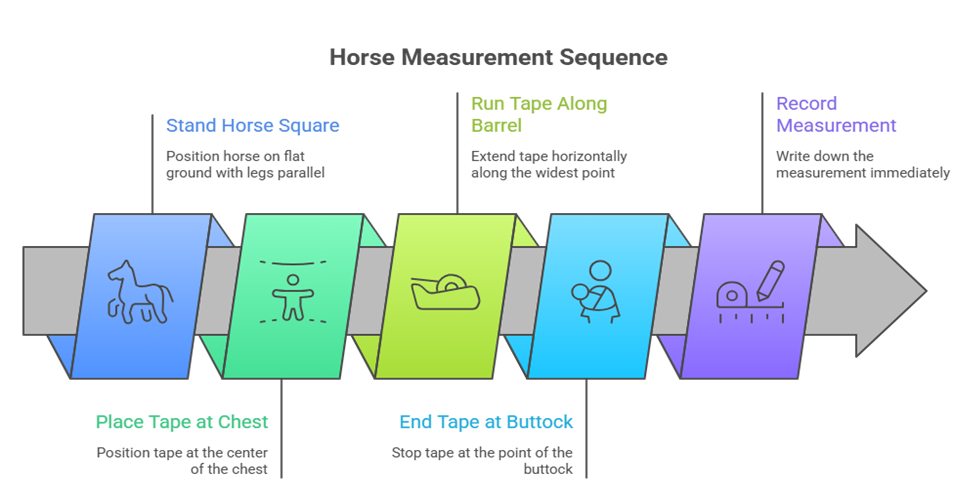
Step 1: Position Your Horse Correctly
Have your helper hold the horse so it stands square, with front legs parallel to each other, hind legs parallel, and head facing forward in a natural resting position. The head should not be raised high, lowered to the ground, or turned to either side.
Correct positioning is the foundation of every accurate blanket measurement. A horse standing with one front leg forward, leaning to one side, resting a hind leg, or stretching its neck changes the distance from chest to buttock by one to three inches. In a sizing system based on two inch increments, that is a full size error. If the horse will not square up immediately, have your helper walk it forward a few steps and halt again. Most horses settle into a balanced stance after a short walk. Do not begin measuring until all four feet are evenly placed and the horse is standing calmly.
Step 2: Start Measuring from the Center of the Chest
Place the zero end of your tape at the center of the horse’s chest. The anatomical landmark is the midpoint where the two pectoral muscles meet, directly between the front legs, roughly in line with the point of the shoulder on either side. Hold the tape flat against this spot with light, steady pressure. If you are using string, have your helper pin the starting end against the chest with a finger so it does not shift as you move along the body.
Placement precision matters here. If you start too high (above the shoulder point), too low (near the girth area), or off to one side, your entire measurement will be skewed from the beginning. Nothing you do along the rest of the path corrects an incorrect starting point.
Step 3: Measure Along the Horse’s Side
From the chest, run the tape straight back along the widest point of the barrel, which is the broadest part of the ribcage. Keep the tape traveling roughly horizontally, not angling upward toward the spine or downward toward the belly.
The tape should drape against the coat like a ribbon: light, even contact along the entire path with no sagging and no pressing into the hair. A drooping tape creates slack that shortens your reading. A tape pulled tight enough to compress the coat also shortens it. The correct tension is neutral. The tape rests on the surface of the body without pulling in either direction. If the horse shifts or steps sideways during this step, stop and start over from the chest. A reading taken on a moving horse is unreliable.
Step 4: Measure Up to the Tail (Dock Area)
Continue the tape to the point of the buttock, the bony prominence on the hindquarters just beside the dock. The dock is the muscular base of the tail where it connects to the body. You will feel this landmark clearly through the skin as a slight protrusion sitting at roughly the same height as your measurement line.
Do not wrap the tape around the curve of the hindquarters, and do not extend it past the tail or around to the opposite side of the horse. The measurement is a single path from the center of the chest, along one side of the body, ending at the point of the buttock beside the dock area. Going further adds inches that do not correspond to how blankets are sized and will result in purchasing a blanket that is too large.
Step 5: Record the Final Measurement in Inches
Read the number at your endpoint and write it down immediately on your phone, a piece of paper, or anywhere accessible. Do not trust your memory. Then measure a second time by running the tape from chest to buttock again from scratch. If both readings fall within one inch of each other, your number is solid. If they differ by more than one inch, take a third measurement and go with the number that appears twice.
This 60 second verification step is the cheapest insurance against buying the wrong blanket size. Your final measurement in inches becomes the reliable foundation for every blanket purchase decision you make going forward.
Horse Blanket Size Chart: Measurement to Size Conversion
Once you have your measurement, use this chart to find your blanket size. Blankets are sold in even number sizes, so your raw number maps directly to the ranges below. These ranges are based on industry standard sizing used by most major blanket manufacturers including Weatherbeeta, Horseware, and Schneiders.
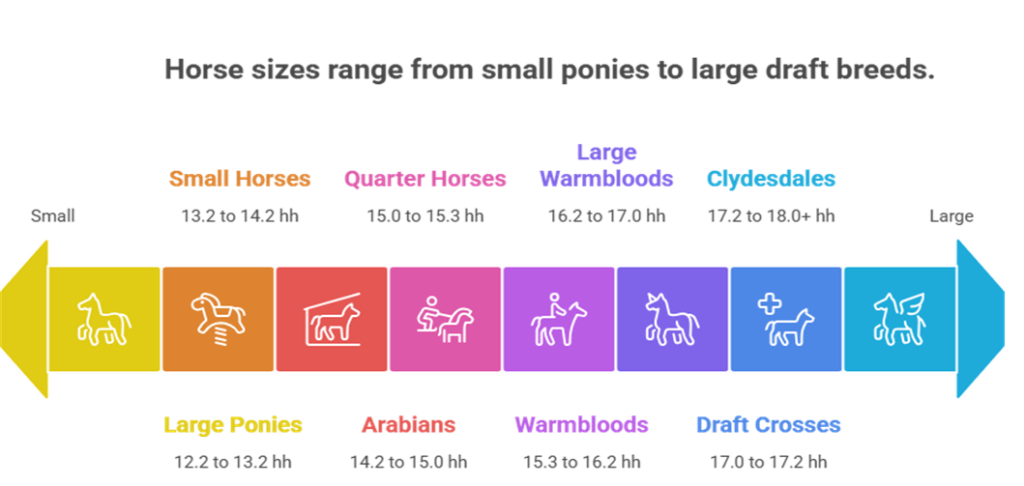
| Measurement (inches) | Blanket Size | Typical Horse Type |
| 60 to 62 | 60 to 62 | Large ponies |
| 64 to 66 | 64 to 66 | Small horses, large ponies |
| 68 to 70 | 68 to 70 | Arabians, Morgans |
| 72 to 74 | 72 to 74 | Quarter Horses, average Thoroughbreds |
| 76 to 78 | 76 to 78 | Warmbloods, tall Thoroughbreds |
| 80 to 82 | 80 to 82 | Large Warmbloods, sport horses |
| 84 to 87 | 84 to 87 | Draft crosses, large sport horses |
| 88 to 90 | 88 to 90 | Clydesdales, Percherons, Shires |
If your number falls on an odd inch (for example, 77), round up to the next even size (78). If you are genuinely between two sizes, always choose the larger one. A slightly roomy blanket can be adjusted with straps and surcingles, but a tight blanket cannot be made bigger.
How to Choose the Right Blanket Size for Your Horse
The size chart gets you in the right range, but choosing the right blanket size for your horse requires understanding three additional factors that influence how a blanket actually fits on your specific horse’s body.
Blanket type matters more than most buyers realise. Turnout blankets, stable blankets, lightweight sheets, and fly sheets are all cut differently even when they carry the same size number. Turnout blankets typically offer more room through the shoulder for free movement in pasture. Stable blankets fit more closely since the horse is not running or rolling in them. Lightweight sheets and coolers often run slightly longer in the body. When ordering, check whether the brand’s size chart is specific to the blanket type you are purchasing, not just a generic chart applied across all their products.
Brand sizing is not universal. A size 78 from Weatherbeeta fits differently than a 78 from Horseware (Rambo/Amigo), which fits differently than a 78 from SmartPak or Schneiders. European cut blankets from brands like Horseware, Bucas, and Horze tend to run slightly smaller and more fitted through the body. American cut blankets from brands like Tough 1 and Schneiders often have a more generous, roomier cut. If you are switching brands, never assume your old size transfers directly. Always compare your fresh measurement against the new manufacturer’s specific size chart before placing an order.
Body type overrides length. Two horses can produce the exact same chest to buttock measurement but require completely different blanket cuts. A barrel chested Quarter Horse and a narrow Thoroughbred may both measure 76 inches, but the Quarter Horse needs significantly more room through the girth and shoulder while the Thoroughbred needs more wither clearance. Many brands now offer body type specific cuts including standard, high neck, draft, and pony options. Matching your horse’s build to the correct cut is just as important as matching the correct size number.
Draft and draft crosses often need blankets two to four inches larger than their measurement suggests because their barrel width and shoulder mass require more fabric to wrap around the body without pulling tight.
Look specifically for draft cut blankets, which are designed with a wider, deeper body without adding unnecessary length. High withered Thoroughbreds and sport horses frequently need blankets with extra wither clearance or built in shoulder gussets, as standard cut blankets in the correct length often sit directly on the withers and create pressure sores within days.
Brands like Horseware and Weatherbeeta offer high wither and combo neck designs specifically for this body type. Ponies and short backed breeds such as Haflingers, Fjords, and some cobs are often wide relative to their length, making purpose built pony cut blankets with proportionally wider, shorter dimensions the best option. Seniors and underweight horses may need one size up to accommodate layering with liner blankets or fleece under blankets during cold weather. If you plan to layer during the coldest months, measure with the base layer already on the horse to ensure the outer blanket has enough room to fit comfortably over it.
Common Mistakes to Avoid When Measuring a Horse
Even experienced horse owners who have been blanketing for years make errors that throw off their measurement and lead to poorly fitting blankets. Understanding these mistakes before you pick up the tape prevents the frustrating cycle of buying, returning, and re ordering that costs both time and money.
Measuring without a helper is the single most common error. When you try to hold the horse, manage the tape, and read the number simultaneously, the tape almost always slips from its starting point at the chest. The result is a reading that comes in one to three inches too short, which is the number one cause of buying a blanket that is too small. Always enlist a second person regardless of how calm your horse typically is.
Measuring on uneven ground is the second most frequent mistake. A slope, soft footing, or rutted surface shifts the horse’s posture and changes the distance from chest to buttock. The horse compensates for uneven terrain by redistributing its weight, which alters shoulder and hip alignment enough to produce an unreliable number. Flat, firm ground is a non negotiable requirement for an accurate measurement.
Incorrect tape tension accounts for a surprising number of sizing errors. A tape that sags or droops away from the body creates slack that shortens the reading. A tape pulled tight enough to compress the coat shortens it from the other direction. The correct tension is neutral, where the tape rests against the surface of the coat with light, even contact along its entire length. If you can see the hair compressing under the tape, ease up. If you can see daylight between the tape and the body, bring it closer.
Relying on an old blanket size without re measuring is a mistake that costs horse owners money every year. Can you use an old blanket size for reference? Only as a rough starting point. Horses change shape continuously with seasonal weight fluctuations, changes in training intensity, muscle loss from injury layoffs, and the natural body composition shifts that come with aging. A horse that measured 78 inches two years ago may measure 76 or 80 today. Always take a fresh measurement before purchasing a new blanket, even if the horse appears to be the same size visually.
Measuring while the horse is distracted, eating, pawing, fidgeting, or turning its head produces unreliable results because the body is never in a consistent position long enough to get an accurate reading. Wait until the horse is standing quietly and squarely before beginning the process. If the horse refuses to settle, try measuring at a time of day when it is naturally calmer, such as after morning turnout or after a light exercise session.
Best Practices for Ensuring a Perfect Blanket Fit in 2026
The measurement gets you the right size number. These fit checks, performed once when you first put the blanket on your horse, confirm that the blanket actually works on your horse’s unique body. Even a correctly sized blanket can fit poorly if it is the wrong cut for the horse’s build or if the straps are not adjusted properly.
Start by checking shoulder freedom. Walk the horse forward at least 20 steps with the blanket fully fastened and watch the front of the blanket carefully. The blanket should move with the horse without pulling tight across the point of the shoulder. Have the horse lower its head to ground level as if grazing. If the front closures strain or gap open, you need a larger size or a blanket with built in shoulder gussets that allow independent movement at the shoulder joint. Shoulder restriction is the first and most obvious sign of a poor fit.
Inspect the wither area next. Two to three inches of clearance should exist between the top of the withers and the blanket fabric. Press down gently on the blanket at the highest point of the withers. If it sits directly on bone with no space, it will create a pressure point that causes hair loss, skin irritation, and eventually open sores. High withered horses are especially vulnerable and often require blankets with contoured wither designs.
Adjust belly surcingles so that a flat hand (roughly four inches) fits between the strap and the belly. Surcingles that are too tight restrict breathing and create rub marks. Surcingles that are too loose allow the blanket to rotate, bunch, or slide to one side. Set leg straps so you can fit a closed fist between each strap and the horse’s inner thigh, with straps interlinking between the hind legs to prevent catching a hoof. The tail flap should end at or just past the dock of the tail. A blanket extending well beyond the tail catches on fencing and stall fixtures. One stopping well short of the tail leaves the hindquarters exposed to wind, rain, and cold.
Re evaluate fit at the start of every blanketing season. Horses gain and lose condition throughout the year. A blanket that fit perfectly in October may be too tight by January if the horse has gained weight on increased winter hay, or too loose by April if the horse has dropped condition during a hard winter. Two minutes of seasonal fit checking prevents weeks of rub marks and discomfort that could have been caught on day one.
Frequently Asked Questions About Horse Blanket Sizing
What If My Horse Is Between Sizes?
Always choose the larger size. A roomy blanket is adjustable with surcingles and leg straps to stay secure. A tight blanket restricts movement and causes rubs that no strap adjustment can fix, and replacing it is the only solution.
Can I Use an Old Blanket Size for Reference?
Only as a rough starting point, never as your final answer. Horses change shape over time with weight, fitness, and age, and sizing varies between brands. Always take a fresh measurement and compare it against the new brand’s chart before ordering.
How Tight Should the Measuring Tape Be?
Light, even contact against the coat, like laying a ribbon on the surface. If the hair compresses visibly, you are too tight and the reading will be short. If you see daylight between the tape and the body, you are too loose and the reading will be long.
Is Proper Blanket Measurement Important for Your Horse?
Learning how to measure a horse for a blanket takes five minutes. Getting it wrong costs weeks of treating rub marks, hundreds of dollars in returns and exchanges, and genuine discomfort for your horse that compounds every day the wrong blanket stays on.
A blanket that is too small creates constant friction that progresses from hair loss to raw sores, restricts natural shoulder movement, and can make a horse resistant to blanketing entirely. A blanket that is too large shifts during turnout, tangles around legs during rolling or active movement, and creates genuine safety hazards if the horse panics while tangled. Both scenarios are entirely preventable with a single accurate measurement and the knowledge to interpret it correctly.