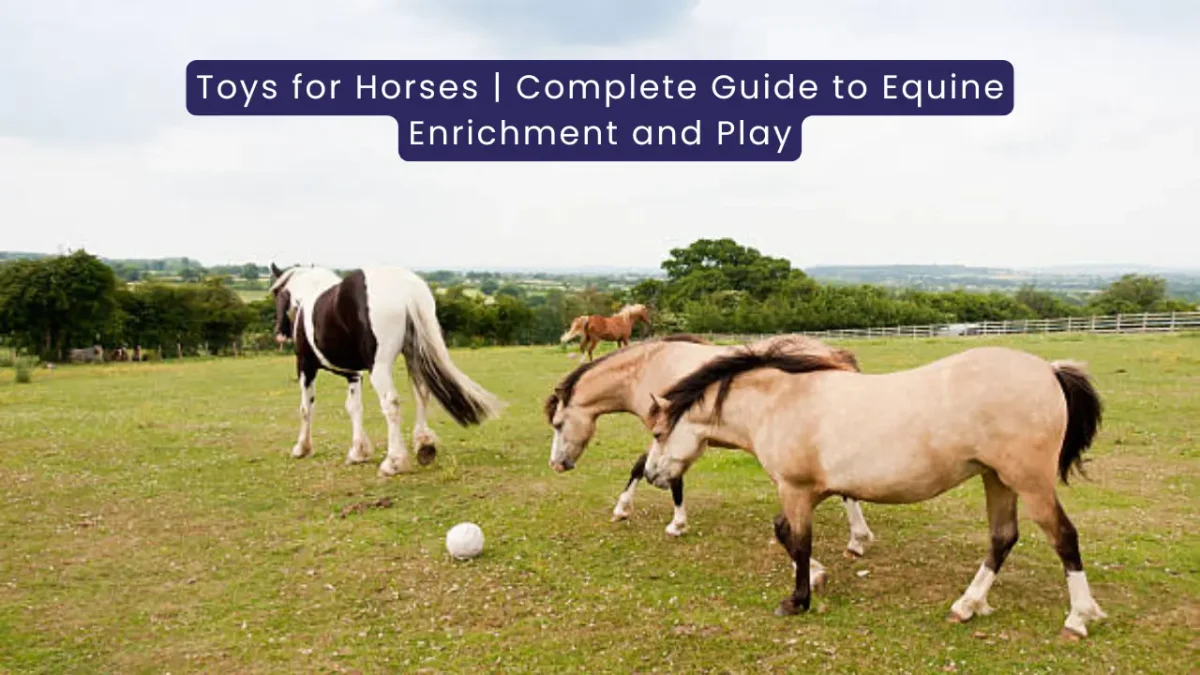
Horses are smart, social animals built for constant movement and mental activity. When they are confined to a stall for long hours with nothing to do, boredom sets in quickly. That boredom leads to real behavioral problems like cribbing, weaving, and wood chewing.
Toys for horses are one of the simplest and most practical solutions available. They give your horse something to explore, interact with, and think about during the long hours spent in the stall.
This guide covers everything you need. You will learn why mental stimulation matters, which types of horse enrichment activities work best, how to make safe DIY horse toys at home, and how to keep your horse engaged over time.
KEY TAKEAWAYS
- Horses need daily mental stimulation to stay calm and healthy in a stable environment.
- Stall boredom is one of the most common causes of cribbing, weaving, and other destructive behaviors.
- Material safety is the most important factor when choosing any horse toy. Always check that products are rated for equine use.
- DIY horse toys can work just as well as commercial options when made from safe, non toxic materials.
- Rotating toys regularly prevents boredom and keeps your horse interested over time.
Why Mental Stimulation Matters for Your Horse
In the wild, horses spend up to 16 hours a day moving, foraging, and socializing with other horses. Their brains are built for constant activity and problem solving.
In a stable, that activity disappears almost completely. A stabled horse can spend 20 hours or more standing in one place with nothing to engage with. Over time, that mental inactivity causes stress and leads to behavioral changes.
Equine enrichment is the practice of adding objects and challenges to a horse’s environment to meet that cognitive need. Even simple additions, like a hay net or a single new toy, can reduce stress and measurably improve how a horse behaves and feels each day. Horses that have regular access to enrichment consistently show lower cortisol levels, fewer stereotypic behaviors, and better responses during training. The investment in time and money is small. The return in behavior and wellbeing is significant.
Understanding the Science of Equine Play
Horses play throughout their entire lives, not just as foals. Research published in Applied Animal Behaviour Science by Paul McGreevy and colleagues confirmed that adult horses in enriched environments showed significantly fewer stereotypic behaviors compared to horses in standard stalls.
Play keeps horses physically coordinated, mentally sharp, and emotionally balanced. It gives the brain something productive to focus on during long hours of confinement.
Think of it this way: a horse that spends 20 minutes rolling a treat dispensing ball around a stall is foraging, problem solving, and staying active all at once. The return on that single enrichment object is substantial. Horses also explore their environment primarily through their muzzles, which means any object placed within reach will be investigated, mouthed, and tested. Good enrichment works with that natural behavior rather than against it.
The Dangers of Stall Boredom: Cribbing and Weaving
When horses do not have enough mental stimulation, they find their own ways to cope. These repetitive, purposeless behaviors are called stereotypies, and they include cribbing and weaving.
Cribbing involves gripping a fixed surface with the teeth, contracting the neck muscles, and drawing in air. It triggers endorphin release, which reinforces the behavior every time it happens. Research published in Equine Veterinary Journal by Nicol and colleagues found that insufficient mental stimulation was one of the strongest predictors of cribbing onset. Once cribbing is established, it is very difficult to stop.
The answer is not physical deterrents. Cribbing collars and anti weave bars do not fix the cause. The more effective approach is always to add enrichment, improve forage access, and give the horse more to do. Most behavioral problems in stabled horses are a management problem, not a horse problem. If these behaviors are already present, work with your veterinarian and an equine behaviorist to create a management plan that addresses the real reason behind what the horse is doing.
The Link Between Turnout and Stall Enrichment
Turnout time is the most valuable thing you can give a horse. Time in the paddock satisfies the need to move, forage, and socialize in a way that no stall toy can fully replace.
However, most horses do not get unlimited turnout. Work schedules, weather, injury, and barn capacity all create gaps. Stall enrichment fills those gaps and keeps the horse mentally engaged when it cannot be outside.
Think of turnout and enrichment as two parts of the same strategy. Together, they give your horse the physical and mental activity it needs to stay healthy and calm throughout the day. Neither replaces the other, but together they create a management environment where behavioral problems are far less likely to develop in the first place.
Top Categories of Horse Toys for Every Environment
The horse enrichment market has grown significantly, and there are now solid options across several categories. Each one is designed to meet a different behavioral need, from foraging instinct to social interaction.
Before buying anything, always confirm the product is specifically rated and tested for equine use. Choosing safe toys for horses means checking material composition, construction quality, and safety information first.
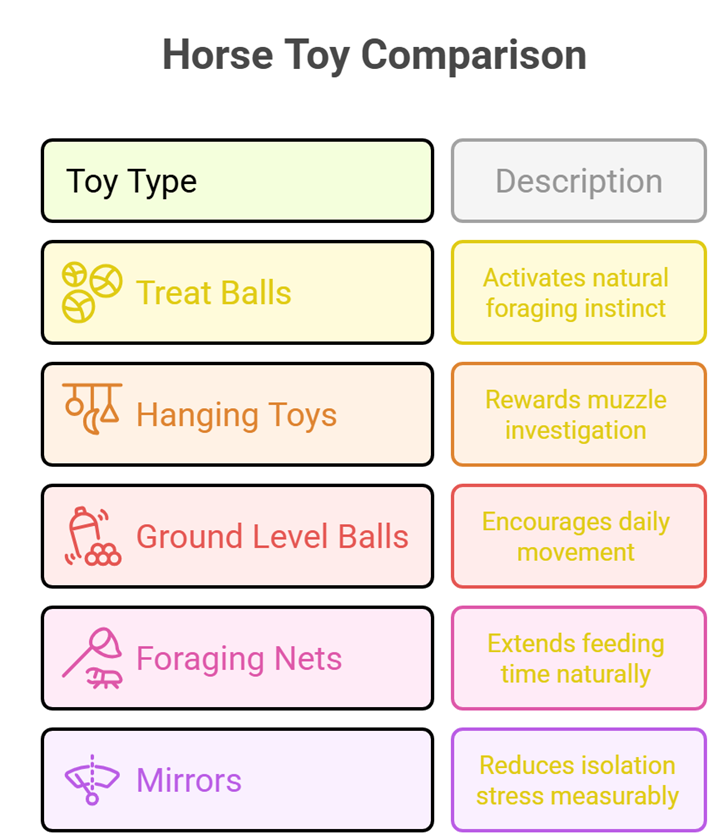
Treat dispensing toys are the most effective category of equine enrichment for stabled horses because they activate the foraging instinct that horses spend the majority of their waking hours satisfying in the wild, creating a direct behavioral bridge between domestic management and natural expression.
Here is a breakdown of the five main categories:
Treat Dispensing Balls and Puzzle Feeders:
These toys release small amounts of feed or treats as the horse pushes and rolls them. They directly engage the foraging instinct and keep horses occupied for extended periods. Research from the University of Bristol School of Veterinary Sciences found that horses with access to puzzle feeders spent significantly more time in active feeding behavior and showed less anxiety at feeding times. Products like the Likit Tongue Twister are well regarded for durability and adjustable difficulty. Start with an easier setting and increase the challenge as your horse figures it out. Vary the treats you load inside to keep the reward fresh and your horse motivated.
Hanging and Suspended Toys:
These attach to the stall wall or ceiling at the horse’s head height. The horse pushes, bats, and mouths the object in response to its movement. The unpredictable swinging motion holds attention longer than a static object. Always use breakaway fittings or solid chain hangers designed for horses, never rope or baling twine, as these create an entanglement risk. Inspect the fitting weekly to make sure it has not been weakened by repeated impact, and replace it at the first sign of wear.
Ground Level Toys: Large rubber balls, traffic cones, and rolling toys sit on the stall floor or paddock surface. The horse rolls, pushes, and investigates them using both its muzzle and feet. The Horsemen’s Pride Jolly Ball is widely recommended for its puncture resistant design and handle, which gives the horse something to grip. Ground level toys are especially useful for high energy horses that need a physical outlet between exercise sessions. They encourage movement and exploration without requiring any setup or monitoring.
Foraging Enrichment Tools:
Slow feeders, small hole hay nets, and scatter feeding setups extend the time a horse spends eating. This is important for gut health, ulcer prevention, and overall wellbeing. A horse eating from a small hole hay net can take two to three times longer to finish the same amount of hay. Research published by the British Equine Veterinary Association found that horses on restricted forage diets show significantly higher stress indicators than horses with near continuous forage access. Of all the enrichment categories available, foraging tools deliver the highest return on investment for both physical health and behavioral wellbeing.
Social Enrichment Objects:
Stall mirrors and companion animals such as goats or miniature donkeys provide a partial substitute for herd contact in isolated horses. A study at the University of Waikato in New Zealand found that horses housed with mirror panels showed measurably lower stress related behavior compared to horses in standard stalls. Use shatter resistant polycarbonate mirrors only, mounted securely at shoulder height. Glass mirrors are not safe for horse stalls under any circumstances. A companion animal can also double as social enrichment and is particularly effective for horses that have been isolated for extended periods.
Material Safety: Avoiding Choking Hazards
No enrichment benefit is worth a veterinary emergency. Material safety must always come before price, appearance, or brand reputation.
Horses apply significant force with their jaws and will test any object by mouthing and biting it. Any toy that can break into small pieces becomes a choking hazard or a risk of intestinal obstruction. Safe materials include hard molded rubber, natural rubber, heavy duty EVA foam, salt and mineral lick compounds, and treated wood made specifically for equine contact.
Avoid standard household plastic, thin nylon webbing, rope elements that can be bitten off, polystyrene foam, and any product with coatings not verified as non toxic for horses. If you are unsure about any product, consult your veterinarian before placing it in the stall. A product that seems solid and safe to a person can become dangerous within hours when a horse applies its full bite force. When in doubt, choose a product with an explicit equine safety rating rather than making an assumption based on how the material looks.
Durability Standards: Puncture Resistant Design
A product that seems solid to a person can be destroyed within hours by an average horse. Durability is the second most critical factor after safety, and first time buyers frequently underestimate it.
Look for one piece construction with no detachable components, a manufacturer’s specification confirming equine suitability, and no paints or coatings that could flake off during use. When a toy breaks down, remove it immediately. A damaged toy is not just ineffective. It is a hazard.
Inspect all toys regularly, not just on day one. Build a quick weekly check into your routine for any toy your horse uses daily. Pay particular attention to edges, joints, and attachment points, as these are the areas most likely to show wear first. Replacing a worn toy before it breaks is always safer and less costly than dealing with a veterinary emergency.
| Toy Category | Recommended Material | Key Safety Consideration | Typical Lifespan |
| Treat Dispensing Balls | Heavy duty rubber or rated hard plastic | Opening size and no loose parts | 6 to 18 months |
| Hanging Lick Toys | Mineral or salt lick compound | Use breakaway fittings only | 1 to 8 weeks |
| Ground Level Balls | Puncture resistant rubber or EVA | No sharp edges when worn | 12 to 36 months |
| Foraging Nets | Food grade rated nylon mesh | No loose threading or fraying | 12 to 24 months |
| Stall Mirrors | Shatter resistant polycarbonate | Secure mounting at shoulder height | 3 to 5 years |
How to Choose the Right Toys for Your Horse
Every horse is different. Age, breed, temperament, and living environment all influence which enrichment options will work best. A toy that suits an energetic young Thoroughbred may hold no interest for a calm older draft horse.
Start by watching your horse’s natural behavior. Horses that paw at the stall floor or bite at the door often respond best to ground level toys. Horses that frequently lip at water buckets or fence rails tend to prefer hanging toys and lick blocks. Observing these patterns for just a few days gives you a clear starting point without any guesswork.
Breed tendencies matter too. Higher energy breeds such as Arabians, Thoroughbreds, and Warmbloods generally need enrichment that challenges them more intensely. Calmer breeds are often perfectly satisfied with a simple foraging net and a lick block. There is no universal right answer, and some trial and error is part of the process. The goal is to find what your specific horse will actually engage with consistently, not what works for horses in general.
Matching Enrichment to Your Horse’s Life Stage
Young horses and foals benefit from a wide variety of enrichment types. Play is a key part of how foals develop coordination, confidence, and social skills. Safe objects to investigate and mouth support normal development and build positive associations early in life.
Adult horses in regular work often need less intensive stall enrichment than horses confined for long periods. But even well exercised horses benefit from enrichment during rest periods, especially overnight when the barn is quiet.
Senior horses may be less physically active but are just as mentally engaged as younger animals. Foraging enrichment and lick blocks are especially well suited for older horses. They provide meaningful sensory and cognitive engagement without requiring physical exertion. If a senior horse has dental issues, check that any treat based enrichment is appropriate for its dietary needs and consult your veterinarian about suitable options.
DIY Horse Toys: Fun Ideas You Can Make at Home
Commercial products can be expensive, especially when you manage more than one horse. Some of the most effective enrichment setups cost very little and take only a few minutes to put together.
The same safety rules apply to DIY options as to commercial products. Every material must be non toxic for horses, every component must be too large to swallow, and every attachment point must be secure. Always introduce a new DIY toy while you are present before leaving the horse alone with it.
These five ideas are widely used, practical, and horse safe:
Hanging Produce Puzzle:
Thread whole apples, carrots, and turnips onto a length of natural cotton cord. Hang it from the stall ceiling or a wall bracket at nose height. The swinging produce requires the horse to work for each bite, providing excellent horse mental stimulation alongside a food reward. Replace produce daily and remove anything showing signs of spoilage immediately. Rotate the type of produce you use throughout the week so the horse encounters something different each day. This simple variation is enough to keep the puzzle engaging well beyond the first few sessions.
Slow Feed Hay Net:
A quality small hole hay net hung at shoulder height is one of the highest value and lowest cost enrichment tools available. It extends a horse’s feeding session from under 30 minutes to two hours or more. That extra time benefits gut health, reduces ulcer risk, and promotes calm behavior throughout the day. Choose a net with holes no smaller than 3 to 4 centimeters to prevent hoof entanglement if the net falls. Hang it at shoulder height rather than on the ground to reduce the risk of tangling. If you can only introduce one enrichment tool to your horse’s stall, this is the one to start with.
Mineral Lick on a Cord:
Thread a natural cord through the hole in a commercial mineral lick block and hang it from a stall bracket at head height. This option is extremely affordable, provides sensory stimulation, and adds a useful nutritional supplement at the same time. Replace the block as soon as it is depleted and check the cord regularly for wear. A fallen lick block on the stall floor can be a trip hazard, so check the hanging setup every few days. This is one of the simplest and most affordable enrichment options you can offer.
Foraging Discovery Box:
Fill a sturdy wooden crate or heavy duty cardboard box with clean shredded paper, a generous layer of hay, and a small amount of scattered pellets or chopped carrots. Place it on the stall floor and let the horse forage to find the food rewards. This works particularly well for horses on stall rest, as it offers meaningful engagement without encouraging physical movement. You can make each session different by varying the treats and adjusting the depth of the foraging layer, which keeps the activity fresh each time. Most horses take to this setup very quickly, even those that are cautious around new objects.
Rolling Jug Feeder:
Clean a sturdy gallon container with a secure screw top lid and drill three to four small holes, approximately one centimeter in diameter, in the cap. Fill with a small amount of grain pellets, seal the lid, and place it on the stall floor. The horse learns to roll the jug to release pellets. Monitor closely on first use and discard the jug at the first sign of damage from biting. This tool works best for horses that are already curious and comfortable around ground level objects. Introduce it in a supervised session first so you can observe how your horse interacts with it before leaving them alone.
Here is the key thing:
The safety of the construction is what determines whether a DIY toy helps or harms. Never compromise on material safety, component size, or attachment security.
Expert Tips for Maintaining Your Horse’s Interest
Horses habituate to new objects quickly. A toy that generates real excitement on day one can be completely ignored by day five. This is normal. It means your enrichment program needs regular active management, not just a one time setup.
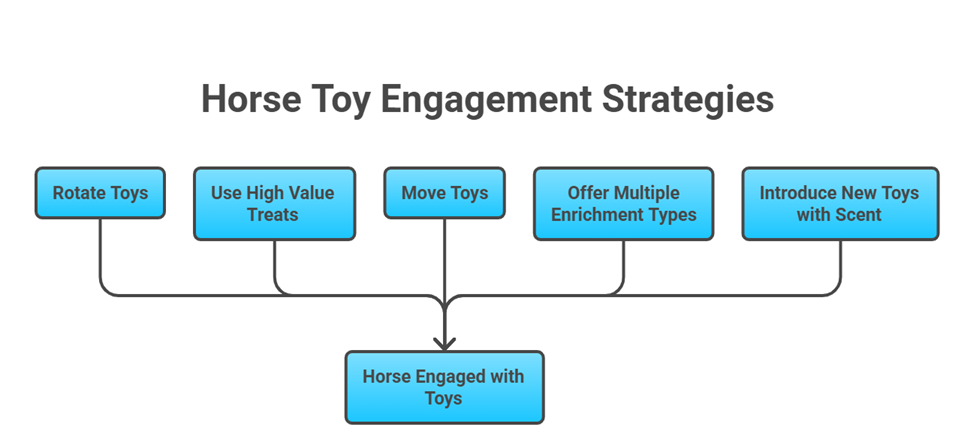
The most effective programs use controlled novelty: consistent access to enrichment, with regular rotation of the specific items in use. Rotate each toy out of the stall for two to four weeks before bringing it back. Most horses show renewed interest in a familiar toy after a rest period, especially if you refresh the treat loading before reintroducing it.
Offer variety at the same time. A horse with access to a hay net, a lick block, and a ground level ball has three different types of engagement available simultaneously. Research consistently shows that environmental variety produces the most significant behavioral benefits in stabled horses.
Change the placement occasionally too. Moving a toy to a different corner of the stall or adjusting the height of a hanging toy is often enough to renew a horse’s curiosity in something it had stopped interacting with. Small changes cost nothing and can reset a horse’s interest almost immediately.
Building a Simple Rotation Schedule
A rotation schedule does not need to be complex. Group your enrichment items into two or three sets. Set A might include the hay net, a hanging lick block, and a ground level ball. Set B might include a treat dispensing toy, a foraging discovery box, and a stall mirror.
Alternate between sets every two to three weeks. Keep a simple note on your phone or a label on each item with the last rotation date. This makes it easy to stay consistent across a full barn of horses without needing to remember everything.
When you reintroduce a toy after a rest period, refresh the treat loading before putting it back. A familiar toy with a new reward feels different to the horse and restores engagement quickly. This small step makes a noticeable difference to how enthusiastically your horse interacts with enrichment it has seen before.
How to Introduce Toys to Nervous Horses
Not every horse greets a new object with curiosity. Nervous or reactive horses may find a new item in their stall stressful rather than enriching. For these horses, a slow introduction matters.
Start outside the stall. Place the toy where the horse can see and smell it without having to approach it directly. Allow 24 to 48 hours of passive exposure, then rub a small amount of apple juice or molasses onto the surface to create a food associated cue.
Once the toy is inside the stall, let the horse investigate at its own pace. Do not push the horse toward it or draw attention to the object. Stay present for the first session and watch for signs of stress like sustained weaving or refusal to eat. If those signs appear, remove the toy and slow the process down. Some horses need three to five days of gradual exposure before they are comfortable enough to interact with something new. Patience here will always produce better results than rushing.
Toys for Horses: Your Most Common Questions Answered
Do all horses like playing with toys?
No. Individual responses to enrichment vary considerably. Personality, breed, prior experiences, and stress levels all affect how a horse engages with new objects. Some horses investigate immediately. Others take days or weeks to show curiosity.
The key is to try multiple types of enrichment, introduce each one gradually, and be patient. Research by the Animal Behavior Institute found that horses with early enrichment experience adapt more readily to new toys in adulthood than those encountering them for the first time later in life. Do not judge a toy as ineffective after just one or two days.
Are standard dog toys safe for horses to use?
No. Dog toys are not built to withstand the biting force of a horse. Even toys designed for large breeds will be destroyed quickly by most horses, creating fragments that are an immediate choking and obstruction hazard. Always use toys explicitly rated and tested for equine use. Verify the manufacturer’s safety specifications before placing anything in a horse’s stall or paddock.
If you want a safe and affordable alternative, look for rubber or molded products specifically manufactured for horses. These are widely available at equine supply stores and are designed to withstand the biting force horses apply during normal play.
What is the best toy for a horse on stall rest?
Low impact foraging enrichment works best for horses recovering from injury or illness. A small hole hay net hung at shoulder height, a hanging mineral lick block, or a supervised foraging discovery box are all appropriate. Avoid ground level rolling toys during stall rest because the excitement they generate can encourage movement that compromises recovery.
Always confirm your enrichment plan with your veterinarian before introducing anything new to a horse on active stall rest.
For horses on long term stall rest, enrichment is especially important. A horse that is mentally engaged throughout the day is less likely to develop anxiety behaviors, which makes the recovery process easier for both the horse and the handler.
How often should I replace my horse’s toys?
It depends on the toy type and how intensively your horse uses it. Ground level rubber toys typically last 12 to 36 months. Hanging lick toys are consumable and should be replaced when depleted. Treat dispensing balls should be inspected weekly and replaced at the first sign of cracking or missing parts.
Any toy showing structural damage should be removed immediately. A damaged toy is not just ineffective. It is an active hazard.
Building a regular weekly inspection into your barn routine takes less than five minutes and is the most reliable way to catch damage before it becomes a problem. Pay particular attention to any toy your horse uses heavily every day.
Can horse toys help reduce cribbing?
Toys alone are rarely enough to stop cribbing once it is established, because the behavior is reinforced by endorphin release every time it occurs. The longer it has been happening, the more ingrained it becomes.
However, introducing enrichment early, before stereotypies develop, significantly reduces the likelihood of cribbing onset. Research published in Equine Veterinary Journal found that horses in enriched environments with high forage availability were substantially less likely to develop cribbing than horses in standard stalls. If cribbing is already present, work with your veterinarian and a certified equine behaviorist to address the root cause. Enrichment alone will rarely eliminate the behavior once it is established, but it is a meaningful part of a broader management approach that reduces the frequency and gives the horse healthier alternatives to engage with.
How many toys should be in a horse’s stall at one time?
Two to three different types of enrichment at any one time is the most effective configuration. Offering a variety of horse enrichment activities simultaneously, such as a foraging hay net, a lick block, and a ground level ball, gives the horse multiple options that engage different behavioral needs.
More than three or four items can feel overwhelming rather than stimulating. Rotate the specific items every two to four weeks to maintain novelty and keep the program effective.
When setting up a combination, choose options that engage different behaviors. Pairing a foraging net with a lick block and a ground toy covers feeding behavior, oral stimulation, and physical interaction all at the same time. That variety has the most consistent positive effect on how a horse behaves throughout the day.
At what age can foals start using enrichment toys?
Foals can benefit from safe enrichment from as young as two to three weeks of age. Play behavior has been documented in foals within the first week of life in research published in Applied Animal Behaviour Science. For very young foals, appropriate options include safe objects for muzzle exploration, low hanging textured items, and opportunities for social play with their dam or other foals.
Manage entanglement risks carefully at this age. Remove any enrichment item that shows signs of damage or that the foal is interacting with in an unsafe way. As foals grow, progressively introduce more varied enrichment to support healthy cognitive and behavioral development. Foals that receive enrichment early tend to be more confident and adaptable as adult horses.
What role does enrichment play in horses with gastric ulcers?
Gastric ulcers affect an estimated 50 to 90 percent of performance horses according to research compiled by The Horse. Two of the biggest contributing factors are psychological stress and long gaps between feeding periods.
Foraging based enrichment tools, particularly slow feeders and small hole hay nets, directly address both of those factors. They extend the time a horse spends consuming forage throughout the day, which buffers stomach acid and reduces the anxiety that comes from waiting long periods between meals. Enrichment should be part of a broader ulcer management strategy alongside appropriate diet and consistent veterinary oversight.
Investing in toys for horses is one of the most direct steps you can take to improve your horse’s daily quality of life. Even the best horse toys only work when they are introduced consistently, rotated regularly, and chosen with your individual horse in mind.
Start simple. A single small hole hay net or a hanging lick block in a bare stall makes a real difference to the horse inside it. You do not need a complicated setup to see results.
Observe your horse’s responses, rotate your options regularly, and keep safety at the center of every choice you make. With the right toys for horses in place and a simple rotation plan, you will see the difference in your horse’s behavior quickly. If your horse has existing behavioral challenges, health conditions, or is on stall rest, we encourage you to consult with your veterinarian or a certified equine behaviorist for advice tailored to your horse’s individual needs.