One bad feeding decision can kill your horse. Most owners never see it coming.
It does not start dramatically. It starts with a horse that is slightly off his feed, a little tucked up, not quite himself. Then one morning he is down in the stable, and nothing is helping.
Here is what most horse owners are never told: the equine digestive system is not sensitive — it is structurally fragile. A stomach producing acid around the clock regardless of whether food is present. A hindgut housing trillions of bacteria that can be destabilized within hours by a single oversized grain meal. A 30 meter tract with no ability to vomit and no tolerance for the twice daily feeding schedules most domestic horses live on.
Colic is the leading cause of death in domestic horses worldwide. Gastric ulcers affect up to 90% of horses in active work. Hindgut acidosis is silently destroying beneficial gut bacteria in well managed yards right now, laying the groundwork for laminitis, chronic poor condition, and behavioral problems blamed on training and tack for months before the real cause is found.
Most of these conditions are entirely preventable through understanding how diet directly impacts equine gut health and making the specific, practical decisions that follow from that understanding.
This guide delivers that knowledge. By the time you finish reading, you will know what a healthy digestive system in horses requires, which dietary decisions are protecting your horse and which are quietly damaging him, and exactly what to act on first.
What This Guide Covers:
- The structure of the horse digestive system — including the timing detail that explains why gut damage always arrives late
- How fiber, water, dental health, and feeding frequency determine gut health more than any supplement
- The exact mechanism by which high starch grain causes hindgut acidosis, endotoxin release, and laminitis
- Which foods support a healthy horse gut and which foods cause harm most owners unknowingly deliver daily
- The common mistakes to avoid in horse feeding — including two that consistently surprise experienced owners
- The best feeding strategies for optimal gut health in 2026, built on microbiome science rather than convention
Your horse cannot tell you his gut is failing. This guide helps you stay ahead of it.
Understanding Equine Gut Health
Understanding equine gut health starts with one uncomfortable truth: the horse’s digestive system was designed for a lifestyle almost no domestic horse lives. The structure of the horse digestive system, the role of microbes in the horse gut, and why gut health is critical for horses are not background theory — they are the foundation every practical feeding decision rests on.
Structure of the Horse Digestive System
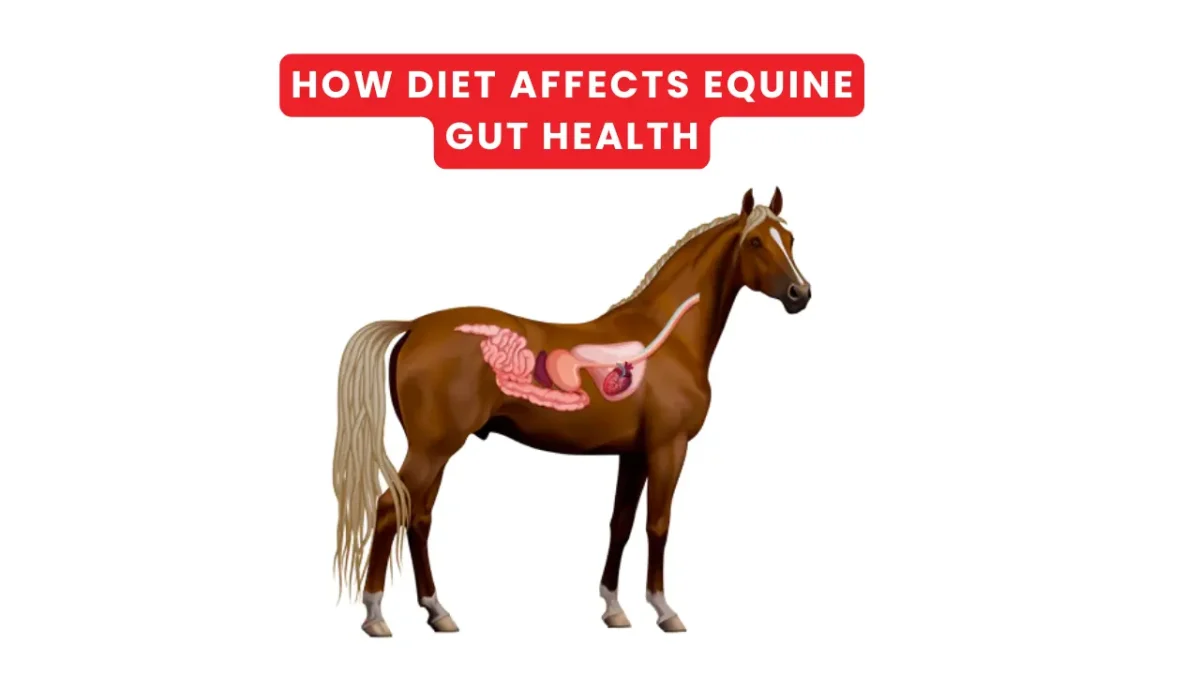
The horse digestive system stretches approximately 30 meters and runs on two completely different mechanisms — enzymatic digestion in the foregut and microbial fermentation in the hindgut. This design works perfectly in a grazing animal eating small amounts of varied forage for 16 to 18 hours daily. In a stabled horse fed twice a day, it becomes a liability.
The stomach holds just 8 to 15 liters and secretes hydrochloric acid continuously, even when empty. The lower glandular region has mucosal protection. The upper squamous region has none — when acid contacts it during fasting or exercise, erosion begins quickly. The small intestine (21 meters) processes carbohydrates, proteins, fats, vitamins, and minerals enzymatically. Starch exceeding its processing capacity passes undigested into the hindgut, where the acidosis cascade begins.
The cecum (up to 30 liters) ferments structural fiber into volatile fatty acids — the horse’s primary fuel. The large colon continues across four segments separated by sharp bends — the anatomical sites where impactions and displacements most commonly occur.
The detail most owners never learn: feed consumed in the morning may not reach the cecum for 3 to 4 hours. Gut damage from a poor feeding decision does not announce itself immediately which is why connecting cause and effect requires attention to the full daily feeding picture, not just the most recent meal.
Role of Microbes in the Horse Gut
The role of microbes in the horse gut is the central function of equine digestion. The hindgut microbiome — fibrolytic bacteria, amylolytic bacteria, methanogens, protozoa, and beneficial species including Lactobacillus and Bifidobacterium — produces the volatile fatty acids supplying 60 to 70% of the horse’s total daily energy, synthesizes B vitamins and vitamin K, maintains the mucosal barrier separating gut contents from the bloodstream, and competes against pathogens like Clostridium and Salmonella.
Research has demonstrated measurable microbial population shifts within 3 to 6 hours of a high starch meal reaching the hindgut. The microbiome responds to every meal in real time — which is why feeding consistency is not a preference. It is a survival condition for the ecosystem that keeps the horse healthy.
Why Gut Health Is Critical for Horses
Why gut health is critical for horses becomes clear when you look at what a compromised digestive system actually produces — not just digestive symptoms but systemic consequences most owners never connect to the feed room.
Approximately 70% of the equine immune system resides in gut associated lymphoid tissue — digestive compromise is immune compromise. Behavioral problems including girthiness, back sensitivity, and arena resistance are frequently rooted in gut pain. In one retrospective study, over 70% of horses successfully treated for gastric ulcers showed measurable behavioral improvement without any training change. Poor nutrient absorption from a damaged gut lining produces coat dullness, hoof deterioration, and muscle wasting regardless of ration cost.
One factor rarely addressed: stress is a direct gut health variable. Isolation, stabling, competition travel, and management disruption elevate cortisol — increasing acid production and suppressing motility independently of diet. For horses in competitive or irregular management environments, both must be addressed together.
How Diet Directly Impacts Equine Gut Health
How diet directly impacts equine gut health is not a single mechanism — it is several operating simultaneously. Understanding each one is what separates reactive management from genuinely preventive care.
Importance of Fiber in the Diet
The importance of fiber in the diet cannot be reduced to a daily weight target. Fiber is what every stage of the equine digestive system is built around — and nothing else can substitute for what it provides.
Chewing fibrous forage produces up to 40 liters of bicarbonate rich saliva daily, continuously buffering stomach acid. Without it, acid accumulates. Fiber bulk drives peristalsis — the muscular contractions moving ingesta through 30 meters of tract. Low fiber means low motility, which creates impaction conditions at every anatomical narrowing in the large colon. In the hindgut, fermentable fiber feeds fibrolytic bacteria and maintains the pH balance protecting the entire microbial ecosystem.
The minimum — 1.5% of body weight in forage dry matter daily, or 7.5 kg for a 500 kg horse — is the floor, not the target. Going below it, even briefly, elevates colic and ulcer risk within days.
The nuance most feeding guides omit: fiber type changes the risk profile. Structural fiber in mature hay ferments slowly and steadily. Fermentable fiber — fructans and pectin in fresh spring pasture — ferments rapidly. An unmanaged surge of rapidly fermentable fiber is the precise trigger of the hindgut acidosis cascade. Quantity and type must both be understood.
Effects of High Starch and Grain Based Diets
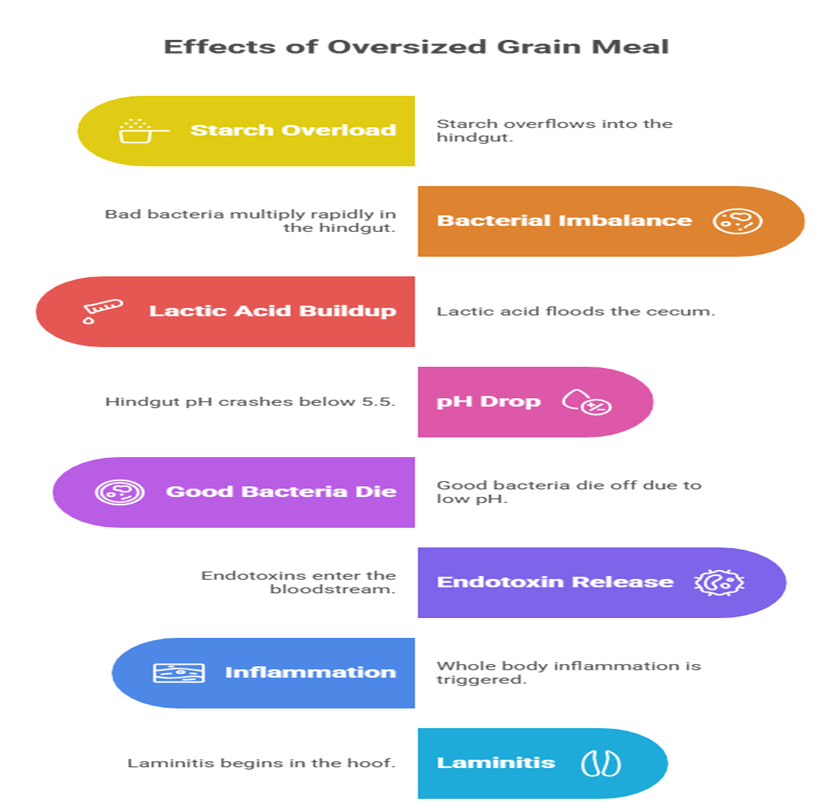
The effects of high starch and grain based diets are the best documented dietary risk in equine management — and the most consistently underestimated. Horses produce very little amylase. When starch intake exceeds 1 to 2 grams per kilogram of body weight per meal, overflow reaches the hindgut, where amylolytic bacteria ferment it explosively, flooding the cecum with lactic acid. pH drops below 5.5. Fibrolytic bacteria die. Endotoxins enter the bloodstream. In horses with any laminitic predisposition, the vascular disruption in the hoof’s laminar tissue can begin within hours of a single oversized meal.
The 2026 specific concern: premium performance feeds with names implying digestive support frequently carry NSC levels of 25 to 30% per serving. At standard 2 kg meal portions, this routinely exceeds the starch overflow threshold. Reading the guaranteed analysis not the front of bag branding — is the single most protective purchasing habit an owner can develop.
Role of Fresh Water in Digestion
The role of fresh water in digestion is not limited to hydration, it is an active participant in every digestive stage, and its absence produces predictable consequences.
When hydration is insufficient, the colon concentrates gut contents at anatomical narrowing primarily the pelvic flexure — causing impaction colic.
Two variables most owners do not manage: sodium deficiency blunts the thirst response. Horses relying solely on a salt lick which most underuse do not drink sufficiently even when water is freely available. Adding 30 to 60 grams of loose salt directly to feed ensures consistent intake and reduces impaction colic risk. Additionally, horses significantly reduce water intake below 7°C (45°F). Winter impaction colic is substantially a water temperature problem. Insulated buckets or heated waterers are a gut health intervention, not a comfort upgrade.
Impact of Feeding Frequency on Gut Function
The impact of feeding frequency on gut function is most severe in the stomach but extends through every digestive segment, accumulating silently before becoming clinically apparent.
Without forage for more than 4 to 6 hours, gastric acid pools against the unprotected squamous mucosa. In controlled studies, measurable erosion has been documented within five days of sustained 12 hour fasting periods. Most stabled horses in conventional management experience exactly this stabled at 5 PM, fed at 7 AM. Thirteen hours. Every night. Across 365 nights.
Slow feeder hay nets with 1.5 to 2 cm holes extend eating time by 2 to 3 hours per delivery, replicate nearly continuous grazing, reduce acid exposure, and stabilize the overnight microbiome without requiring any change to the existing feeding schedule.
Common Diet Related Gut Problems in Horses
The most common diet related gut problems in horses are not random misfortunes — they are predictable endpoints of identifiable dietary patterns. Understanding the mechanism behind each is what makes prevention practical and reliable.
Colic and Digestive Disturbances
Colic and digestive disturbances are the most urgent, costly consequence of poor equine nutrition. The type of colic identifies the dietary variable responsible.
| Colic Type | Primary Dietary Cause | Key Signs |
| Spasmodic | Rapid diet change, fermentation disruption | Intermittent cramping, pawing, flank watching |
| Impaction | Insufficient water or fiber, low electrolytes | Reduced manure, dull gut sounds, mild pain |
| Gas / Tympanic | Excess fermentable carbohydrate, lush pasture | Distended abdomen, severe unrelenting pain |
| Sand | Feeding from sandy ground without psyllium | Chronic loose manure, intermittent low grade pain |
| Large Colon Displacement | Gut motility disruption, dietary imbalance | Severe pain, unresponsive to initial treatment |
One consistently overlooked trigger: parasite burden. Cyathostomins encysted in the gut wall cause significant inflammatory disruption when they emerge — typically late winter and early spring. Fecal egg counts every 3 to 6 months and targeted treatment are gut health management, not a separate topic.
Gastric Ulcers in Horses
Gastric ulcers in horses are almost entirely a disease of modern management. ESGD (Equine Squamous Gastric Disease) affects the upper, acid exposed stomach region — caused by prolonged fasting, high intensity exercise, and high starch diets. EGGD (Equine Glandular Gastric Disease) affects the lower glandular region, where NSAID use directly compromises mucosal prostaglandin defense.
Breed susceptibility matters and is rarely discussed. Thoroughbreds show significantly higher ESGD prevalence than native breeds or warmbloods under equivalent management — reflecting genuine differences in gastric physiology that affect both risk level and management requirements.
The most evidence supported dietary prevention: 0.5 to 1 kg of alfalfa before exercise buffers acid splash onto the squamous mucosa — controlled trials consistently show lower ulcer scores in alfalfa supplemented horses over 8 week exercise periods. Eliminating overnight fasting costs nothing and removes the horse’s longest daily period of unprotected acid exposure. Omeprazole treats active ulcers. Without dietary change, relapse rates after treatment are high.
Hindgut Acidosis
Hindgut acidosis is the most underdiagnosed diet related condition in horses because it develops subclinically, producing signs that are easily attributed to training problems or general unwellness.
Excess starch or rapidly fermentable fructans reach the hindgut, amylolytic bacteria multiply explosively, lactic acid overwhelms bicarbonate buffering, and pH crashes to 5.0 or below. Fibrolytic bacteria die. Endotoxins enter the bloodstream. The laminitis cascade can begin within hours of a single oversized meal.
Early signs: loose manure specifically after concentrate meals; intermittent flank or back sensitivity; selective appetite — hay accepted eagerly, concentrates approached with hesitation; subtle resistance in a previously willing horse. By the time obvious signs appear, the condition has been developing for weeks or months.
Management: replace grain energy with fat (stabilized flaxseed, soy oil, rice bran) and fermentable fiber (beet pulp, soy hulls). Cap starch at 1 to 2 grams per kilogram of body weight per meal. Use hindgut buffers during transitions and rebalance with Saccharomyces cerevisiae.
Poor Nutrient Absorption
Poor nutrient absorption is the end stage consequence of chronic, unaddressed gut compromise. Repeated damage from acidosis, ulceration, or parasitic infiltration degrades intestinal villi — collapsing the absorptive surface that nutrients depend on. A horse with significant villous atrophy absorbs a fraction of even a high quality ration, which is why the perpetually poor conditioned horse who does not respond to feed changes almost always has a gut health problem, not a nutrition problem.
The connection most feeding advice misses: dental health is a prerequisite for nutrient absorption. Improperly chewed hay passes through as long stemmed bulk without fermentable value — the microbiome starves even when hay intake appears adequate. Dental assessment every 6 to 12 months is foundational gut health management.
Best Diet Practices to Improve Equine Gut Health
The best diet practices to improve equine gut health require correct prioritization. Most owners invest in the wrong order — spending on supplements before the dietary foundation is in place.
Feeding High Quality Forage
Feeding high quality forage is the single most impactful decision in equine nutrition — and the most consistently underinvested. The practical starting point is not choosing better hay. It is knowing what is in the hay already being fed.
NIR hay analysis (approximately £25 to 40 per sample) identifies dry matter, digestible energy, crude protein (target 8 to 12%), NSC (under 12% for metabolic risk horses, under 18% for healthy horses), and calcium:phosphorus ratio (target 1.5 to 2:1). Two visually identical bales from different cuttings can differ by 8 to 10 percentage points in NSC — the difference between safe forage and a laminitis trigger.
For low NSC requirements, soaking hay in cold water for 30 to 60 minutes reduces NSC by 20 to 30%. Do not soak longer — prolonged soaking leaches minerals and promotes bacterial contamination. Steaming is superior where available. Horse appropriate haylage should have pH 4.5 to 5.5 and dry matter 50 to 70% — reject any bale with visible mold, excessive heat, or pH below 4.0. Never substitute cattle silage, which has a fermentation profile incompatible with equine digestion.
| Horse Type | Recommended Forage Approach |
| Healthy leisure horse | Good quality grass or mixed hay; slow feeder or free choice access |
| Performance horse | High quality hay and alfalfa; before exercise alfalfa buffer (0.5 to 1 kg) |
| Laminitis / EMS / PPID | Tested hay below 10 to 12% NSC; soak 30 to 60 minutes in cold water |
| Senior horse | Soaked hay or appropriate haylage; chopped forage if dentition is compromised |
Introducing Feed Changes Gradually
Introducing feed changes gradually is a biological requirement, not a precaution for sensitive horses. The hindgut microbiome needs 14 to 21 days to adapt. Any transition that bypasses this window is a direct colic risk.
14 Day Transition Protocol:
| Days | Previous Feed | New Feed |
| Days 1 to 3 | 75% | 25% |
| Days 4 to 7 | 50% | 50% |
| Days 8 to 11 | 25% | 75% |
| Days 12 to 14 | 0% | 100% |
Spring pasture is the most consistently mismanaged transition of the year. Start with 15 to 20 minutes per day in week one, increasing by 10 to 15 minutes every 3 to 4 days. Fructan content peaks on cold, bright mornings — afternoon turnout during the first weeks materially reduces the highest risk exposures.
Maintaining a Consistent Feeding Schedule
Maintaining a consistent feeding schedule is a direct gut health intervention. Gastric acid secretion, gut motility, and microbial activity are all partially regulated by circadian rhythm and feeding anticipation. Irregular timing elevates cortisol — increasing acid production and suppressing motility regardless of what is being fed.
Feed within 30 minutes of the same time daily, every day. The most damaging inconsistency in most yards is the overnight hay gap that varies unpredictably. A slow feeder net, automated feeder, or late evening hay check removes this variable cleanly.
Supporting Gut Health with Supplements
Supporting gut health with supplements is the last investment to make, not the first. Once the dietary foundation is sound, targeted supplementation provides meaningful protection during the high risk periods that disrupt even well managed horses.
Saccharomyces cerevisiae (live yeast): The strongest equine gut supplement evidence base. Multiple controlled trials demonstrate improved fiber digestibility and more stable hindgut pH. Look for guaranteed live CFU counts at time of purchase — not manufacture, since viability declines — with named strains backed by equine specific research.
Prebiotics (FOS, MOS, beta glucans): Feed beneficial bacteria selectively. Most effective during dietary transitions and post antibiotic recovery when the microbiome needs active rebuilding.
Gastric buffers (calcium carbonate, pectin lecithin complexes, aloe vera): Buffer acid between meals. Appropriate for competition horses, confirmed ESGD cases, and horses undergoing management disruption.
Omega 3 fatty acids (stabilized ground flaxseed, fish oil): Anti inflammatory mucosal support with emerging evidence for improved gut barrier function in horses with chronic low grade digestive inflammation.
Foods That Support a Healthy Horse Gut
Knowing which foods support a healthy horse gut — and the mechanism behind each — allows owners to make informed dietary decisions rather than following generic guidelines.
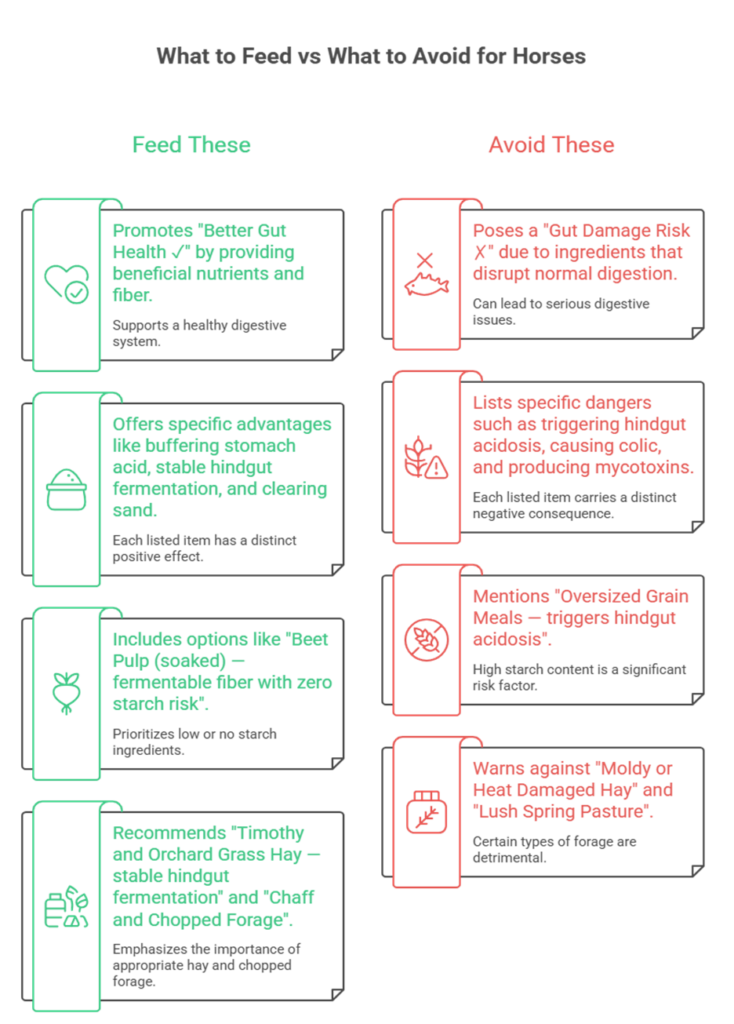
Alfalfa (Lucerne): The most evidence supported forage addition for gastric ulcer prevention. Calcium and protein content buffers acid in both stomach regions. Feed 0.5 to 1 kg before exercise. Use sparingly in horses prone to weight gain or with laminitis history.
Timothy and Orchard Grass Hay: High structural fiber, moderate protein, moderate NSC — the combination creating stable, predictable hindgut fermentation. The best forage foundation for most horses.
Beet Pulp (soaked): Fermentable pectin based fiber with minimal starch. Feeds hindgut microbes without overflow risk. The most practical partial grain replacement. Always soak fully before feeding.
Soy Hulls: Low NSC fermentable fiber providing caloric density without starch related hindgut risk. Widely used in performance rations as a safer grain alternative.
Psyllium Husk: The only evidence supported intervention for sand clearance from the large colon. Use one week per month — continuous daily use reduces efficacy as the gut adapts.
Stabilized Ground Linseed: The most bioavailable dietary omega 3 source for horses. Supports gut mucosal anti inflammatory health. Must be ground or heat stabilized — raw whole seeds contain cyanogenic compounds problematic at higher intakes.
Chopped Forage and Chaff: The most underused gut health tool in domestic management. Adding 400 to 500 g to any concentrate meal slows consumption, increases saliva production, and buffers the gastric acid response to grain.
Foods That Can Harm Equine Gut Health
Recognizing which foods can harm equine gut health matters because several of the most common offenders are not obviously dangerous — they are everyday management choices that accumulate damage quietly.
Oversized Grain Meals: Any single meal exceeding 1 to 2 g of starch per kg of body weight causes hindgut overflow, acidosis, and endotoxin release — the documented mechanism behind the most severe digestive emergencies in horses.
Lush Spring Pasture (unrestricted): Fructan content peaks on cold, bright mornings during rapid spring growth — the primary dietary trigger of pasture associated laminitis and tympanic colic. Restrict access to afternoon hours and introduce access gradually from the first day of spring turnout.
Moldy or Heat Damaged Hay: Mycotoxins damage the intestinal epithelium at subclinical concentrations — a horse can eat visually acceptable hay while experiencing ongoing gut damage. When in doubt about a bale, reject it.
Lawn Clippings: Freshly cut clippings heat and ferment rapidly. Their fine particle size compacts in the stomach and concentrates fructan load. A garden bin of clippings represents a genuine colic and laminitis risk. Never feed them under any circumstances.
Brassica Vegetables (Cabbage, Kale, Broccoli): Glucosinolate compounds produce significant hindgut gas during fermentation. Even small amounts have triggered severe tympanic colic. There is no safe quantity.
Abrupt Forage Changes: Switching hay without a transition period — even to visually identical hay from a different supplier — is among the most common causes of spasmodic and gas colic in otherwise well managed horses. The microbiome adapts to specific fiber structures; changing without warning disrupts the entire fermentation ecosystem.
Common Mistakes to Avoid in Horse Feeding
The common mistakes to avoid in horse feeding stem from outdated habits and information gaps — not carelessness. Each has a direct, documented gut health consequence.
Feeding by Volume Rather Than Weight: Different feeds differ by a factor of three or four in density. A bucket of chaff and a bucket of pelleted balancer are not equivalent quantities. Calibrate every feed measure by actual weight, and recalibrate when the feed type or supplier changes.
Buying Hay Without Testing: Visual assessment cannot identify NSC content, calcium:phosphorus imbalances, or subclinical mycotoxin contamination. A single NIR hay test (approximately £30) prevents the conditions responsible for the most avoidable equine health emergencies.
Overlooking Dental Health as a Nutritional Variable: Horses with dental irregularities cannot produce the particle size required for effective hindgut fermentation. Weight loss and poor condition in these horses are gut health failures, not feeding failures. Dental assessment every 6 to 12 months is non negotiable.
Creating a 13 Hour Overnight Fast: Stabling at 5 PM and feeding at 7 AM is the most common gut health mistake in domestic management. Slow feeders, a larger final evening ration, or a late night hay check correct what causes cumulative gastric mucosal damage across 365 nights per year.
Maintaining Full Rations Through Box Rest: A horse moved from full work to stall rest needs its concentrate ration reduced or removed within 24 to 48 hours. Continuing a performance ration through enforced rest is a direct risk factor for laminitis and hindgut acidosis.
Ignoring Parasite Management: Gut health cannot be fully achieved alongside an uncontrolled worm burden. Fecal egg counts every 3 to 6 months with targeted anthelmintic treatment replaces the rotational dosing programs that are accelerating resistance across the horse population.
Best Feeding Strategies for Optimal Gut Health in 2026
The best feeding strategies for optimal gut health in 2026 are built on microbiome science and current nutritional evidence — not convention.
Build the Ration Around the Forage, Not the Bag: Test the hay, identify its nutritional gaps, select a balancer to fill them. This reduces concentrate intake, cuts starch load, and produces better long term condition at lower cost.
Replace Grain Energy With Fat Energy: Fat from stabilized flaxseed, rice bran, or vegetable oil is digested in the small intestine with zero hindgut overflow risk. A horse receiving 500 ml of oil daily gains approximately 15 MJ of digestible energy without additional starch — the highest impact change for hard keepers and performance horses on high grain rations.
Make Slow Feeding the Default: Slow feeder hay nets extend eating time by 2 to 3 hours per delivery, remove overnight fasting gaps, and stabilize the hindgut microbiome between meals — at a cost less than a single vet callout.
Use Probiotics Strategically, Not Habitually: Evidence for continuous daily supplementation in healthy horses on stable forage forward diets is limited. Targeted use during spring turnout, dietary transitions, antibiotic courses, and competition travel is more evidence aligned and cost effective.
Read Manure Every Morning: Manure is the most immediate, accessible, and cost free indicator of digestive function available. Establish a baseline for each horse and treat any unexplained change as an early signal to review the previous 48 hours of feeding.
Frequently Asked Questions About Equine Gut Health
What Is the Best Diet for Horse Gut Health?
The best diet for horse gut health is built on tested, high quality forage available nearly continuously, with concentrates fed only where additional energy is required in small divided meals. Energy above forage level is best met with fat rather than starch. A forage first ration balanced with a targeted mineral supplement consistently outperforms generic complete feeds for most horses regardless of workload.
Can Poor Diet Cause Colic in Horses?
Yes — poor diet is the most significant modifiable cause of colic in horses. Abrupt dietary changes, insufficient forage, oversized grain meals, inadequate water intake, and unmanaged parasite burden are the most consistently identified triggers. Horses on forage based, low starch diets with consistent water access have significantly lower colic incidence than grain fed, conventionally managed horses.
How Long Does It Take to Improve Gut Health?
How long it takes to improve gut health depends on what is being addressed. Gastric ulcer symptoms typically improve within 2 to 4 weeks of combined pharmaceutical and dietary intervention, with full mucosal healing at 4 to 8 weeks. Hindgut microbiome rebalancing takes 2 to 6 weeks, while visible changes in body condition, coat, and behavior generally appear within 6 to 12 weeks of sustained dietary change.
Are Probiotics Necessary for Horses?
Probiotics are not necessary for every horse all the time — but they provide well supported benefit during specific high risk periods. Saccharomyces cerevisiae has the strongest equine evidence base. Choose products with guaranteed live CFU counts at time of use, named strains with equine specific research, and third party quality verification.
Can Proper Diet Prevent Digestive Problems in Horses?
For the vast majority of diet related conditions, proper diet can prevent digestive problems in horses completely — not merely reduce them.
Gastric ulcers, hindgut acidosis, impaction colic, spasmodic colic, and the chronic malabsorption that keeps horses in poor condition despite generous feeding are not bad luck. They are the predictable outcomes of overnight fasting, oversized grain meals, abrupt forage changes, cold winter water, and hay bought without analysis. All identifiable. All correctable. None requiring significant financial investment.
The gap between the owner who battles recurring digestive problems and the one who does not is rarely better feed or more expensive supplements. It is the decision to treat every feeding choice as a gut health choice — based on what the horse’s digestive system requires, not what is convenient.
Weigh tomorrow morning’s hay ration. Confirm it meets the 1.5% body weight minimum. Check honestly whether the overnight forage gap is covered. Those three checks will tell you more about your horse’s gut health than any supplement label ever will.
Feed the horse, not the routine. Understand the gut, and everything else in equine nutrition falls into place.