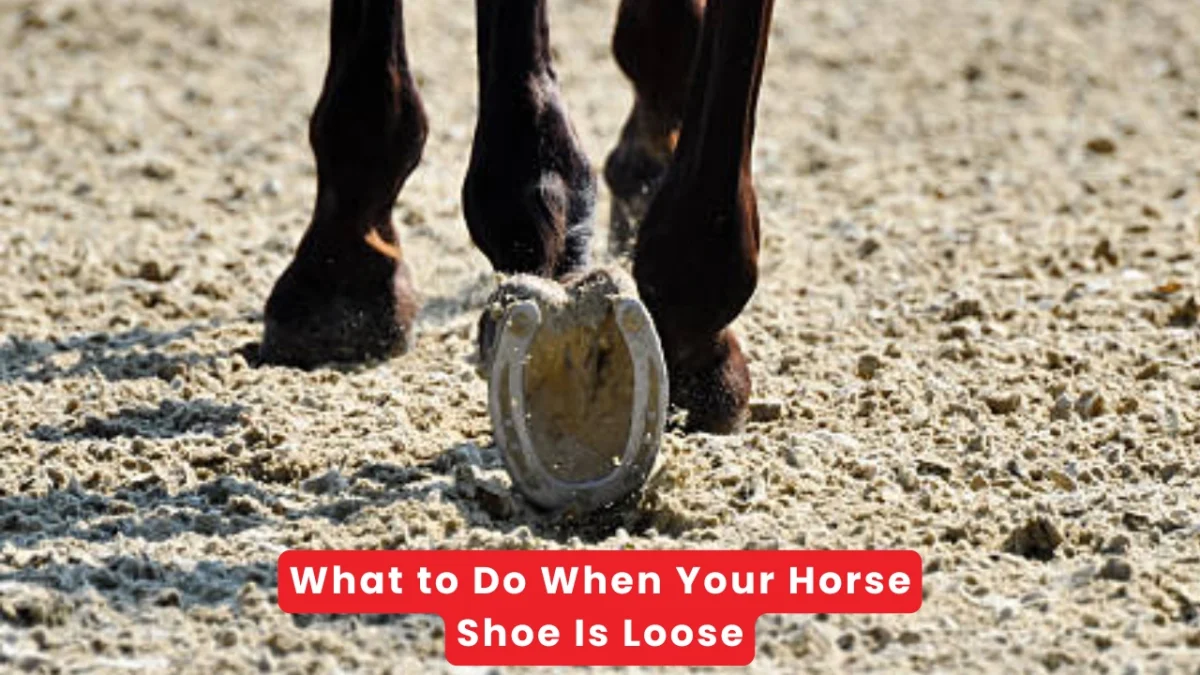
A loose horse shoe is one of the most common problems in horse hoof care, and one of the most mishandled. This guide gives you the exact steps to handle it safely, the warning signs to catch it earlier next time, and the daily habits that prevent loose horseshoes from happening again.
Quick Summary
- Stop riding and limit movement immediately.
- Inspect the hoof, check for rocking, gaps, raised clinches, and missing nails.
- Call your farrier with specifics: which hoof, how many nails are compromised, and whether there’s injury.
- Remove the shoe only if it’s dangling or twisted and you’re confident with the tools. Otherwise, leave it.
- Protect the bare hoof with a hoof boot while waiting for help.
Need the full picture, causes, prevention, mistakes, and FAQs? Keep reading.
Step by Step Guide to Handling a Loose Horse Shoe
Here’s exactly how to handle a loose horseshoe, from discovery to resolution.
Step 1: Stay Calm and Inspect the Hoof
Bring your horse to a flat area with good lighting. Pick up the affected hoof and clean out all dirt and debris with a hoof pick so you have a clear view.
Press on the shoe with your thumb. Check for rocking, gaps between the shoe and the hoof wall, and any nails that are raised, loose, or missing. Look at the clinches on the outer hoof wall. In a secure shoe, these sit flat and tight. If any have straightened or lifted, the hold is weakening.
Snap a photo of what you see. Your farrier will appreciate the detail when you call, and it helps them prepare the right tools and shoes before they arrive.
Step 2: Limit the Horse Movement
Stop riding, lunging, and turnout on hard ground. Confine your horse to a clean, dry stall or a small, soft footed paddock.
Here’s why this matters, and why front hooves deserve extra urgency. Horses carry roughly 60% of their body weight on their front legs. A loose shoe on a front hoof means more force pressing against an unstable shoe with every step, which accelerates damage faster than on a hind hoof. If the loose shoe is on a front leg, restrict movement more aggressively and prioritize the farrier call.
If stall confinement isn’t an option, choose the smallest, softest turnout area available and remove any horses that might prompt yours to run, play, or compete for food at speed. The goal is minimal, calm movement on forgiving ground until the shoe is addressed.
Step 3: Check for Injuries or Damage
With the shoe assessed, examine the hoof itself and the surrounding tissue for signs of injury. Look for blood around nail holes or the coronary band, discoloration on the sole, cracks in the hoof wall near the nail line, and heat in the hoof that could signal inflammation.
Press gently around the sole and frog. If your horse reacts to pressure in a specific spot, note the exact location. This tells your farrier whether the shoe may have caused a bruise or whether a nail has migrated toward sensitive tissue.
Step 4: Remove the Loose Shoe Safely (If Necessary)
This is a judgment call, not a default action. Only remove the shoe if it’s dangling by one or two nails, twisted sideways, or positioned where it could catch on the ground, a fence, or stall hardware. A dangling shoe is an active hazard that can lever against the hoof wall and tear it.
To remove safely:
- Use a clinch cutter or rasp edge to straighten any remaining clinches on the outer wall. This releases the nails without tearing the horn.
- With pull off tongs, grip one heel branch and lever it gently toward the toe. Work one side at a time, alternating branches, rocking slowly and evenly.
- Never pull outward. Yanking away from the hoof rips nail fragments through the wall and causes far worse damage than the loose shoe itself.
- Once off, inspect every nail hole for debris. Clean the hoof and apply a topical antiseptic if available.
If the shoe is only mildly loose but still sitting flat against the sole, leave it. A partially attached shoe still provides some protection, and an inexperienced removal attempt can cause more problems than it solves.
Step 5: Contact Your Farrier
Call your farrier as soon as possible. Don’t wait for the next scheduled visit. Give them specifics: which hoof, how many nails are compromised, whether you removed the shoe or left it on, and whether there’s any injury or lameness.
What to expect during the farrier visit: Your farrier will evaluate the hoof wall condition, checking whether the existing nail holes can hold a new shoe or whether the hoof needs time to grow out. They’ll trim and rebalance the hoof, fit a new shoe (or the same shoe if it’s still in good shape), and set fresh nails at clean angles into solid horn. If the hoof wall is too damaged to hold nails, they may recommend a glue on shoe or a period of therapeutic barefoot recovery with a hoof boot for protection.
What it costs: A standard reshoeing or reset typically runs $50 to $75 for a single hoof or $150 to $300 for a full set, depending on your region and farrier. An emergency or same day call may add $25 to $75 to the trip fee. Compare that to the cost of treating a torn hoof wall or deep abscess, which can run into hundreds in combined farrier and vet bills plus weeks of lost riding time, and the prompt call is always the better investment.
When to Call a Farrier Immediately
Most loose shoe situations can wait a few hours or even overnight for a farrier visit. But certain scenarios demand same day, urgent professional attention:
- The shoe has twisted and is pressing into the sole or frog.
- There’s active bleeding from nail holes, hoof wall, or the coronary band.
- You can see exposed laminae, the pink, sensitive tissue layer inside the hoof wall.
- The horse refuses to bear weight on the affected leg.
- Multiple shoes are loose or lost simultaneously, which may signal a systemic horse hoof health issue.
- A nail appears to have been driven into sensitive structures, known as a “hot nail” or “nail prick”, which risks deep infection if untreated.
If the situation involves bleeding, severe lameness, or suspected tissue damage, call your equine veterinarian alongside your farrier.
What to Do After the Shoe Is Off
Whether you removed the shoe yourself, the farrier pulled it, or it came off on its own in the field, your priorities are the same: protect the bare hoof, prevent infection, and get it reshod as soon as conditions allow.
How long can a horse go barefoot after losing a shoe? It depends on the horse and the hoof. A horse with strong, thick hoof walls and no sole sensitivity can manage a few days on soft footing without major issues. A horse with thin walls, flat soles, or existing hoof problems may be uncomfortable within hours on anything firmer than grass. Front hooves are generally more sensitive barefoot than hinds, because they bear more weight and typically have flatter soles. The general rule: treat it as temporary and schedule the farrier within one to three days at most. Your goal during this window is to keep your horse comfortable and safe while minimizing further hoof wear on the unprotected foot.
Protect the hoof with a boot. A properly fitting hoof boot is the single best tool for this situation. It cushions the sole, keeps debris out of open nail holes, and allows limited, safe movement. Keep at least one pair on hand. Brands like EasyCare, Scoot Boot, and Cavallo are widely available and sized for most horses. If you don’t have a boot, a layer of clean padding (gauze or a disposable diaper) secured with duct tape can serve as a short term wrap on soft ground, though it won’t survive more than a few hours on abrasive surfaces.
Keep conditions clean. Open nail holes are direct entry points for bacteria. Avoid turnout in mud, standing water, or wet bedding. Apply iodine or chlorhexidine to the nail holes once or twice daily until the farrier resets the shoe.
Inspect the hoof for damage. Look for cracks, chips, or missing chunks of hoof wall where nails were seated. Check the sole for bruising or puncture marks. If you find significant wall damage, let your farrier know before they arrive. They may need to bring glue on shoes or packing material instead of standard nail on shoes.
Talk to your farrier about why it happened. This conversation is where prevention starts. Ask specific questions: Was the shoe overdue for a reset? Was poor hoof condition weakening the nail holes? Were environmental factors like mud or persistent moisture playing a role? Should the next set use a different nail size, shoe type, or clip configuration for better retention? A good professional farrier won’t just replace the shoe. They’ll help you identify what went wrong and adjust the plan so it’s less likely to happen again. If you’re losing shoes frequently (more than once or twice a year), that pattern is worth investigating seriously rather than accepting as normal.
Signs That Your Horse’s Shoe Is Loose
Now that you know what to do, here’s how to catch the problem earlier next time. Recognizing loose horseshoe signs during your daily routine means you can act before a minor issue escalates. The best horse hoof care is proactive. That starts with knowing exactly what a failing shoe looks and sounds like.
Visible Movement or Gap in the Shoe
During your daily hoof pick, press on the shoe with your thumb: first at the toe, then at each heel. Any rocking, wobbling, or visible movement means the shoe to hoof bond is failing. Check both sides of the shoe independently, since a shoe can be tight on one branch and loose on the other, which is easy to miss with a single quick press. Even a hairline gap at the heel or toe can trap grit and moisture against the sole, setting up conditions for infection over time. Building this check into your daily grooming takes seconds and catches problems days before they become emergencies.
Missing or Raised Nails
Check the clinches on the outer hoof wall. They should lie flat and smooth. If any have straightened out or lifted away, the shoe’s grip is compromised. On the ground surface, look for nail heads that are raised or absent. Two or more compromised nails means the shoe is actively working its way off, and you should act that day rather than waiting for the next scheduled farrier visit.
Changes in Gait or Discomfort
Horses communicate discomfort through movement. Subtle changes in gait such as a shortened stride, reluctance to move forward, head bobbing at the trot, or uneven weight distribution can all point to a shifting shoe pressing unevenly on the sole or pinching tissue underneath. If your horse moved normally yesterday and feels “off” today, check the shoes before assuming a muscle or joint issue. It’s the simplest thing to rule out and the fastest to fix.
Unusual Sounds While Walking
A clicking, clanking, or metallic scraping on hard ground such as concrete, asphalt, or barn aisles is a classic sign. These unusual sounds come from the shoe shifting against the hoof or striking the ground at an inconsistent angle. It’s distinctly different from the even, rhythmic clip clop of a secure shoe. If you hear it, stop and inspect immediately rather than continuing to ride, as the risk of the shoe catching and tearing escalates with every step.
Understanding Why a Horse’s Shoe Becomes Loose
Knowing the cause helps you prevent the next one. A loose horse shoe almost always traces back to one of four factors and sometimes a combination of them.
Normal Wear and Tear
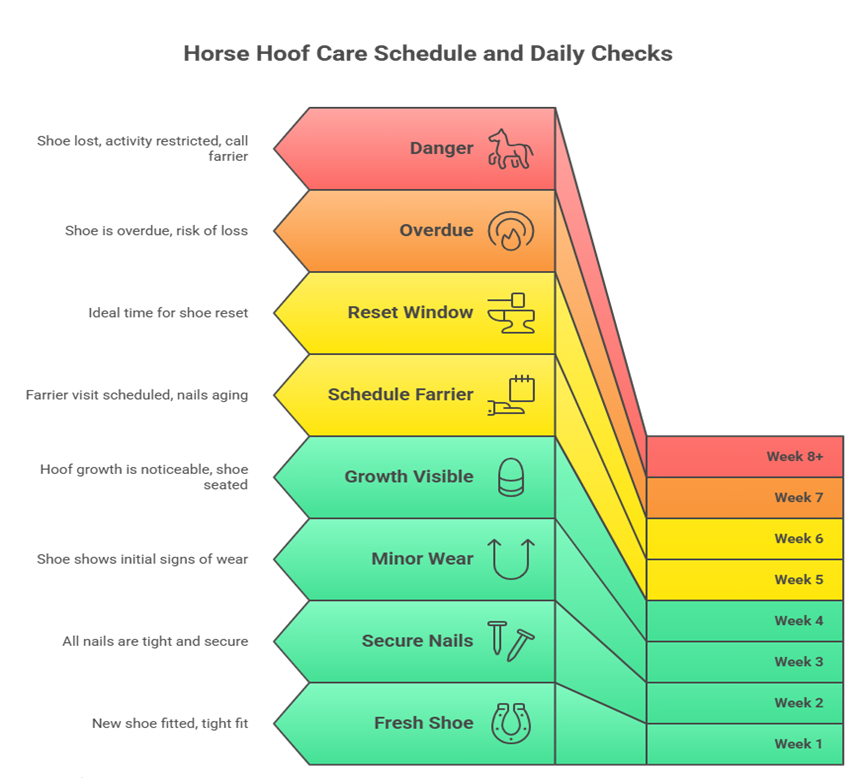
Horseshoes are held by a small number of nails driven through the insensitive outer hoof wall. Over time, typically five to eight weeks, the repeated impact of hooves against ground gradually works those nails loose. The rate of normal wear and tear depends on workload, body weight, and terrain. A trail horse covering rocky ground weekly wears shoes faster than a lightly worked horse on soft footing. Jumping and eventing horses experience additional shearing forces on landing that stress the shoe to hoof bond differently than flatwork alone. Even horses that mostly stand in a paddock experience gradual loosening simply from the natural expansion and contraction of the hoof during temperature shifts.
The bottom line is that every set of shoes has a finite lifespan. Regular horseshoe maintenance on a consistent schedule rather than waiting until you notice a problem is the most reliable way to stay ahead of normal wear. Your farrier can advise on the ideal reset interval for your horse’s specific workload and conditions.
Poor Hoof Condition
The hoof wall is the anchor for every nail. When it’s dry, brittle, cracked, or weakened by conditions like white line disease or thrush, the nail holes lose their holding power and nails begin to work loose within the softened horn. Poor horse hoof health is one of the most underestimated reasons for repeated shoe loss. Many owners focus on the shoe when the real problem is the hoof underneath.
Signs of poor hoof condition include visible cracks or chips along the outer wall, a chalky or flaky texture around the nail holes, a strong foul smell when picking the frog (indicating thrush), and hooves that seem to grow slowly or unevenly. Nutrition matters directly: biotin (15 to 20 mg/day for a full sized horse), zinc, methionine, and essential fatty acids all affect hoof wall quality and density. If your horse’s hooves are chronically crumbly or soft despite good farrier care, ask your vet about a targeted mineral panel. A professional farrier can also assess whether the hoof wall is strong enough to hold nails reliably or whether alternative attachment methods like glue on shoes are a better fit.
Improper Shoeing
If a shoe is poorly fitted, nailed at the wrong angle, or set on a hoof that wasn’t properly trimmed beforehand, it’s more likely to fail early. Improper shoeing includes using nails too small for the hoof, setting the shoe off center relative to the hoof’s balance point, or failing to create tight clinches. Even timing matters. Shoeing a horse immediately after a bath or a wet night in the field means driving nails into softer horn, which reduces their grip from day one. A qualified, experienced farrier who knows your horse is the best insurance against this cause.
Environmental Factors
Moisture is the most common environmental cause of shoes working loose. Horses standing in wet paddocks, muddy fields, or damp stalls experience hoof wall softening that weakens nail holes over time. Environmental factors like seasonal freeze thaw cycles expand and contract the hoof, gradually loosening nails even on well shod horses. Summer drought creates the opposite problem: hooves dry, shrink, and crack, enlarging nail holes until the shoe shifts.
The impact varies by region. Horses in the Pacific Northwest or the UK, where rainfall is persistent, face chronic moisture softening throughout the year. Horses in arid climates like the American Southwest deal more with brittleness and cracking. Horses in the Midwest or Northeast get hit with both extremes: wet springs followed by dry summers followed by freezing winters. This makes seasonal shoeing adjustments essential. Managing your horse’s living conditions (drainage, dry standing areas, clean bedding, and appropriate hoof conditioners) directly affects how long shoes stay secure.
Common Mistakes to Avoid When Dealing with a Loose Shoe
You’ve already learned what to do. Here are the less obvious mistakes that experienced horse owners still make, situations the step by step guide doesn’t cover.
- Pulling the shoe and then turning the horse out barefoot on hard ground. Removing a loose shoe is sometimes the right call, but some owners then turn the horse out in a gravel paddock or rocky pasture without hoof protection. A hoof that’s been wearing a shoe has a thinner, less conditioned sole than a naturally barefoot hoof. Without a boot, even one afternoon on firm ground can cause deep sole bruising that takes weeks to resolve.
- Calling the farrier but downplaying the urgency. Saying “the shoe’s a bit loose, whenever you can get here” gets a different response than “the shoe is rocking, two clinches are raised, and the horse is short striding on the right front.” Specific, accurate descriptions help your farrier triage correctly. Vague descriptions get pushed to end of week. Detailed ones get same day or next day priority.
- Blaming the farrier without checking hoof condition. When shoes come off repeatedly, owners sometimes assume improper shoeing is the only cause. In reality, the issue is often the hoof underneath, poor nutrition, chronic moisture exposure, or underlying conditions like white line disease can make even a perfect shoeing job fail within weeks. Before switching farriers, have an honest conversation about hoof quality and what you can do on your end between visits.
- Wrapping the hoof with materials that trap moisture. Vet wrap, wet towels, or plastic bags taped over the hoof might seem protective, but if they hold moisture against the sole and nail holes, they create a warm, damp environment ideal for bacterial growth. Use breathable padding or a vented hoof boot instead.
- Assuming all four hooves are fine because only one shoe is loose. The conditions that loosened one shoe, aging nails, wet turnout, softened hoof walls, are acting on all four feet simultaneously. Check every hoof when one shows a problem. The fifteen seconds it takes to inspect the other three can save you from discovering a second lost shoe the next morning.
- Not keeping emergency hoof supplies on hand. A hoof boot, a clinch cutter, pull off tongs, duct tape, antiseptic, and clean padding should be in every barn’s first aid kit. Scrambling to find supplies during an active problem adds stress and delays protection. Prepare before you need them.
Best Practices to Prevent Loose Horseshoes
Prevention isn’t just about farrier schedules, though that’s where it starts. Here’s what actually moves the needle on shoe retention, including some factors most horse hoof care guides overlook.
- Hold your farrier schedule at 5 to 8 weeks, and track it. Don’t rely on memory. Set a recurring calendar reminder for your horse’s reset cycle. Stretching even two weeks beyond the recommended interval allows enough overgrowth to shift the hoof angle and stress the shoe to hoof bond. More shoes are lost in weeks seven and eight than at any other point in the cycle.
- Feed for hoof quality, not just body condition. A biotin supplement at 15 to 20 mg per day (for a full sized horse), adequate zinc and methionine, and consistent access to clean water are the nutritional foundation for strong hoof wall growth. If your horse has chronically weak or crumbly hooves, work with your vet or equine nutritionist on a targeted mineral panel before assuming supplements alone will fix the issue.
- Control moisture at the source. This means drainage in paddocks and turnout areas, dry and well bedded stalls, and rotation off waterlogged fields during wet seasons. In high moisture climates, ask your farrier about hoof sealants or conditioners that help regulate the hoof wall’s moisture balance. The goal is a hoof that’s neither too dry nor too soft, both extremes weaken nail retention.
- Pick and inspect hooves daily, and know what you’re looking for. Most owners pick hooves to remove rocks. That’s the minimum. While you’re there, check shoe tightness, clinch condition, nail heads, hoof wall cracks, and the smell and texture of the frog (early thrush detection). A 90 second daily inspection catches problems days before they become emergencies.
- Match the shoe type to the work. A horse doing heavy trail work on rocky terrain has different shoeing needs than one working primarily in a sand arena. Discuss shoe material (steel vs. aluminum), shoe weight, and clip placement with your farrier based on your horse’s actual workload, not a one size fits all approach. Clips, small metal tabs forged into the shoe that grip the hoof wall, add significant stability for horses that are hard on shoes, work in mud, or compete in disciplines with lateral movement. If your horse consistently loses shoes despite a good schedule and healthy hooves, switching to a clipped shoe or a different nail pattern may solve the problem entirely.
- Manage the transition between seasons. Spring and fall are peak periods for lost shoes because hooves are adjusting to changing moisture and temperature. Consider scheduling farrier visits slightly more frequently during seasonal transitions, every four to five weeks instead of six to eight, to stay ahead of the hoof changes that loosen nails.
- Maintain arena and work area footing. Deep, uneven, or rocky footing increases the twisting and concussive forces on shoes. Drag and level your arena regularly, remove large rocks from turnout areas, and avoid working your horse on surfaces that consistently pull shoes.
Frequently Asked Questions About Loose Horse Shoes
Can a Horse Walk With a Loose Shoe?
Physically yes, but it’s not safe to allow it. Each step increases the risk of the shoe shifting into a position that causes injury. Confine your horse to soft, clean footing and call your farrier.
Should I Remove a Loose Shoe Myself?
Only if it’s dangling, twisted, or poses a catching hazard, and you’re comfortable using clinch cutters and pull off tongs correctly. If the shoe is sitting flat and only mildly loose, leave it for the farrier.
How Often Should Horseshoes Be Checked?
Check every time you pick the hooves, daily is ideal. Look for rocking, gaps, raised clinches, and loose nails. A professional farrier should inspect and reset shoes every five to eight weeks depending on growth rate and wear.
What Happens If a Loose Shoe Is Ignored?
It will continue to loosen, and the consequences escalate, from sole bruising to hoof wall tearing to potential nail prick infection. What could have been a simple $75 reset becomes a multiweek, multihundred dollar recovery involving both farrier and vet.