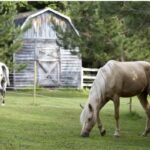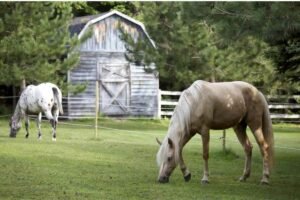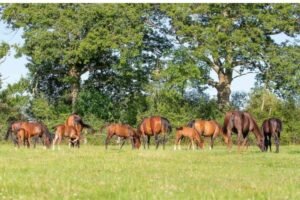
A senior performance horse retains its winter coat into early summer. Subtle topline loss becomes visible. Mild hoof sensitivity appears after spring pasture turnout. In many settings, these signs are attributed to aging. In others, confusion arises between PPID and Equine Metabolic Syndrome (EMS). Diagnostic testing may be performed without adjusting for seasonal ACTH physiology, leading to inconsistent clinical decisions.
Reframing PPID: A Neurodegenerative Endocrine Disorder
PPID, historically referred to as equine Cushing’s disease, is now understood as a progressive neurodegenerative condition characterized by loss of hypothalamic dopaminergic neurons. Dopamine normally suppresses melanotrope activity within the pars intermedia. As inhibition declines with age, melanotropes undergo hyperplasia or adenomatous enlargement and increase secretion of pro-opiomelanocortin (POMC)-derived peptides, including ACTH.
What Has Changed in PPID Diagnosis in 2026
One of the most significant advancements involves mandatory incorporation of circannual ACTH variation into interpretation. Plasma ACTH concentrations rise physiologically during late summer and early autumn in both healthy and PPID-affected horses. Multi-latitude cohort studies confirm peak elevations between late August and early October, particularly in horses aged fifteen years and older.
TRH Stimulation Testing
The TRH stimulation test has gained broader clinical application, particularly for early or equivocal cases. By stimulating pars intermedia activity, TRH enhances ACTH secretion and increases diagnostic sensitivity. In modern practice, TRH testing is strategically deployed when basal ACTH values fall within borderline ranges or when subtle clinical signs are present.
Laboratory Handling and Diagnostic Integrity
ACTH is temperature-sensitive and prone to degradation. Current best practice includes EDTA collection, immediate cooling, prompt plasma separation, and controlled transport conditions. Inadequate pre-analytical handling can distort results, making laboratory discipline central to reliable diagnosis.
PPID, Insulin Dysregulation, and Laminitis Risk
Modern research demonstrates that PPID frequently overlaps with insulin dysregulation. Although PPID is neurodegenerative and EMS is metabolically driven, aging horses often exhibit features of both. Experimental models have shown that prolonged hyperinsulinemia induces lamellar pathology via insulin-like growth factor-1 receptor signaling, independent of systemic inflammation.
Modern Management of Senior Horses
Pergolide Treatment
Pergolide mesylate remains the primary pharmacological therapy for PPID. Acting as a dopamine agonist, it reduces ACTH concentrations and improves clinical signs such as hypertrichosis and lethargy. However, pergolide does not reverse structural pituitary enlargement and does not independently eliminate laminitis risk if insulin dysregulation persists.
Nutritional and Pasture Integration
Non-structural carbohydrate intake influences insulin dynamics. Cool nights followed by sunny days increase pasture carbohydrate accumulation. When this carbohydrate volatility coincides with autumn ACTH elevation, laminitis susceptibility may intensify.
Monitoring Innovations
Continuous glucose monitoring systems are being evaluated for equine metabolic assessment and provide insight into dynamic glycemic patterns. While not yet standard for PPID diagnosis, these technologies represent a shift toward physiology-based monitoring.
Conclusion
PPID in 2026 reflects refinement rather than reinvention. The disorder is understood as a neurodegenerative pituitary dysfunction influenced by circannual ACTH physiology and frequently intersecting with insulin dysregulation. Advances in seasonal ACTH interpretation, TRH stimulation testing, laminitis pathway research, and integrated metabolic management have strengthened diagnostic precision and long-term outcomes.
Call to Action
If you manage senior horses, consult your veterinarian regarding seasonally appropriate ACTH testing and discuss whether insulin evaluation should accompany PPID screening in laminitis-prone animals. Continuing education in endocrine and metabolic science remains essential for aligning care with 2026 standards.
Frequently Asked Questions (FAQs)
Q1: Is PPID still diagnosed with ACTH testing in 2026?
A: Yes. Basal ACTH testing remains the primary diagnostic method, but interpretation requires seasonal adjustment and clinical correlation.
Q2: What has changed in TRH stimulation testing?
A: TRH testing is applied more strategically in early or equivocal cases and interpreted with seasonal awareness.
Q3: How does PPID differ from EMS?
A: PPID is a neurodegenerative pituitary disorder, whereas EMS is defined by insulin dysregulation. The two conditions can overlap and increase laminitis risk.