In this article, we’ll explore how Class IV laser therapy for horses is transforming equine rehabilitation. You’ll learn what Class IV lasers are, how they work, their proven benefits for tendon and ligament injuries, dosage guidelines, safety tips, and how veterinarians integrate this technology into structured rehabilitation programs.
What is Class IV Laser Therapy for Horses?
When a horse suffers a soft-tissue injury or chronic musculoskeletal pain, recovery can take months. Class IV laser therapy is emerging as a powerful rehabilitation tool that helps veterinarians accelerate healing, relieve pain, and restore mobility.
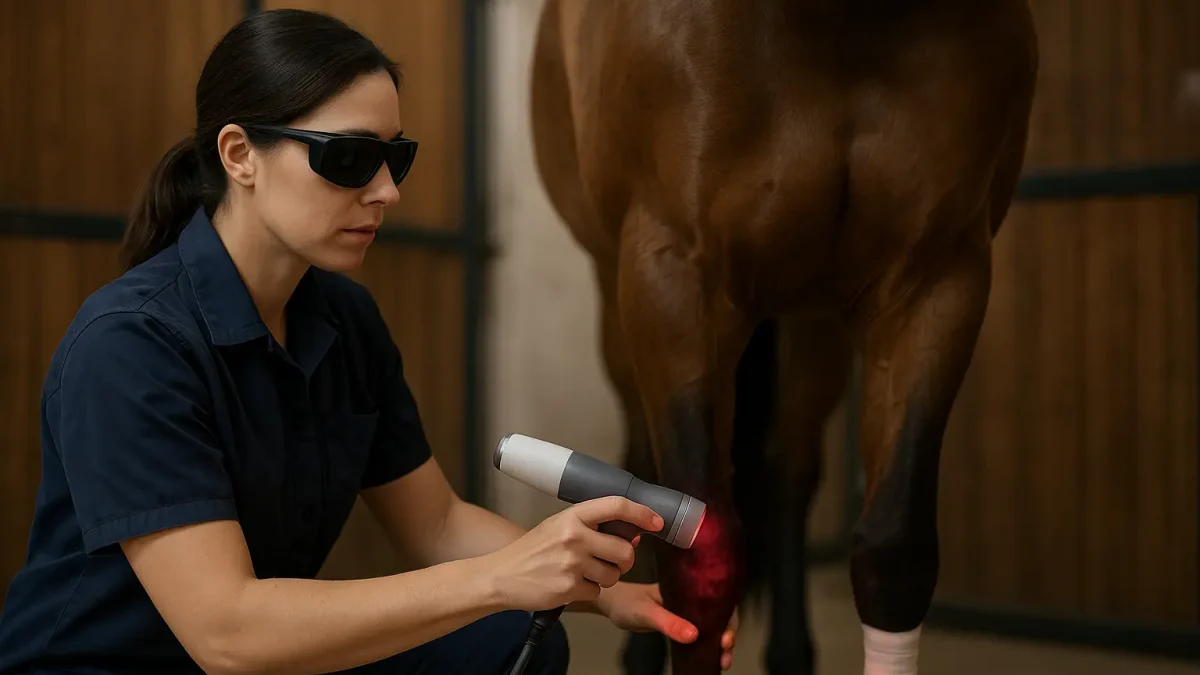
Unlike low-level “cold” lasers, Class IV devices deliver higher power—over 500 milliwatts—allowing deeper penetration into tissues like tendons and ligaments. This depth enables the light to stimulate cellular repair, improve blood flow, and reduce inflammation effectively.
According to Dr. Mathilde Pluim, PhD, of Ghent University, this deeper light energy “reaches tissues that lower-level lasers simply can’t,” making it highly effective for equine injuries.
How Class IV Lasers Support Equine Rehabilitation
Veterinarians use Class IV lasers to manage:
- Tendon and ligament injuries
- Chronic lameness and musculoskeletal pain
- Wound healing and inflammation
- Acupuncture point stimulation in needle-sensitive horses
Clinical studies show that horses treated with Class IV laser therapy experience:
✅ Reduced lameness within two weeks
✅ Faster tissue repair and improved ultrasound results
✅ Return to exercise within six weeks
✅ Full performance recovery within six months
✅ Lower reinjury rates (17–21%) compared to traditional methods (42–44%)
How It Works: The Science Behind Class IV Lasers
Laser therapy stimulates healing through photobiomodulation, where light energy activates cellular mitochondria. This process enhances oxygen use, boosts ATP production, and promotes tissue regeneration.
Key Benefits at the Cellular Level:
- Pain relief: Increased serotonin and beta-endorphins
- Reduced inflammation: Nitric oxide release and improved circulation
- Tissue repair: Enhanced fibroblast and collagen production
- Better healing: Stronger, more organized collagen fibers
Dr. Pluim’s research shows smaller lesion sizes and improved fiber alignment—leading to stronger, more durable tissue and reduced reinjury risk.
Creating a Class IV Laser Treatment Plan for Horses
Treatment depends on the injury type and healing stage:
- Acute cases: Daily or alternate-day therapy
- Chronic cases: 1–2 sessions per week
- Dosage:
- 1–5 J/cm² for superficial tissues
- 8–20 J/cm² for general musculoskeletal areas
- Up to 30 J/cm² for deep tendons or muscles
Technique Tips:
- Shave and clean the area before treatment.
- Keep the laser handpiece in motion to avoid overheating.
- Monitor tissue warmth and the horse’s comfort during therapy.
“Class IV sessions are nonpainful and well-tolerated,” says Dr. Martha Rodgers, VMD, owner of Shephard Hill Equine.
Safety & Contraindications
Class IV lasers require expert handling and protective eyewear. Avoid use over:
🚫 Tumors or thyroid glands
🚫 Pregnant uteruses
🚫 Pacemakers or implants
🚫 Eyes or growth plates in young horses
Practitioners must monitor the beam angle, distance, and tissue temperature to ensure safe, effective results.
Training and Equipment Costs
Because these lasers are powerful, veterinarians must complete specialized training covering laser physics, safety, and anatomy.
💰 Cost range: $15,000–$25,000 per unit
📘 Manufacturers provide on-site or virtual instruction
Despite the cost, professionals report faster recovery and reduced reinjury rates, making Class IV systems a valuable investment in equine care.
Setting Realistic Expectations
While Class IV laser therapy for horses enhances healing quality, it doesn’t necessarily shorten total recovery time. Its strength lies in:
- Producing stronger, more functional tissue
- Reducing pain and inflammation
- Supporting safe progression through rehabilitation phases
Takeaway
Class IV laser therapy for horses is reshaping equine rehabilitation by improving tissue quality, reducing inflammation, and promoting faster recovery. When used correctly within a structured rehab plan, it can help horses return to peak performance safely and confidently.
“High-power laser therapy enhances healing, reduces lesion size, and improves collagen alignment—something lower-level lasers can’t achieve,” says Dr. Pluim.