Warendorf equestrian destination is quickly becoming a headline phrase in international equine media, as the historic German town gains fresh recognition for its deep-rooted horse culture, world-class institutions, and tranquil countryside charm. Recent coverage highlighting Warendorf as a “charming equestrian destination” has sparked renewed interest among riders, breeders, trainers, and equestrian tourists seeking an authentic horse-centered travel experience in Europe.
Located in North Rhine–Westphalia, Warendorf has long been known as the spiritual heart of German equestrianism. What is new is the growing global appreciation of the town not only as a professional hub for elite sport and breeding, but also as a welcoming, picturesque destination for leisure riders and horse lovers from around the world.
A Town Where Horses Shape Everyday Life
Unlike many destinations that host occasional horse events, Warendorf lives and breathes equestrian culture year-round. Horses are not an add-on to the town’s identity; they are central to it. From early morning training sessions to relaxed countryside hacks in the afternoon, equine activity is woven into the daily rhythm of life.
Warendorf’s reputation is built on centuries of tradition, careful breeding programs, and structured education in riding and horsemanship. This authenticity is what sets the Warendorf equestrian destination apart from more commercialized horse tourism hotspots. Visitors are not merely spectators here; they are immersed in a living equestrian ecosystem.
Home of Germany’s Most Influential Equestrian Institutions
One of the strongest reasons behind Warendorf’s recognition lies in the concentration of nationally and internationally significant equestrian organizations based in the town.
At the center of this legacy is the German Equestrian Federation, known as FN (Deutsche Reiterliche Vereinigung). As Germany’s governing body for equestrian sport and breeding, the federation oversees disciplines ranging from dressage and show jumping to eventing and driving. Its headquarters in Warendorf firmly anchor the town as the administrative and educational core of German equestrianism.
Equally important is the historic Landgestüt Warendorf, the North Rhine–Westphalian State Stud. Established in the early 19th century, the stud has played a decisive role in shaping warmblood breeding in Germany. Stallion parades, breeding evaluations, and educational programs hosted here attract visitors from across Europe and beyond.
Together, these institutions give Warendorf unmatched credibility. For equestrians, visiting Warendorf is not just tourism; it is a pilgrimage to one of the sport’s most influential centers.
Scenic Riding Routes and Horse-Friendly Infrastructure
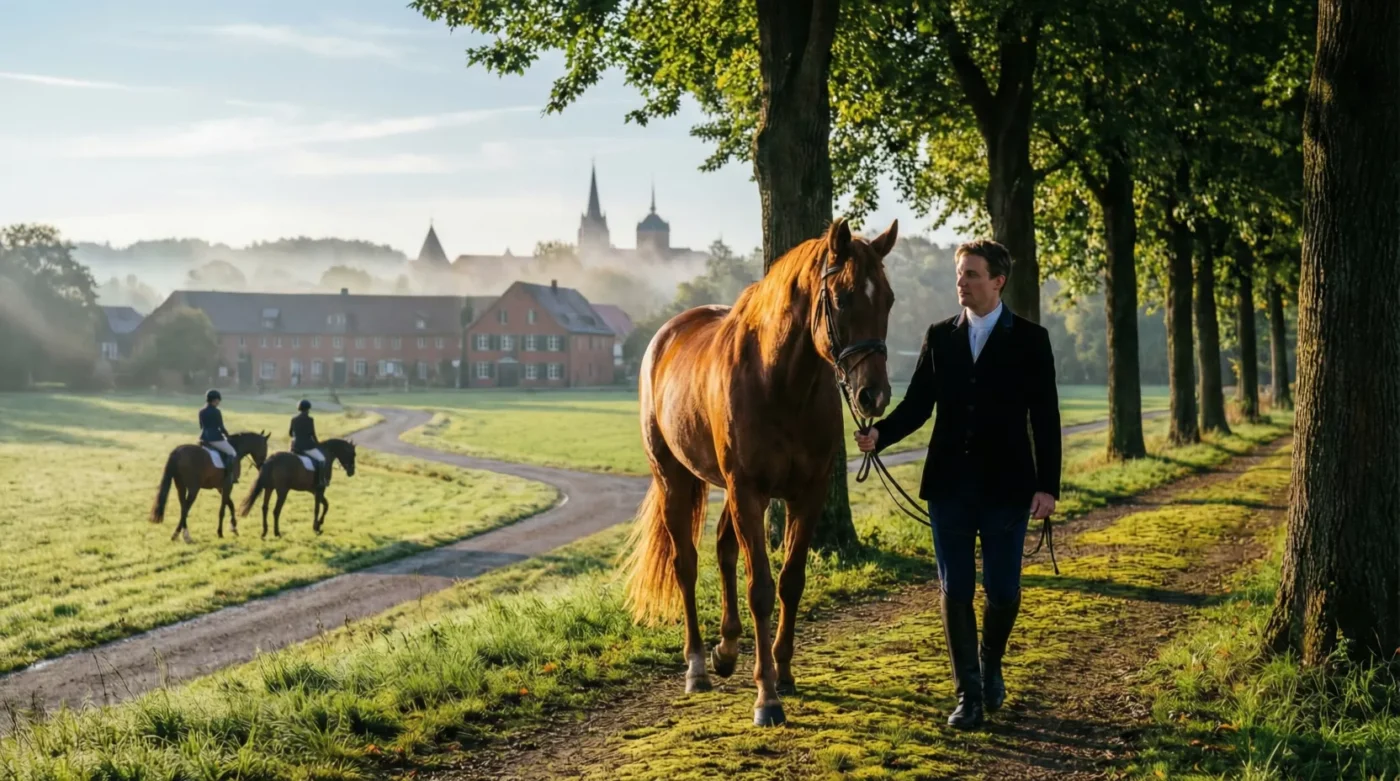
Beyond its institutions, the Warendorf equestrian destination appeal is strongly tied to its landscape. The surrounding Münsterland region offers gently rolling countryside, open fields, forest paths, and quiet farm roads that are ideal for riding.
More than 200 kilometers of well-marked bridle paths connect villages, stables, and natural landmarks, allowing riders to explore the region at a relaxed pace. These routes are designed with horses in mind, featuring safe footing, clear signage, and access points near equestrian-friendly accommodations.
This infrastructure makes Warendorf particularly attractive to leisure riders and horse-owning travelers who want to combine riding with cultural exploration. Unlike destinations focused solely on competition, Warendorf supports slow, experience-driven equestrian tourism.
A Balance Between Elite Sport and Relaxed Tourism
What makes Warendorf stand out in recent news coverage is its balance. While it remains deeply connected to elite sport, it avoids the pressure and exclusivity often associated with high-performance equestrian centers.
International riders may train in Warendorf, but so do young students, amateur enthusiasts, and visiting riders on holiday. This coexistence creates an atmosphere that is professional yet welcoming. Cafés near training facilities, open stud grounds, and public viewing opportunities allow visitors to observe top-level equestrianism without barriers.
As a result, Warendorf is increasingly seen as a destination where inspiration and relaxation meet. This dual appeal is a key reason why equine travel writers and industry observers now describe Warendorf as “charming” rather than purely technical or institutional.
Cultural Heritage Beyond the Stables
The charm of the Warendorf equestrian destination is not limited to horses alone. The town’s historic center features traditional architecture, cobblestone streets, and a peaceful small-town ambiance that contrasts with the intensity of modern competition venues.
Warendorf’s old town, local markets, and riverside walks along the Ems River provide a slower pace that appeals to accompanying family members and non-riding visitors. This broader cultural offering strengthens Warendorf’s position as a holistic travel destination rather than a niche sports location.
Local cuisine, regional festivals, and cycling routes complement equestrian activities, making the town suitable for longer stays. For many visitors, this balance is what turns a short equestrian visit into a memorable travel experience.
Growing Interest in Equestrian Tourism
Warendorf’s recent recognition also reflects a wider trend within global tourism. Equestrian travel is increasingly valued for its sustainability, cultural depth, and connection to rural landscapes. Horse-based tourism encourages longer stays, local spending, and respectful engagement with nature.
In this context, Warendorf serves as a model. Its long-standing horse culture predates modern tourism, allowing the town to develop equestrian travel organically rather than artificially. This authenticity resonates strongly with today’s travelers, who seek meaningful experiences over mass tourism.
As equestrian tourism grows across Europe, Warendorf’s name is appearing more frequently in international publications, travel guides, and equine lifestyle media. The phrase Warendorf equestrian destination is becoming a shorthand for quality, tradition, and genuine horse culture.
Education and the Future of Horsemanship
Another reason Warendorf continues to attract attention is its role in shaping the future of equestrian sport. Training programs, seminars, and certification courses held in the town influence coaching standards and welfare practices across Germany and beyond.
By hosting educational initiatives alongside competition and breeding, Warendorf reinforces its image as a place where horsemanship is taken seriously at every level. This commitment aligns well with modern discussions around horse welfare, ethical training, and sustainable sport.
For young riders and professionals alike, visiting Warendorf is an opportunity to learn not just techniques, but values that define responsible equestrianism.
International Recognition Without Losing Identity
Despite growing international interest, Warendorf has managed to retain its local character. It has not transformed into a commercialized equestrian resort. Instead, its charm lies in its consistency and restraint.
Local stables, family-run guesthouses, and traditional training methods coexist with global institutions. This balance ensures that Warendorf remains authentic, a quality that is increasingly rare and highly valued.
Industry experts suggest that this careful approach is why Warendorf’s reputation continues to grow without backlash from residents or professionals. The town’s success feels earned rather than manufactured.
Why Warendorf’s Moment Matters
The news of Warendorf being named a charming equestrian destination is more than a flattering headline. It signals a shift in how equestrian centers are evaluated. Excellence is no longer measured solely by medals and rankings, but by culture, accessibility, and experience.
Warendorf exemplifies this broader definition of success. It proves that a town can be globally influential while remaining calm, traditional, and welcoming.
As equestrian tourism and cultural travel continue to intersect, Warendorf’s profile is likely to rise even further. For riders, breeders, and horse lovers seeking a destination that reflects the soul of equestrianism, the Warendorf equestrian destination now stands firmly at the top of the list.
Conclusion
Warendorf’s recognition as a charming equestrian destination is the result of decades of dedication to horses, people, and tradition. Anchored by institutions like the German Equestrian Federation and the Landgestüt Warendorf, supported by scenic landscapes and a rich cultural setting, the town represents the best of what equestrian destinations can offer.
In a world where authenticity is increasingly rare, Warendorf remains genuine. That is why this news matters—and why Warendorf’s name will continue to resonate across the global equestrian community.