In this article, we’ll discuss what scratches in horses (pastern dermatitis) are, why they’re more common during fall, how to spot early signs, and the best prevention and treatment tips from equine dermatology experts. You’ll also find practical advice for keeping your horse’s legs clean, dry, and infection-free this season.
Scratches in Horses – Causes, Signs & Prevention
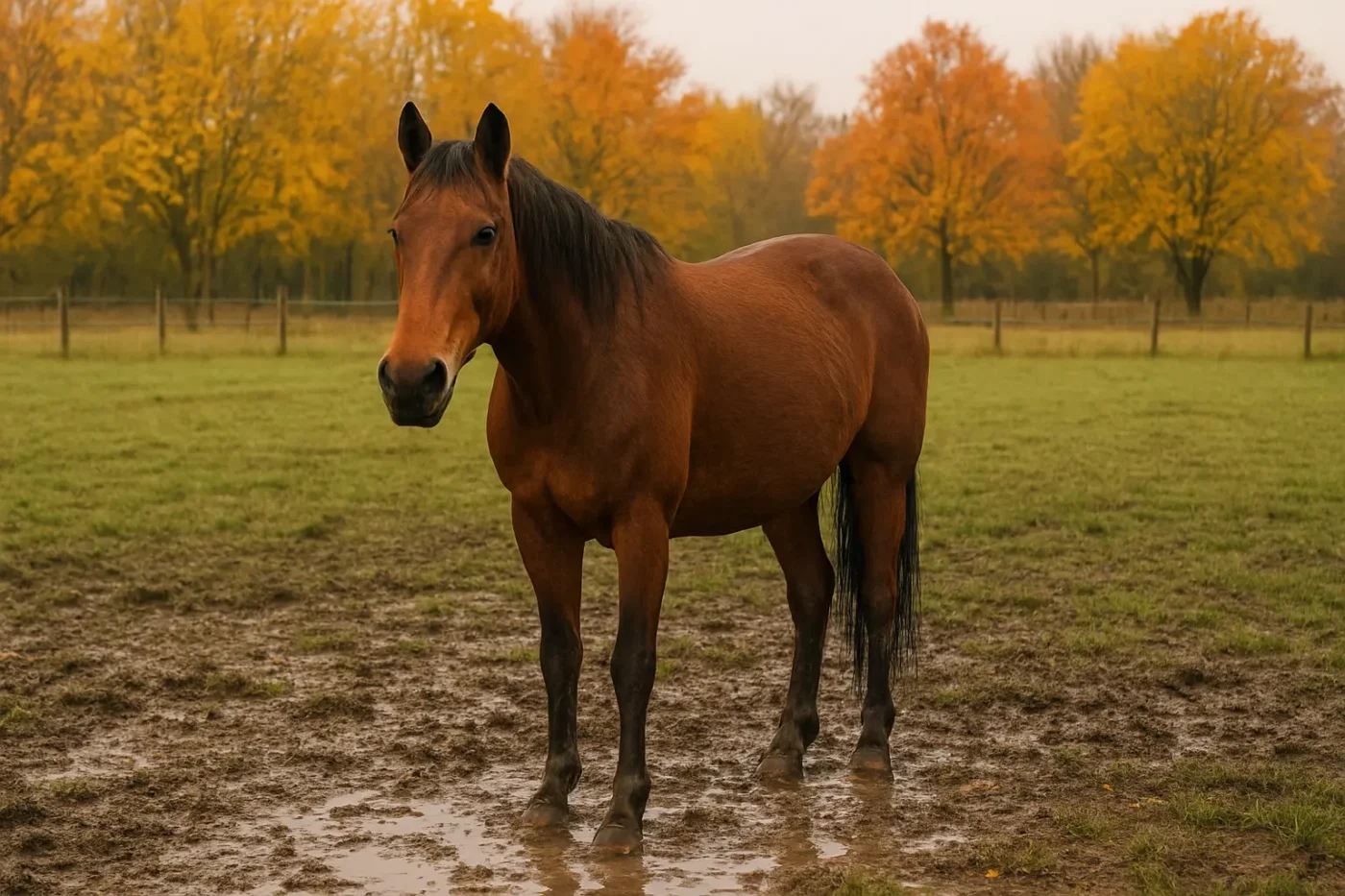
Fall’s wet and muddy weather often leads to a painful skin condition known as scratches in horses, or pastern dermatitis. This infection affects the lower legs, causing scabs, irritation, and even lameness if untreated. As temperatures drop and horses grow thicker coats, trapped moisture softens the skin, creating the perfect environment for bacteria.
“Moisture is the biggest culprit,” explains Dr. Julia Miller, DVM, Dipl. ACVD, from the Animal Dermatology Group in Louisville, Kentucky. “When mud mixes with manure, it forms a breeding ground for bacteria that can easily infect softened skin.”
Spot Scratches in Horses Early
Early detection is key. Check your horse’s pasterns and heels daily—don’t rely only on brushing. Use your hands to feel for small scabs, warmth, or crusty areas. If you notice mild irritation, gently clean with warm water and a mild antiseptic, then dry the area completely. Avoid harsh scrubbing, which can worsen inflammation.
Keep the Legs Clean and Dry
“Clean and dry is my motto,” says Dr. Miller. Horses standing in wet or muddy areas for long periods are more prone to scratches.
- Provide a dry stall during wet mornings and evenings.
- Improve pasture drainage and move hay racks or water troughs away from muddy zones.
- Add footing such as gravel or crushed stone to high-traffic areas.
If your horse has long leg hair, consider trimming it to help the skin stay dry. However, avoid clipping too short or using dull blades to prevent skin damage.
Treatment for Scratches in Horses
After cleaning and drying, apply a steroid-free topical that allows the skin to breathe.
Natural products like medical-grade manuka honey or micro-silver can help fight bacteria and form a protective barrier.
For severe infections or swelling, consult your veterinarian—some horses may need antibiotics or steroid creams for deeper infections.
👉 For more detailed treatment guidelines, check out The Horse’s Guide to Pastern Dermatitis
Prevention Tips for Horse Owners
You can’t avoid mud entirely, but you can reduce your horse’s exposure:
- Rotate turnout to drier paddocks.
- Use sand pens or arenas when pastures are soaked.
- Apply a barrier cream like diaper rash ointment before turnout (and reapply often).
Consistent management and observation are your best defense against scratches in horses.
Takeaway
Fall’s moisture and mud create ideal conditions for scratches in horses, leading to painful skin infections if ignored. Keep your horse’s legs clean, dry, and inspected daily. Early treatment with gentle topicals and improved stable management helps prevent this common seasonal problem.