Introduction
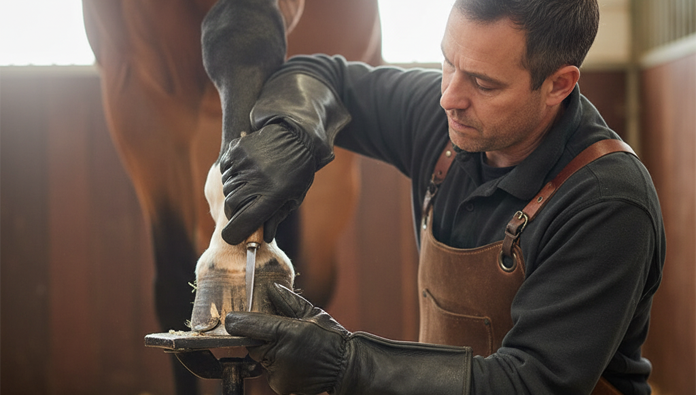
Achieving a professional-quality hoof trim requires precision, patience, and careful technique. Unlike standard trims that remove larger sections, precision trimming involves carefully taking off small, thin slivers of hoof wall to refine the shape and balance of the hoof. This guide explains the technique of precision trimming, ensuring an optimal and polished outcome while maintaining your horse’s comfort.
Why Precision Trimming Matters
Precision trimming allows farriers and horse owners to:
- Fine-tune hoof balance
- Avoid removing excessive hoof material
- Enhance the overall shape and function of the hoof
- Ensure greater accuracy and horse comfort
Step-by-Step Guide to Precision Trimming
Step 1: Preparing for Precision
- Clean and inspect the hoof carefully to identify precise areas needing refinement.
- Ensure your trimming tools, particularly hoof nippers, are sharp and well-maintained.
Step 2: Identifying Target Areas
- Carefully identify areas of slight imbalance or unevenness requiring subtle corrections.
- Marking areas with a hoof-safe marker can help guide precision trimming.
Step 3: Removing Small Slivers
- Hold the hoof nippers firmly but gently, carefully removing thin slivers of hoof wall.
- Make small incremental adjustments, pausing frequently to reassess the hoof’s shape and balance.
Step 4: Fine-Tuning with a Rasp
- Smooth and refine the hoof’s surface with a rasp, ensuring a polished finish and balanced structure.
- Regularly check from multiple angles to maintain proper hoof alignment.
Step 5: Post-Trimming Inspection
- Conduct a thorough post-trim inspection to ensure optimal hoof shape, balance, and comfort.
- Make final adjustments as necessary, ensuring all edges are smooth and even.
Common Mistakes to Avoid
- Removing excessive amounts of hoof wall in one go.
- Overlooking small details leading to subtle imbalances.
- Rushing the trimming process, leading to uneven results.
Expert Tips for Precision Trimming
- Practice frequently on hoof models or cadaver hooves to develop confidence and accuracy.
- Regularly sharpen and maintain your trimming tools for precise, effortless cuts.
- Seek professional guidance or workshops to refine your precision trimming techniques further.
Real-Life Example
Jessica, an experienced horse owner, noticed her horse’s hooves consistently had minor imperfections after trimming. By implementing precision trimming techniques, focusing on small incremental adjustments, and regularly refining her approach, she successfully achieved perfectly balanced, polished hooves, significantly improving her horse’s comfort and appearance.
Conclusion
Mastering precision trimming techniques significantly enhances the quality and accuracy of hoof care. Patiently removing small slivers for incremental refinements leads to professionally balanced hooves, ensuring horse comfort and optimal hoof health.
Call to Action (CTA)
Elevate your hoof trimming skills by regularly practicing precision techniques, engaging with educational resources, and consulting professional farriers to ensure the highest standard of hoof care.
Frequently Asked Questions (FAQs)
- What distinguishes precision trimming from regular trimming?
- How can precision trimming benefit my horse?
- Is precision trimming suitable for all horses?
- How often should precision trimming be conducted?
- Can beginners safely practice precision trimming?
References
- American Farrier’s Association, Techniques in Precision Hoof Trimming.
- Equine Veterinary Journal, Importance of Precise Hoof Trimming in Equine Health.