The LA28 Equestrian Events Timetable Confirmed announcement marks a major milestone in the countdown to the 2028 Summer Olympics. With the official schedule structure now in place, athletes, national federations, broadcasters, and fans worldwide can begin precise preparations for equestrian competition in Los Angeles.
Equestrian sport, one of the Olympic Games’ most historic disciplines, will once again feature dressage, eventing, and jumping. The confirmation of the timetable provides clarity not only about when medals will be awarded, but also how competition flow, horse welfare, and global broadcast demands will be balanced in one of the world’s most anticipated sporting events.
Los Angeles previously hosted the Olympic Games in 1984, and the return of equestrian sport to Southern California signals both continuity and evolution. The timetable reflects a modern Olympic strategy designed to maximize global reach while preserving competitive integrity.
Santa Anita Park to Host Olympic Equestrian Action
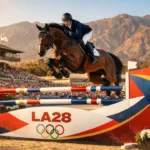
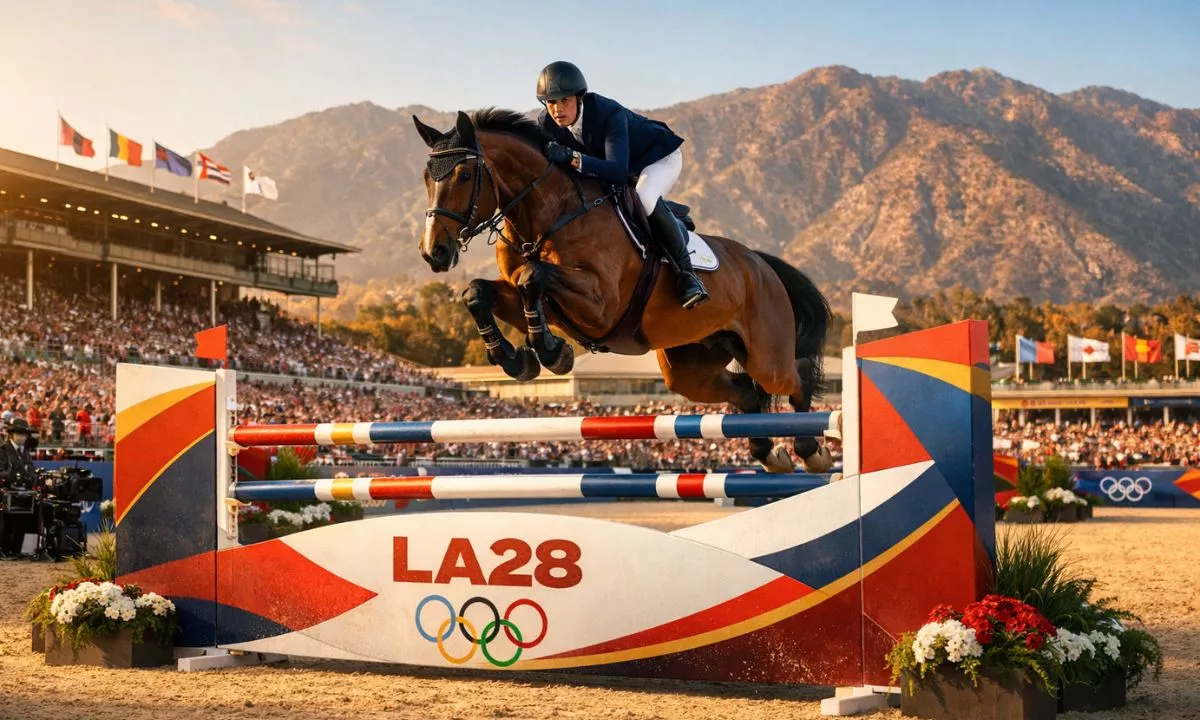
The majority of equestrian competitions during LA28 will take place at Santa Anita Park, a venue internationally recognized for its equine heritage. Nestled against the backdrop of the San Gabriel Mountains, Santa Anita offers extensive infrastructure suitable for Olympic-level equestrian sport, including competition arenas, training facilities, stabling capacity, and spectator accommodations.
Santa Anita is not new to Olympic history. It served as the equestrian venue during the 1984 Los Angeles Games, and its selection for LA28 underscores confidence in its ability to meet modern standards for athlete experience, veterinary services, and operational excellence.
While Santa Anita Park will serve as the primary competition venue, Los Angeles Memorial Coliseum remains a symbolic centerpiece of the Games. Depending on final operational plans, elements of equestrian presentation or ceremonies could be integrated within the broader Olympic footprint anchored by the Coliseum.
Dressage Schedule Structure at LA28
Dressage will unfold over approximately five days under the confirmed timetable. The discipline traditionally opens with the Grand Prix, which determines team standings and individual qualification. This is followed by the Grand Prix Special, where team medals are decided, and culminates in the Grand Prix Freestyle, the individual medal final.
The Freestyle competition is expected to occupy a premium broadcast window, given its artistic appeal and audience engagement potential. Dressage at the Olympic level blends athletic precision with musical interpretation, making it one of the most visually compelling segments of equestrian sport.
By confirming the timetable early, organizers enable riders to fine-tune their conditioning cycles and performance peaks. Olympic dressage demands exact synchronization between horse and rider, and scheduling precision is critical for optimal preparation.
Eventing Timetable and Competition Flow
Eventing, often described as the triathlon of equestrian sport, will follow its traditional three-phase format across several days. The confirmed schedule includes a dressage phase, a cross-country phase, and a concluding show jumping phase.
Cross-country day is widely anticipated to be one of the most attended equestrian sessions at LA28. Designed across varied terrain within the Santa Anita grounds, the cross-country course will test stamina, courage, and precision. The timetable allows adequate recovery windows between phases, reflecting an ongoing emphasis on horse welfare and safety.
The structure mirrors recent Olympic formats while incorporating refinements introduced in previous Games. By maintaining continuity in eventing’s competition flow, LA28 reinforces consistency for athletes accustomed to Olympic standards.
Jumping Competition Format Confirmed
Jumping will conclude the equestrian program and is expected to draw significant global viewership. The timetable confirms a progression from team qualifiers to the team final, followed by individual qualifiers and the individual medal final.
Team jumping remains one of the most dramatic Olympic spectacles, with nations competing over identical courses under high-stakes pressure. The individual final traditionally features multiple rounds to determine the ultimate Olympic champion.
By spacing qualification and medal rounds strategically, organizers aim to maintain competitive intensity while ensuring horses receive sufficient rest periods between performances.
Global Broadcast Strategy Behind the Timetable
The confirmation of the LA28 Equestrian Events Timetable reflects careful coordination with international broadcasters. Operating in Pacific Time, Los Angeles presents both opportunities and challenges for global scheduling.
European audiences represent a significant portion of equestrian viewership, particularly in dressage and jumping. As a result, certain medal events are expected to align with favorable European prime-time windows. North American evening audiences will also benefit from accessible session timing.
Asia-Pacific markets, meanwhile, may access live morning broadcasts or enhanced digital streaming options. The timetable demonstrates how Olympic sport increasingly operates within a global media ecosystem.
Horse Welfare and Climate Considerations
Summer temperatures in Southern California require careful operational planning. The confirmed timetable incorporates morning and late-afternoon competition windows to mitigate heat exposure.
Advanced cooling stations, hydration protocols, and veterinary monitoring systems will be integrated throughout the equestrian venues. Olympic equestrian sport operates under strict international welfare regulations, and LA28 has emphasized that scheduling decisions were made with animal well-being as a priority.
Longer recovery intervals between phases, especially in eventing, demonstrate a deliberate approach to safeguarding equine athletes.
Medal Allocation and Olympic Significance
Equestrian sport at LA28 will award six medal sets: team and individual medals in dressage, eventing, and jumping. The confirmed timetable preserves this structure, ensuring continuity with previous Olympic editions.
Olympic equestrian medals carry profound significance. For riders, qualification alone represents years of preparation, logistical coordination, and international competition. For horses, the Olympic stage represents the pinnacle of elite training and partnership.
The LA28 timetable provides a roadmap for federations planning their qualification campaigns through world championships and continental events leading up to 2028.
Operational Readiness and Long-Term Planning
The announcement of the LA28 Equestrian Events Timetable Confirmed signals operational readiness within the LA28 Organizing Committee. Olympic-scale logistics require synchronized planning across transportation, quarantine procedures, accreditation systems, and venue readiness.
Equestrian sport presents unique complexities compared to other Olympic disciplines. Horses must travel internationally under strict veterinary regulations. Stabling, feed supply chains, and acclimatization strategies must be aligned precisely with competition days.
By locking in the competition structure years in advance, LA28 reduces uncertainty and enhances strategic planning across the global equestrian community.
Comparison to Recent Olympic Games
Recent Olympic cycles introduced adjustments to team sizes and qualification rules in equestrian sport. The LA28 timetable builds upon these structural refinements without introducing disruptive format changes.
Stability in scheduling ensures that riders and federations can draw lessons from previous Games while adapting to Los Angeles’ environmental and geographic context. The continuity reinforces fairness and predictability in Olympic preparation.
What This Means for Athletes and Fans
For athletes, confirmation of the timetable marks the transition from abstract planning to concrete preparation. Training cycles, competition simulations, and peak-performance conditioning can now align precisely with projected Olympic dates.
For fans, the announcement builds anticipation. Equestrian sport combines athletic excellence with deep tradition, and LA28 promises a visually striking backdrop for Olympic competition.
Santa Anita Park’s mountain setting, combined with Olympic-scale production and global broadcast innovation, positions equestrian events among the most picturesque competitions of the Games.
The Road to Los Angeles 2028
With venues confirmed and the competition structure finalized, the equestrian world now shifts focus to qualification pathways and preparatory events. Test competitions at Santa Anita are expected to refine operational elements before the Games begin.
As the Olympic countdown continues, the confirmed timetable stands as a foundational milestone. It reflects collaboration among organizers, international governing bodies, broadcasters, and athlete representatives.
The LA28 Equestrian Events Timetable Confirmed announcement is more than a scheduling update. It represents the framework upon which Olympic dreams will be built over the next several years.
Los Angeles is preparing to welcome the world once again, and equestrian sport will occupy a central role in that global celebration of athletic excellence.