introduction
When selecting farrier tools, especially hoof knives, sharpness is crucial. A dull hoof knife can cause uneven trimming, increase difficulty, and risk injury to both horse and handler. But how can you reliably determine hoof knife sharpness before purchasing? This article provides practical methods to test sharpness, helping you choose the best hoof knife and avoid poor-quality tools, ensuring optimal hoof care and safety.
Why Sharpness Matters for Hoof Care
A sharp hoof knife significantly reduces the effort needed during trimming, improving precision, efficiency, and promoting safer trimming practices. Sharp blades allow clean, accurate cuts, reducing trimming time and minimizing injury risk.
Practical Methods to Test Hoof Knife Sharpness
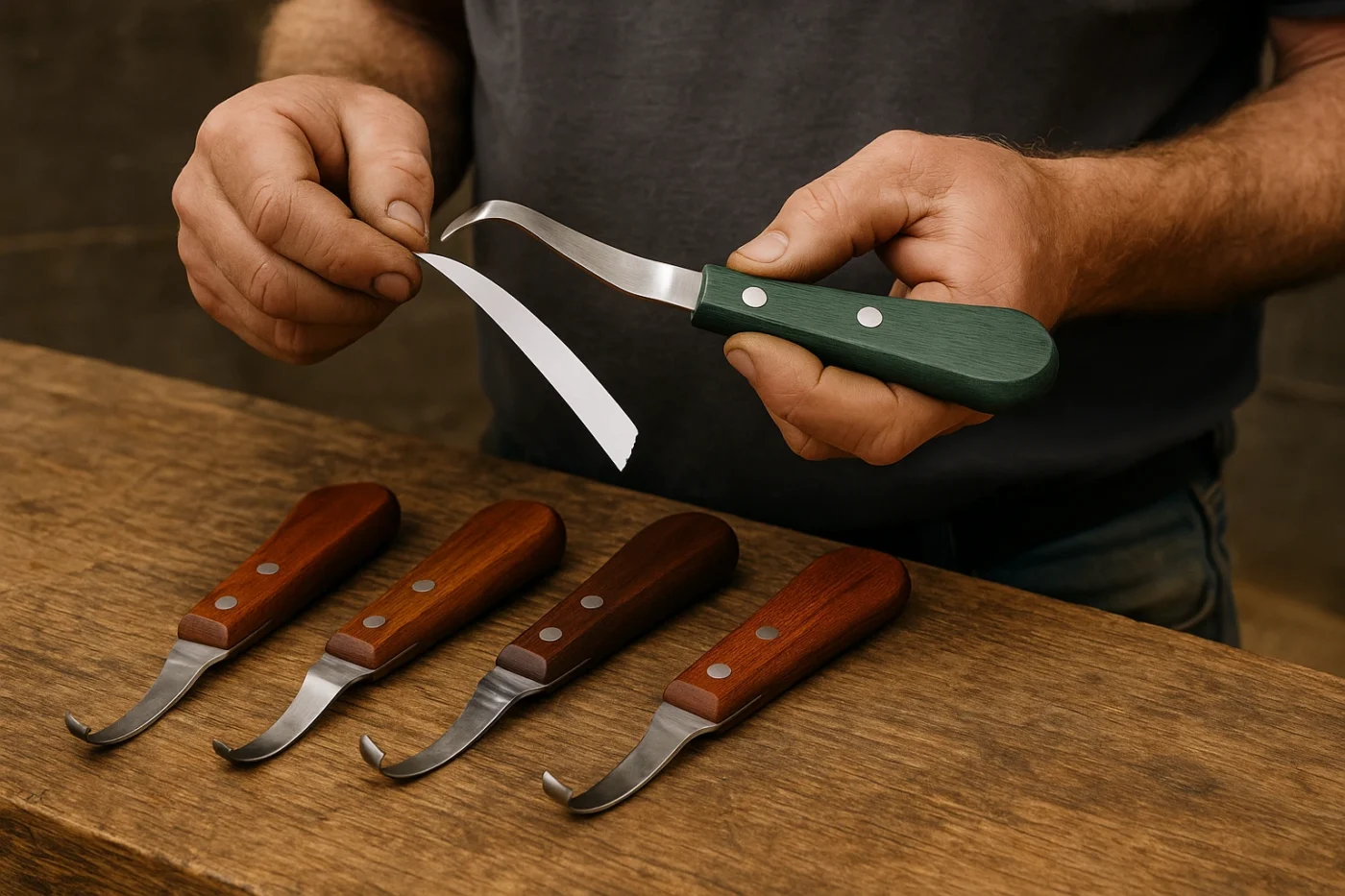
- Paper-Cutting Test
To perform this test, hold a piece of paper vertically and attempt to slice it from the edge using the hoof knife blade. A sharp knife will slice cleanly through without tearing or bending the paper. This method provides immediate visual feedback on blade quality and is quick and straightforward.
- Thumbnail Test
Gently rest the blade edge against your thumbnail at a slight angle and check if it catches without applying pressure. A sharp edge easily catches the thumbnail, providing a safe, tactile assessment of blade sharpness.
- Visual Edge Inspection
Inspect the hoof knife blade closely under good lighting, ideally using a magnifying glass for enhanced accuracy, looking for uniformity, smoothness, and the absence of visible nicks or dull spots. A smooth, reflective edge indicates good sharpness. This visual check quickly helps eliminate poor-quality blades.
- Shaving Test (Advanced Users)
Carefully attempt to shave a few hairs off your forearm or the back of your hand. A sharp knife should effortlessly remove hairs. This test is highly accurate but should only be performed by experienced users with extreme caution due to potential injury risks. Ensure confidence and safety precautions before attempting.
What if the Knife Fails the Test?
If the knife fails these tests, consider if you can sharpen it effectively yourself. Regularly testing sharpness after purchase ensures ongoing optimal performance. High-quality hoof knives typically arrive pre-sharpened; failing significantly may indicate inferior materials or craftsmanship. Equine Care ensures rigorous quality checks for sharp, reliable tools.
Additional Tips for Ensuring Hoof Knife Sharpness
When assessing sharpness, ask reputable sellers if blades are pre-sharpened. Purchase from brands known for quality hoof knife materials, like carbon steel or high-grade stainless steel. Ensure proper storage in dry conditions and consider protective covers to maintain sharpness. Always perform sharpness tests safely by wearing protective gloves or using careful handling techniques to avoid injury.
When assessing sharpness, ask reputable sellers if blades are pre-sharpened. Purchase from brands known for quality hoof knife materials, like carbon steel or high-grade stainless steel. Always perform sharpness tests safely by wearing protective gloves or using careful handling techniques to avoid injury.
Conclusion
Testing a hoof knife’s sharpness before purchase saves time, money, and ensures safer, more efficient hoof trimming. Using simple tests like paper cutting, thumbnail catching, visual inspection, or shaving helps you confidently invest in the best hoof knife tailored to your hoof care needs.
Take Home Message
Explore Equine Care’s range of professionally pre-sharpened hoof knives and farrier tools, designed for optimal hoof care, performance, and reliability.
FAQs
How often should I test my hoof knife’s sharpness?
Regularly, before each use, to ensure optimal performance.
Can a dull hoof knife be sharpened effectively?
Yes, most quality knives can be sharpened multiple times effectively.
Is the shaving test safe?
It is accurate but should only be attempted by experienced handlers due to injury risks.
Do all hoof knives come sharpened from the store?
Most reputable brands provide pre-sharpened blades, but it’s best to verify this before purchase.
Does blade material affect sharpness?
Yes, carbon steel generally stays sharper longer than stainless steel but requires more maintenance.