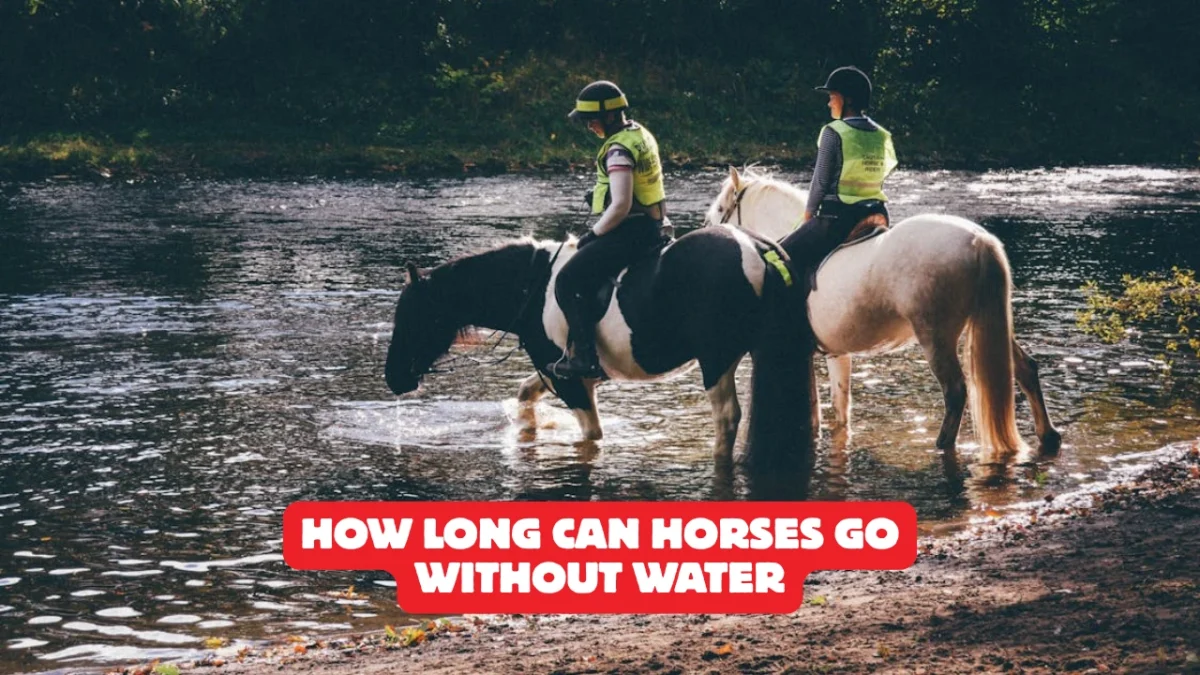
Water is not simply a comfort for horses, it is a biological necessity that governs nearly every function in their body. From digestion and temperature regulation to joint lubrication and nutrient absorption, every system in a horse’s body depends on adequate hydration. Yet dehydration in horses remains one of the most underestimated and preventable threats horse owners face.
So, how long can a horse go without water? Most horses begin experiencing dangerous physiological consequences within 24 to 48 hours of water deprivation. In hot weather, after strenuous exercise, or in horses that are already unwell, serious harm can begin in as little as 6 to 12 hours.
This guide covers everything you need to know from daily water requirements and seasonal risks to recognizing dehydration symptoms, understanding why horses refuse water, and knowing exactly when to call your veterinarian.
Quick Summary — What Every Horse Owner Should Know
- 24–48 hours is the critical window — horses begin facing life-threatening consequences within this timeframe without water, and gut complications can start in as little as 6–12 hours
- An average adult horse needs 25 to 55 litres of water per day — more in heat, during exercise, and for lactating mares
- Winter is the most underestimated risk season — horses naturally drink less when water is cold, making heated water sources and daily monitoring essential
- The skin pinch test and capillary refill time (CRT) test are the two fastest at-home tools to assess hydration — every horse owner should know how to perform both
How Long Can a Horse Go Without Water?
Under normal resting conditions in mild weather, a healthy adult horse can survive approximately 48 to 72 hours without water before facing life-threatening consequences. However, survival is not the same as safety, significant organ stress, impaired gut motility, and elevated colic risk begin far sooner than that.
Research and clinical veterinary practice consistently show that 12 to 24 hours without water is enough to compromise a horse’s digestive function. The equine gastrointestinal tract depends on water to move food through the system. When water intake drops, the intestinal contents dry out and slow down, dramatically increasing the risk of impaction colic one of the leading causes of equine death.
Key Factors That Affect How Long a Horse Can Survive Without Water
No two horses are identical, and several variables influence how quickly dehydration becomes dangerous:
- Body size and weight: Larger horses have greater total water volume in their bodies but also higher baseline needs. A 1,200 lb horse needs significantly more water than a 900 lb pony.
- Ambient temperature and humidity: Heat accelerates fluid loss through sweating and respiration. In summer, the risk window shrinks dramatically.
- Activity level: A horse in heavy work can lose 10 to 15 litres of fluid per hour through sweat alone, making immediate rehydration critical.
- Diet composition: Horses on dry hay diets have far greater water needs than those on fresh pasture, which can contain up to 80% moisture.
- Health status: Horses with diarrhea, fever, or other illnesses lose fluids faster and have less physiological reserve.
- Age: Foals and senior horses are more vulnerable to dehydration and deteriorate more quickly.
Important: Even a horse showing no visible symptoms may be in the early stages of dehydration. By the time obvious signs appear, the horse is already in a compromised state. Prevention and early detection are always preferable to treatment.
How Much Water Should a Horse Drink a Day?
Understanding how much water a horse needs daily is foundational to preventing dehydration. The answer varies based on body weight, diet, environment, and workload, but the general veterinary guideline is that horses need approximately 5% of their body weight in water per day.
Daily Water Requirements by Horse Type
| Horse Type / Condition | Estimated Daily Water Intake |
| Resting adult horse (mild weather) | 25–30 litres (5.5–6.5 gallons) |
| Lightly working horse | 30–40 litres (6.5–9 gallons) |
| Moderately to heavily working horse | 45–55 litres (10–12 gallons) |
| Lactating mare | 50–65 litres (11–14 gallons) |
| Pregnant mare (late gestation) | 35–45 litres (7.5–10 gallons) |
| Horse in hot/humid conditions | 55–70+ litres (12–15+ gallons) |
| Horse on all-dry hay diet | Up to 20% higher than baseline |
How Much Water Does a Horse Drink Per Day in Litres?
On average, a healthy adult horse in moderate conditions will drink between 25 and 55 litres per day. A commonly used benchmark is approximately 1 litre per 50 kg of body weight under mild conditions meaning a 500 kg horse needs roughly 25 litres at minimum.
It is important to note that fresh pasture grass contributes significantly to daily water intake. Grass can contain 60–80% water by weight, meaning a horse spending several hours grazing may consume several litres of water passively through their diet. Conversely, horses fed exclusively dry hay will need more supplemental water.
How Long Can a Horse Go Without Food and Water?
Many horse owners ask this question when facing emergencies — a horse that has escaped, a natural disaster, or an animal found in neglect situations. The distinction between food and water deprivation is critical.
Water is far more immediately critical than food.
- Without food but with access to water, a horse can survive for several days to a few weeks, depending on body condition and health. However, prolonged fasting creates its own serious risks, including hyperlipemia (particularly in ponies and donkeys) and muscle wasting.
- Without water but with food, a horse’s condition deteriorates within 24 to 48 hours. Dry feed without water accelerates dehydration by drawing moisture into the gut to aid digestion.
- Without both food and water, organ failure can begin within 24 to 72 hours, depending on environmental conditions, the horse’s size, and health status.
In emergency situations involving both food and water deprivation, veterinary attention should be sought immediately, even if the horse appears functional on the surface. Internal damage, electrolyte imbalances, and impaction colic may not be visibly apparent.
How Long Can a Horse Go Without Water in Winter?
Winter presents a uniquely dangerous and often overlooked hydration risk. Horse owners understandably focus on blankets, shelter, and forage during cold months but water intake in winter is just as critical as in summer, and arguably more difficult to manage.
Why Winter Dehydration Is a Hidden Danger

Horses instinctively drink less when water is very cold. Research from the University of Pennsylvania’s School of Veterinary Medicine found that horses drink significantly more water when it is offered at temperatures between 7°C and 18°C (45°F and 65°F) compared to near-freezing temperatures. When only icy or very cold water is available, horses will voluntarily reduce their intake sometimes to dangerously low levels.
Additionally, horse owners are less visually attuned to dehydration in winter. Horses are not visibly sweating, temperatures seem forgiving, and the urgency feels lower. Yet the risks are just as real:
- Impaction colic spikes in winter months, largely due to inadequate water intake combined with high dry hay consumption
- Frozen water sources can leave horses without any access for hours without the owner realising
- Older horses with dental issues may struggle to drink cold water
Minimum Winter Water Requirements For Horses
Even in cold weather, a resting adult horse needs a minimum of 20 to 30 litres per day. This threshold should be considered the floor any horse in work, lactating, pregnant, or dealing with illness will need considerably more.
Practical Winter Hydration Tips
- Install heated water buckets or tank heaters to maintain water temperature above 7°C
- Check water sources twice daily for ice formation
- Offer warm water (around 10–15°C) — studies show horses prefer and drink more of it in cold weather
- Add a small amount of loose salt to daily feed to stimulate natural thirst
- Soak hay or grain with warm water to increase passive fluid intake
- Monitor manure closely — dry, hard, or infrequent manure in winter is a strong early warning sign
Common Causes of Horse Dehydration
Understanding why dehydration happens is the first step in preventing it. While insufficient water access is the most obvious cause, many cases of horse dehydration are more nuanced.
1. Inadequate or Inconsistent Water Access
The most preventable cause. Horses should have access to clean, fresh water at all times — not just at feeding times. A horse that is thirsty when it reaches the trough will often drink quickly, which may not fully compensate for earlier fluid deficit.
2. Water Quality and Taste Refusal
Horses are highly sensitive to the taste and smell of water. Common triggers for refusal include:
- Chlorinated municipal water (especially when travelling to a new area)
- Algae growth in outdoor troughs
- Contamination from feed, manure, or insects
- Strong mineral content (iron-heavy well water)
- A change in water source during travel or competition
3. Hot Weather and Sweating
Horses are large animals that generate significant body heat during exercise. Sweating is the primary cooling mechanism, but equine sweat contains high levels of electrolytes — particularly sodium, potassium, and chloride. This means horses lose not just water but the minerals needed to absorb and retain it, compounding dehydration.
4. Travel and Trailering Stress
Transport is a commonly overlooked dehydration trigger. Many horses reduce or refuse water intake during and after trailering due to stress, unfamiliar water sources, and reduced opportunity to drink. Even a 3–4 hour trailer journey in warm weather can leave a horse measurably dehydrated.
5. Illness and Fever
Fever, diarrhoea, and systemic illness all accelerate fluid loss. A horse with a fever of even 39.5°C (103°F) can lose significantly more fluid than normal through respiration and increased metabolic activity.
6. Electrolyte Imbalance
Electrolytes play a critical role in regulating thirst and enabling water absorption at the cellular level. A horse with depleted electrolytes may drink water but be unable to properly retain it. This is particularly relevant for horses in heavy work or competing in endurance events.
7. Pain, Dental Problems, or Physical Discomfort
Horses with mouth sores, dental pain, or injuries to the lips, tongue, or throat may drink less because it is physically uncomfortable. This cause is frequently missed during routine observation.
Horse Dehydration Symptoms: How to Spot It Early
Early identification of dehydration can prevent a manageable situation from becoming a veterinary emergency. Every horse owner should be familiar with the following assessments and warning signs.
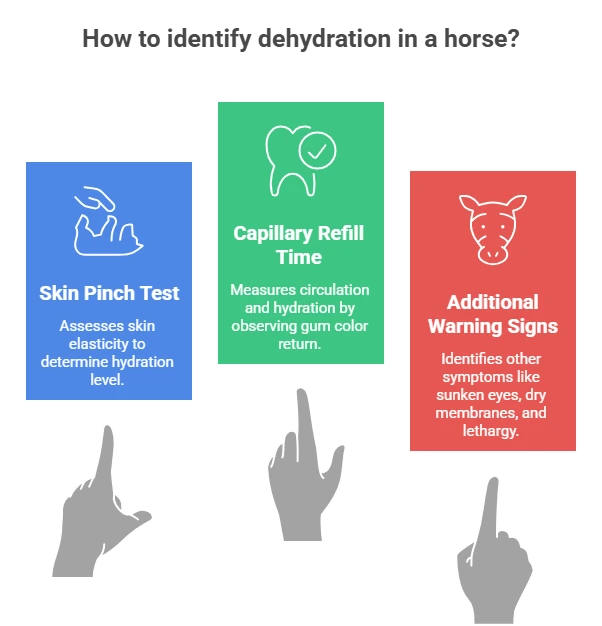
The Skin Pinch Test (Skin Turgor Test)
This is the most widely used field test for hydration status.
How to perform it:
- Stand beside your horse and locate a fold of skin on the neck or shoulder
- Gently pinch a section of skin between your thumb and forefinger, lift it slightly, and release
- Observe how quickly the skin returns to its normal flat position
Interpreting results:
- Under 1 second: Well-hydrated
- 1 to 2 seconds: Mildly dehydrated — monitor closely and offer water
- 2 to 4 seconds: Moderately dehydrated — take action, consider veterinary contact
- Over 4 seconds: Severely dehydrated — contact your veterinarian immediately
Note: Skin turgor can be less reliable in older horses or very lean horses due to reduced skin elasticity unrelated to hydration.
Capillary Refill Time (CRT) Test
This test measures circulation and hydration together.
How to perform it:
- Lift your horse’s upper lip to expose the gum above the front teeth
- Press your thumb firmly against the gum for 2 seconds, then release
- Observe how quickly the blanched (white) area returns to the normal pink colour
Interpreting results:
- Under 2 seconds: Normal hydration and circulation
- 2 to 3 seconds: Mildly compromised — hydration needed
- Over 3 seconds: Potentially serious — contact a vet
Additional Warning Signs of Dehydration
Beyond the two primary tests, the following symptoms indicate a horse is dehydrated:
- Sunken or dull eyes — loss of the normal bright, moist appearance
- Dry, tacky mucous membranes — gums that feel sticky rather than slick
- Reduced or dark-coloured urine — healthy horses urinate regularly with pale yellow urine
- Dry, firm, or infrequent manure — a key indicator of insufficient gut water
- Lethargy and weakness — reduced energy even when undisturbed
- Elevated resting heart rate — normal is 28–44 beats per minute
- Reduced gut sounds — absent or reduced borborygmi (gut noises) when listening with a stethoscope
- Loss of appetite — particularly for water-rich feed like fresh grass or soaked hay
- Dry coat or poor skin quality — longer-term sign of chronic under-hydration
How Can I Tell If My Horse Is Hydrated?
Healthy hydration has its own clear markers. Knowing what “normal” looks like for your specific horse is the most powerful diagnostic tool you have.
Signs of a Well-Hydrated Horse
- Skin snaps back immediately in the pinch test
- Pink, moist, slick gum tissue with CRT under 2 seconds
- Regular urination — typically 4 to 7 times per day, pale yellow
- Consistent, well-formed manure with slight moisture
- Normal energy levels and interest in food
- Clear, bright eyes without sunken appearance
- Normal gut sounds on both sides of the abdomen
Building a Hydration Monitoring Routine
The best way to catch dehydration early is to establish your horse’s individual baseline:
- Perform the skin pinch and CRT test regularly when your horse is healthy, so you know their personal “normal”
- Monitor daily water intake — automated systems or bucket checks give you volume data
- Observe urination frequency as part of daily stall or paddock checks
- Note manure quality consistently — changes in firmness or frequency are early warning signals
- Keep records during travel, competition, and seasonal changes when risk increases
Why Is My Horse Not Drinking Water?
A horse that refuses or significantly reduces water intake is a horse at immediate risk. Identifying the cause quickly allows for targeted intervention.
Water Temperature
This is one of the most common and overlooked causes. Horses are highly selective about water temperature. Most horses prefer water between 10°C and 20°C (50°F to 68°F). Ice-cold water in winter and sun-warmed stagnant water in summer are both commonly refused.
Change in Water Source or Location
Horses are creatures of habit. Moving to a new barn, attending a show, or trailering to a new location often results in water refusal simply because the water smells or tastes different. This is why experienced equestrians recommend bringing water from home when travelling, or gradually mixing home water with the destination supply.
Contamination, Algae, or Poor Water Quality
Horses will refuse water that contains algae, has been contaminated by feed or droppings, contains high mineral levels, or has sat stagnant. Troughs should be cleaned at least weekly and more frequently in summer. Automatic waterers should be checked for debris and biofilm regularly.
Dental Pain or Oral Discomfort
A horse with sharp enamel points, fractured teeth, mouth ulcers, or tongue injuries may avoid drinking because of pain associated with the movement of lips and tongue against the water surface. If a horse has recently had dental work or is overdue for a dental float, this is worth considering. Annual dental examinations are essential for this reason.
Illness or Systemic Disease
Horses with colic, respiratory infections, neurological conditions, or metabolic disorders may lose the thirst drive or simply feel too unwell to drink. A horse that has not drunk for over 12 to 18 hours alongside other symptoms warrants a veterinary call.
Stress and Environmental Factors
Horses in new environments, recently separated from herdmates, or exposed to loud or unpredictable stimuli may refuse food and water temporarily. While often self-resolving, it should be monitored closely and addressed if it persists beyond a few hours.
Bit or Equipment-Related Discomfort
Horses returning from riding with a poorly fitted bit, bridle, or noseband that has caused soreness may temporarily refuse water due to oral sensitivity. Check the mouth and tongue after work sessions if water refusal is observed post-exercise.
What Can I Do If My Horse Is Dehydrated?
The appropriate response to dehydration depends on its severity. Mild cases can often be managed at home with prompt action; moderate to severe cases require veterinary intervention.
Mild Dehydration: At-Home Management
If the skin pinch test shows a delay of 1 to 2 seconds and your horse is still alert and interested in the environment, try the following steps immediately:
- Offer fresh, clean water at an appropriate temperature not ice cold
- Add electrolytes to feed or water to stimulate thirst and support fluid absorption. Use equine-specific electrolyte formulations, not human sports drinks.
- Wet the hay or soak feed in water to increase passive fluid intake
- Move the horse to a cool, shaded area if heat is a contributing factor
- Offer hay before grain fibre helps retain water in the gut
- Monitor closely for the next 2 to 4 hours and reassess with the pinch test
Moderate to Severe Dehydration: When to Call the Vet
Contact your veterinarian without delay if:
- Skin turgor test shows a delay of 3 seconds or more
- CRT is over 2.5 to 3 seconds
- The horse is showing signs of colic (pawing, rolling, looking at flanks)
- The horse is trembling, stumbling, or unresponsive
- There has been no water intake for over 24 hours
- The horse has been in extreme heat or heavy work without water access
Veterinary treatment for moderate to severe dehydration typically involves intravenous (IV) fluid therapy the fastest and most reliable method of restoring fluid and electrolyte balance. In some cases, nasogastric (stomach tube) administration of fluids and electrolytes is also used.
Do not attempt to force large amounts of water into a severely dehydrated horse. Rapid, large-volume oral intake can cause further complications. Allow small, regular amounts and let the veterinarian guide more aggressive rehydration.
The Role of Electrolytes
Electrolytes primarily sodium, chloride, potassium, and magnesium — are the minerals that regulate fluid balance at the cellular level. A horse that sweats heavily or has experienced illness-related fluid loss will need electrolyte replacement alongside water.
Electrolyte supplementation is appropriate when:
- The horse has worked hard or sweated significantly
- The horse is recovering from diarrhoea or fever
- You are preparing for or returning from travel or competition
- You want to stimulate drinking in a reluctant horse
Always ensure the horse has access to water before and after providing electrolytes — offering them without water access can worsen dehydration by drawing fluid out of the tissues.
How to Prevent Horse from Dehydration
Prevention is always more effective, less stressful, and less expensive than treatment. The following strategies, when applied consistently, dramatically reduce dehydration risk across all seasons and conditions.
Water Access Best Practices
- Provide unrestricted access to clean, fresh water at all times not just at feeding times
- A single horse requires a minimum of a 100 to 150-litre water source that is checked and topped up at least twice daily
- For multiple horses, ensure one water source per three to four horses to prevent dominant animals from blocking access
- Position water away from feed areas to reduce contamination
- Clean troughs and buckets weekly at minimum, more often in hot weather
- Consider automatic waterers for convenience but check them daily for blockages, as horses cannot tell you when water has stopped flowing
Seasonal Hydration Management
Summer:
- Ensure shade and cool water are always available
- Offer water during and after exercise, not just after
- Add loose white salt (not iodised) to daily feed — 30 to 60 grams per day stimulates natural thirst
- Consider electrolyte supplementation for horses in heavy work
Winter:
- Install heated water buckets or trough heaters to maintain water above 7°C
- Check water sources morning and night for ice coverage
- Offer warm water alongside or instead of cold water
- Increase roughage (hay) intake — this also increases the horse’s natural thirst
Hydration During Exercise and Travel
Exercise:
- Allow your horse to drink small amounts before, during, and after work sessions
- The old advice to withhold water before exercise is outdated and unsupported by modern veterinary science voluntary drinking during work is safe and beneficial
- After heavy work, offer water gradually and monitor for excessive, panicked drinking (which can indicate prior dehydration)
Trailering:
- Offer water every 2 to 3 hours during journeys
- Bring water from home for the first 24 to 48 hours at destination
- Use electrolyte paste or supplements before and after long journeys
- Ensure the trailer is well-ventilated to reduce heat stress
Diet Adjustments for Hydration
- Soak hay for horses that are reluctant drinkers or recovering from dehydration
- Feed a forage-based diet rather than high-grain — fibre holds moisture in the gut
- Avoid excess protein supplementation, which increases the need for water to process metabolic waste
- Provide a loose salt lick or free-choice mineral block — this consistently encourages adequate drinking in horses that have the option
Daily Monitoring as Preventive Medicine
The most powerful preventive tool is attentive, consistent observation. Make it a daily habit to:
- Estimate or measure water consumed in 24 hours
- Observe urination frequency and colour
- Assess manure quality
- Check mucous membranes briefly during grooming
- Note any changes in energy, appetite, or behaviour
Horses cannot tell you they are thirsty. The responsibility for their hydration status rests entirely with their caregiver.
FAQ: Frequently Asked Questions
How long can a horse go without water?
A horse can begin experiencing serious health consequences within 24 to 48 hours of water deprivation under normal conditions. In hot weather, after exercise, or in ill horses, dangerous dehydration can develop in as few as 6 to 12 hours.
How long can a horse go without water in winter?
Even in cold weather, a horse should not go more than 12 to 24 hours without drinking. Winter dehydration is a significant cause of impaction colic. Horses drink less when water is very cold, so maintaining heated water sources is essential.
How much water does a horse drink per day in litres?
The average adult horse drinks 25 to 55 litres per day depending on size, diet, weather, and workload. Lactating mares and hard-working horses may need significantly more.
How long can a horse go without food and water?
Water is the more critical requirement. Without water, a horse’s condition deteriorates dangerously within 24 to 48 hours. Without food but with water access, horses can survive longer but face serious risks including impaction and metabolic disorders.
What are the first signs of dehydration in horses?
Early signs include reduced skin elasticity (slow skin pinch test result), slightly tacky gums, reduced urination, firmer-than-normal manure, and mild lethargy. These can appear before the horse shows more obvious distress.
Can a horse drink too much water?
Yes, though it is uncommon. Polydipsia (excessive drinking) can indicate metabolic disorders such as Cushing’s disease (PPID) or diabetes insipidus. Any sudden, significant change in drinking habits either up or down warrants a veterinary evaluation.
Does grass count toward a horse’s daily water intake?
Yes. Fresh pasture grass contains up to 80% water by weight, contributing meaningfully to daily fluid intake. However, it should never be assumed to fully replace free access to drinking water.
How do I get my horse to drink more water?
Add loose salt (30–60 grams) to daily feed to stimulate thirst. Offer water at a comfortable temperature (10–20°C). Ensure water is fresh and clean. Consider equine electrolyte supplements during high-risk periods. Soaking feed and hay also increases passive fluid intake.
Is it normal for horses to drink less in winter?
Horses naturally reduce their water intake slightly in cold weather, but significant reduction is not safe and is a primary cause of winter colic. If your horse is drinking noticeably less than 20–25 litres per day in winter, intervention is warranted.
When should I call a vet for a dehydrated horse?
Call your veterinarian if your horse has not drunk in over 18 to 24 hours, shows a skin pinch test delay of more than 3 seconds, has a CRT over 3 seconds, is showing signs of colic or distress, or appears weak and unresponsive.