Introduction
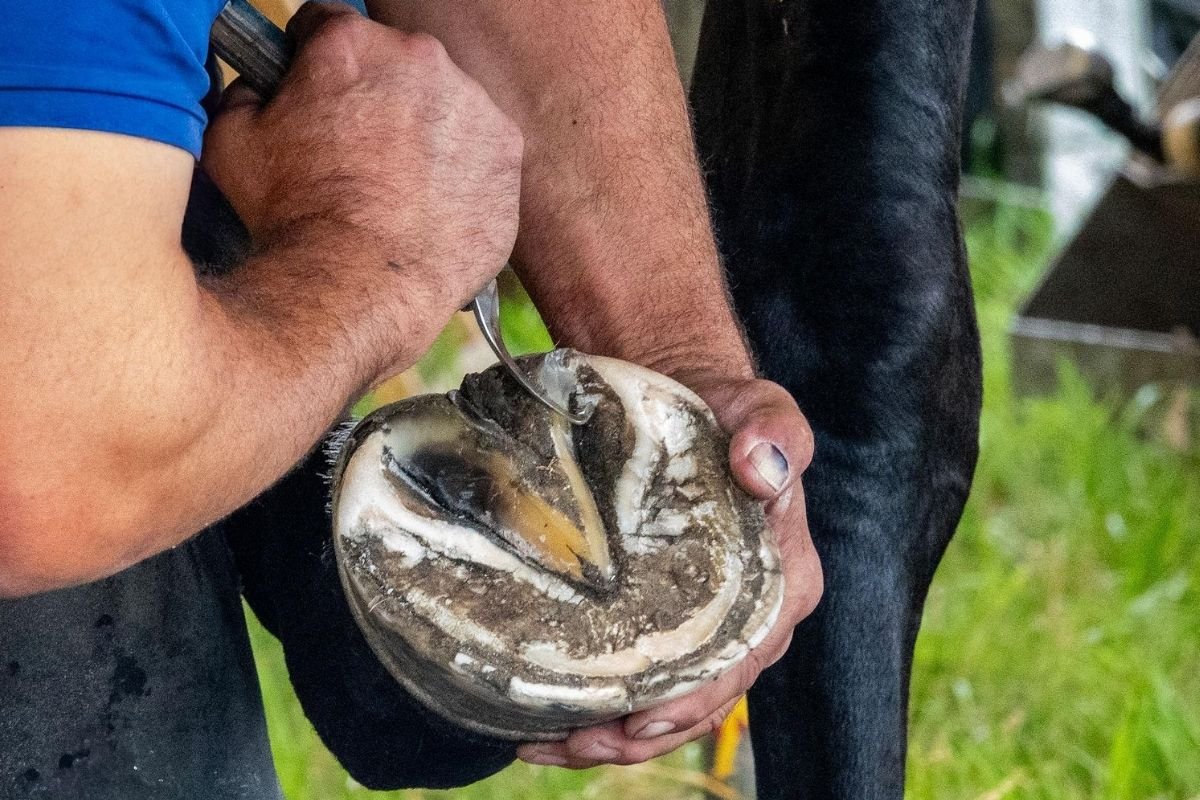
Imagine preparing to trim your horse’s hooves—your tools ready, your horse calm—but encountering difficulties cutting efficiently or achieving precision. Often overlooked, the thickness of your hoof knife’s blade significantly impacts your trimming results, comfort, and overall hoof health. This guide explores why blade thickness matters and how selecting the appropriate thickness enhances your hoof trimming experience.
Understanding Blade Thickness in Hoof Knives
Blade thickness refers to the measurement from one side of the knife’s blade to the other. In hoof knives, thickness varies widely to cater to different trimming requirements. Generally:
- Thin blades (usually around 1–2 mm thick) provide high flexibility and precision.
- Thick blades (typically 3–5 mm or more) offer superior strength and durability, handling tough hoof conditions effortlessly.
Additionally, blade material—usually carbon steel or stainless steel—affects durability and sharpness. Carbon steel blades offer superior sharpness but require more maintenance, while stainless steel blades resist corrosion and are easier to maintain.
Hoof Trimming Efficiency: Why Thickness Matters
Efficient trimming involves balancing sharpness, precision, strength, and control. A blade’s thickness directly influences these factors, shaping your trimming experience:
- Precision: Thin blades enable delicate, detailed trimming, especially around sensitive hoof structures.
- Strength: Thick blades excel in cutting through dense, tough hoof material with less effort.
Choosing incorrectly could lead to inefficient trimming sessions, unnecessary fatigue, or hoof damage.
Detailed Comparison of Thicker and Thinner Hoof Knife Blades
| Feature | Thicker Blades | Thinner Blades |
|---|---|---|
| Cutting Power | High for tough materials | Adequate for most general trimming tasks |
| Precision | Lower; potential for less controlled cuts | Higher; enables delicate, controlled trimming |
| Maneuverability | Less maneuverable in tight spaces | Highly maneuverable in tight and detailed areas |
| Durability | High; resistant to bending or breaking | Lower; susceptible to bending or breaking |
| User Fatigue | Increased effort, potential for fatigue | Reduced effort, lower fatigue during tasks |
| Sharpening | Less frequent sharpening but harder to sharpen | Easier to sharpen; more frequent sharpening |
| Best Suited For | Thick soles, initial heavy trimming | Detailed tasks, sensitive areas, regular upkeep |

Impact of Blade Thickness on Farrier Health and Comfort
Using the correct blade thickness directly impacts a farrier’s comfort and health. Thick blades, though durable, can cause faster hand and wrist fatigue due to their weight. Conversely, thin blades require less effort, reducing fatigue but demanding careful handling and frequent sharpening.
Expert Tips for Maximizing Hoof Trimming Efficiency
- Regular Maintenance: Sharpen blades routinely, especially thinner ones, to maintain efficiency.
- Task Matching: Choose blade thickness according to specific hoof care tasks—thick blades for initial trimming, thinner blades for detailed shaping.
- Proper Handling: Maintain proper grip and ergonomic posture to minimize strain regardless of blade thickness.
FAQs
- What blade thickness is best for daily hoof trimming?
- Typically, medium-thickness blades (around 2–3 mm) balance durability and precision effectively for everyday tasks.
- Does blade thickness affect the risk of hoof injury?
- Yes, overly thick blades may lack precision, risking accidental damage, while thin blades require careful handling to avoid bending.
- How frequently should hoof knives with thin blades be sharpened?
- Thin blades generally need sharpening every few trimming sessions, depending on usage intensity.
- Can thicker blades lead to trimming mistakes?
- Thick blades may reduce accuracy, increasing the chance of mistakes in detailed areas of the hoof.
Conclusion
Selecting the correct hoof knife blade thickness significantly impacts trimming efficiency, comfort, and hoof health. Evaluating hoof conditions, experience levels, and specific trimming tasks ensures optimal performance, reducing fatigue and enhancing precision.
Call to Action
Review your current hoof knife blade thickness today. Choose wisely for comfort, precision, and optimal hoof health. Explore our related guides and top-quality tools to enhance your hoof care experience.