Introduction
Selecting the correct blade angle for a hoof knife significantly impacts trimming effectiveness, horse health, and farrier comfort. Proper hoof care is essential for preventing infections, mobility issues, and incorrect weight distribution, enhancing overall horse performance and well-being. This article explores the science behind blade angles, detailing their crucial role in precision, efficiency, and ergonomic safety.
Understanding Hoof Anatomy
A horse’s hoof includes essential components like the hoof wall, sole, frog, bars, coffin bone, digital cushion, and laminae. Each structure varies in density and function, requiring specific trimming techniques and blade angles. For example, the robust hoof wall demands powerful cutting angles, while the softer frog and sole require more precise, delicate control. Clear understanding and visualization of these anatomical details improve trimming outcomes.
Versatility of the Hoof Knife
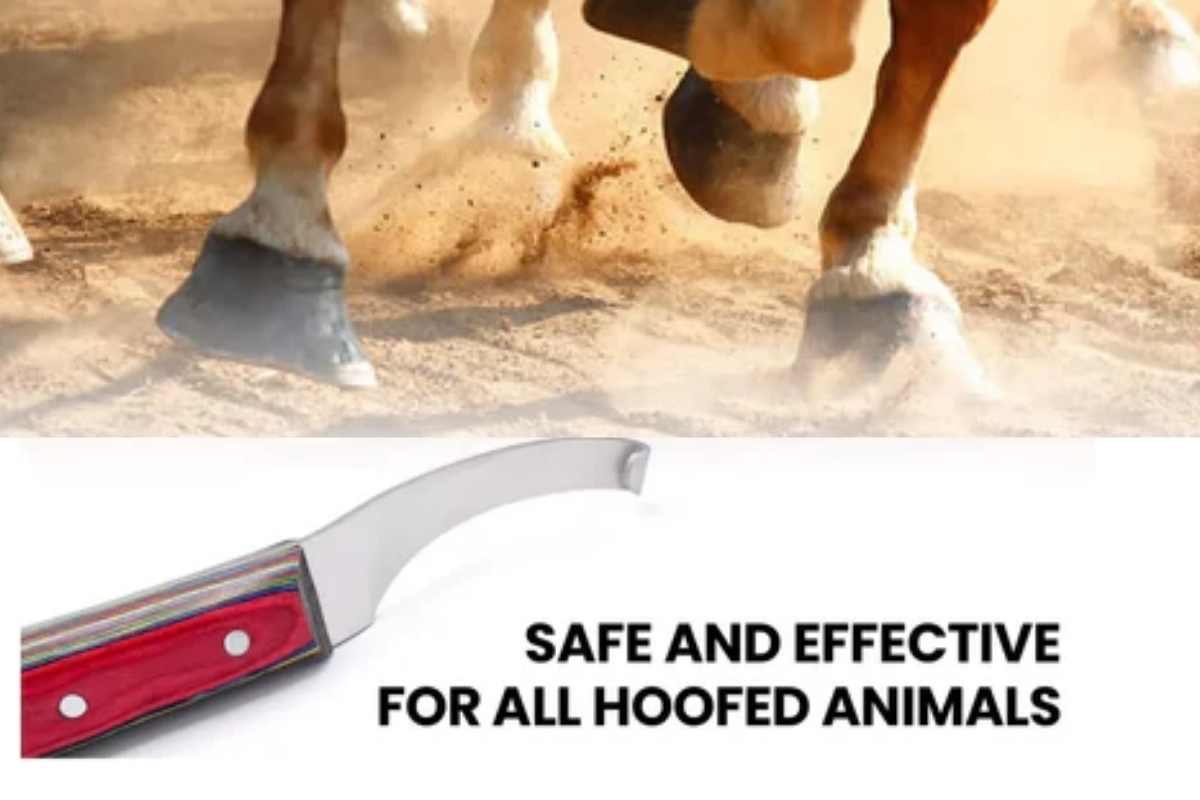
Hoof knives perform numerous essential functions, including removing dead sole material, trimming frogs, cleaning collateral sulci, balancing bars, treating conditions like white line disease, and preparing hoof surfaces for shoeing. Different tasks necessitate distinct blade designs and angles—straight blades for dense hoof walls, curved blades for precise control, and loop blades for detailed access in tight spaces.
The Science Behind Blade Angle Efficiency
Blade angles directly influence how effectively a knife cuts through hoof material.
Sharpness vs. Durability
- Acute Angles (15°–25°): Provide superior sharpness, ideal for detailed trimming tasks, but require frequent sharpening.
- Wider Angles (25°–45°): Offer enhanced durability, demand less frequent sharpening, but require greater physical force for cutting.
Blade Angle and Cutting Mechanics
Optimal blade angles minimize fatigue and enhance user control by reducing the required cutting force, ensuring precise trims. This efficiency translates directly into better hoof care outcomes and reduced risk of injury.
Blade Angles and Practical Applications
Blade angles typically range from 15°–45°, each suited to specific tasks:
- Straight blades (25°–30°): Excel at trimming robust hoof walls.
- Curved blades (20°–24°): Ideal for precision trimming of softer, sensitive hoof areas.
- Loop blades (20°–25°): Effective for navigating intricate spaces like collateral sulci.
The Impact on Hoof Health
Using the incorrect blade angle negatively impacts hoof health, leading to uneven trims, potential injuries, and hoof infections. Selecting the proper angle promotes healthier hooves, efficient trimming, and enhanced safety for both horse and handler.

Ergonomic Considerations
Correct blade angles significantly reduce the risk of injury, awkward hand positioning, wrist strain, and fatigue. Ergonomically designed hoof knives, featuring optimal angles and comfortable handles, mitigate these issues, promoting precise trimming and reducing strain.
Practical Tips
- Beginners should initially use blade angles of approximately 20°, adjusting gradually based on experience.
- Frequent sharpening and careful handling are essential for effective and safe trimming.
- Avoid overly deep cuts to prevent damage to sensitive structures.
Real-World Example
Farriers regularly trimming multiple horses with diverse hoof conditions benefit from having various hoof knives tailored to specific blade angles. This approach ensures efficient trimming, optimal results, and reduced physical fatigue.
Case Study & Testimonials
Case Study:
- Experienced farrier Mark Thompson reduced trimming time and wrist fatigue significantly by switching to optimized hoof knives. After six months, Mark reported improved accuracy and reduced strain.
Testimonials:
- “Adjusting blade angles has greatly improved my trimming efficiency and horse hoof health.” – Sarah Jensen, Professional Farrier.
- “Using tailored blade angles significantly reduced my wrist pain, enhancing daily comfort.” – James Davis, Equine Specialist.
Expert Recommendations
Experts recommend hoof knife blade angles between 15°–30°, emphasizing adaptability to individual trimming techniques, hoof hardness, and condition. A versatile starting angle around 20° is often suggested, with adjustments tailored to specific scenarios for optimal results. Professionals frequently maintain knives with varying blade angles for different trimming tasks.
FAQs
- What is the best blade angle for beginners?
- 20°–25°, balancing precision and ease of use.
- How often should I sharpen my hoof knife based on blade angle?
- Sharper angles (15°–25°) need frequent sharpening; wider angles (25°–45°) maintain sharpness longer.
- Can I adjust the blade angle myself?
- It’s best done professionally to maintain blade integrity.
- Does blade angle impact trimming time?
- Yes, correct angles significantly improve efficiency.
- Are certain angles better for different hoof types?
- Yes, tougher hooves require wider angles, softer hooves benefit from sharper angles.
Conclusion
Understanding hoof anatomy, ergonomic considerations, and expert recommendations helps farriers and horse owners select optimal blade angles. Properly chosen blade angles improve precision, trimming efficiency, reduce physical strain, and overall safety, benefiting horses and handlers alike.
Call to Action (CTA)
Explore Equine Care’s scientifically designed hoof knives, optimized for trimming efficiency and comfort. Visit our product pages or subscribe for expert advice and product updates.