Executive Summary
Equine gastric ulcer syndrome (EGUS) is now widely recognized as a complex, whole-gut disorder rather than a condition driven solely by excess stomach acid (Sykes et al., 2015; Murray, 2013). Affecting a broad spectrum of horses—from performance and racehorses to sport and endurance horses—ulcers in horses remain one of the most prevalent challenges in modern equine management. While omeprazole for horses is an effective component of horse ulcer treatment, especially for equine squamous gastric disease (ESGD), clinical evidence consistently shows that ulcer relapse in horses is common when therapy ends without structured ulcer aftercare for horses (Luthersson et al., 2009).
Introduction:
Horse gastric ulcers, including equine gastric ulcers, continue to affect horses across disciplines. Studies consistently report high prevalence of gastric ulcers in horses, often exceeding 50% in ulcers in performance horses, ulcers in racehorses, ulcers in sport horses, and ulcers in endurance horses (Vatistas et al., 1999; Bell et al., 2007; Sykes et al., 2015). Many horses respond well to gastric acid suppression in horses using omeprazole, yet relapse once medication is reduced or discontinued (Murray et al., 2001).
Understanding Ulcer Types: ESGD vs EGGD
Equine gastric ulcer syndrome is classified into ESGD equine squamous gastric disease and EGGD equine glandular gastric disease, each with distinct physiology and management implications (Sykes et al., 2015).
Squamous ulcers in horses (ESGD) affect the non-glandular stomach and are strongly linked to acid splash in horses, prolonged fasting, and high-intensity exercise (Murray & Eichorn, 1996). ESGD typically responds well to acid suppression therapy in horses, explaining the effectiveness of omeprazole during active treatment (Andrews et al., 1999).
Why Omeprazole Alone Is Not Enough
Omeprazole for horses is highly effective for short-term healing, particularly in ESGD, and remains an essential part of horse ulcer treatment (Andrews et al., 1999). However, acid suppression alone does not resolve the biological and management conditions that created the ulcer.
Persistent fasting windows, low-starch diet for horses not being implemented, hindgut ulcers in horses, stress load, and reduced gut barrier integrity remain unless deliberately addressed (Murray, 2013). When these factors persist, ulcer relapse in horses is a predictable outcome rather than a treatment failure (Luthersson et al., 2009). Effective long-term ulcer management in horses must therefore extend beyond medication.
Post-Omeprazole Aftercare:
The phase following stopping omeprazole in horses represents one of the highest-risk windows for relapse. Prolonged acid suppression alters gastrin signaling, and research has documented increased serum gastrin during treatment with potential for rebound gastric acidity in horses after withdrawal (Sandin et al., 2016).
Forage-First Feeding:
A forage-first feeding horses strategy is the single most effective intervention for ulcer prevention in horses (Ellis et al., 2010). Continuous forage intake increases saliva production, buffers stomach acid, reduces acid splash, and supports forage-driven digestion in horses (Luthersson et al., 2009).
Monitoring for Early Ulcer Relapse
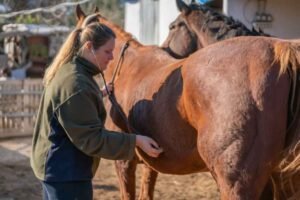
Early indicators of ulcer relapse in horses include reduced appetite, girth sensitivity, behavioral changes, intermittent discomfort, and manure inconsistency (Luthersson et al., 2009). Prompt adjustments to feeding and management prevent escalation and support gastric ulcer recovery in horses.
The Economics of Ulcer Relapse and Prevention
Repeated ulcer treatment imposes significant costs, including medication, veterinary care, lost training time, and compromised performance (Murray, 2013). In contrast, investing in long-term care for horses with ulcers through feeding architecture, stress management, and gut health support improves outcomes and reduces cumulative expense.
Conclusion
Equine gastric ulcer syndrome, including ESGD and EGGD, is not merely a problem of acid but a systems-level disorder shaped by nutrition, microbial metabolism, stress physiology, and gut barrier health (Sykes et al., 2015; Whitfield-Cargile et al., 2019). Omeprazole remains an essential therapeutic tool, but true ulcer prevention in horses requires holistic ulcer management.
When care moves beyond omeprazole, focusing on forage-first diet, hindgut support, and stress control, horses achieve more stable digestion, improved performance, and lasting gastric health.
Frequently Asked Questions (FAQs)
Q1: Why do ulcers come back after omeprazole?
A: Because underlying causes such as fasting, starch overload, stress, and hindgut imbalance remain uncorrected.
Q2: What is the best feeding program for ulcer horses?
A: Programs emphasizing continuous forage access, low-starch intake, and fermentable fiber are most effective.
Q3: Does omeprazole cause rebound acidity in horses?
A: Research indicates increased gastrin signaling during treatment, which may contribute to rebound acidity after withdrawal if aftercare is inadequate (Sandin et al., 2016).
Call to Action
If your horse has a history of ulcers or is currently on omeprazole, reassess feeding practices, optimize forage-first feeding, reduce starch exposure, support hindgut fermentation, manage stress proactively, and monitor closely during transitions. Sustainable equine ulcer management begins with informed, system-wide decision-making (Murray, 2013).
References
- Andrews, F. M., Buchanan, B. R., Smith, S. H., Elliott, S. B., & Saxton, A. M. (1999). Gastric ulcers in horses: A review of diagnosis, treatment, and prevention. Journal of Equine Veterinary Science, 19(10), 632–640.
- Bell, R. J. W., Kingston, J. K., Mogg, T. D., & Perkins, N. R. (2007). The prevalence of gastric ulceration in endurance horses during a 7-day endurance ride. Equine Veterinary Journal, 39(2), 162–166.
- Belknap, J. K., Giguère, S., & Barton, M. H. (2009). Endotoxemia and systemic inflammatory response in horses. Journal of Veterinary Internal Medicine, 23(3), 562–573.
- Ellis, A. D., Hill, J., & Ramzan, P. H. L. (2010). Forage intake in horses: Factors affecting voluntary intake and implications for equine health. Livestock Science, 129(1–3), 1–7.
- Furness, J. B., Rivera, L. R., Cho, H.-J., Bravo, D. M., & Callaghan, B. (2013). The gut as a sensory organ. Nature Reviews Gastroenterology & Hepatology, 10(12), 729–740.
- Garner, H. E., Moore, J. N., Johnson, J. H., Clark, L., Amend, J. F., Tritschler, L. G., Coffman, J. R., Sprouse, R. F., Hutcheson, D. P., & Salem, C. A. (1978). Changes in the caecal flora associated with the onset of laminitis. Equine Veterinary Journal, 10(4), 249–252.
- Hamer, H. M., Jonkers, D., Venema, K., Vanhoutvin, S., Troost, F. J., & Brummer, R.-J. (2008). The role of butyrate on colonic function. Alimentary Pharmacology & Therapeutics, 27(2), 104–119.
- Husted, L., Sanchez, L. C., Olsen, S. N., Baptiste, K. E., & Merritt, A. M. (2008). Effect of paddock versus stall housing on 24-hour gastric pH within the proximal and ventral equine stomach. Equine Veterinary Journal, 40(4), 337–341.
- Luthersson, N., Nielsen, K. H., Harris, P., & Parkin, T. D. H. (2009). The prevalence and anatomical distribution of equine gastric ulceration syndrome in horses subjected to intensive training. Equine Veterinary Journal, 41(7), 593–598.
- McClure, S. R., Glickman, L. T., & Glickman, N. W. (1999). Prevalence of gastric ulcers in show horses. Journal of the American Veterinary Medical Association, 215(8), 1130–1133.
- Murray, M. J. (2013). Equine gastrointestinal disease (2nd ed.). Elsevier Saunders.
- Murray, M. J., & Eichorn, E. S. (1996). Effects of intermittent feed deprivation, intermittent feeding, and gastric ulceration on gastric fluid pH in horses. American Journal of Veterinary Research, 57(8), 1160–1163.