Introduction
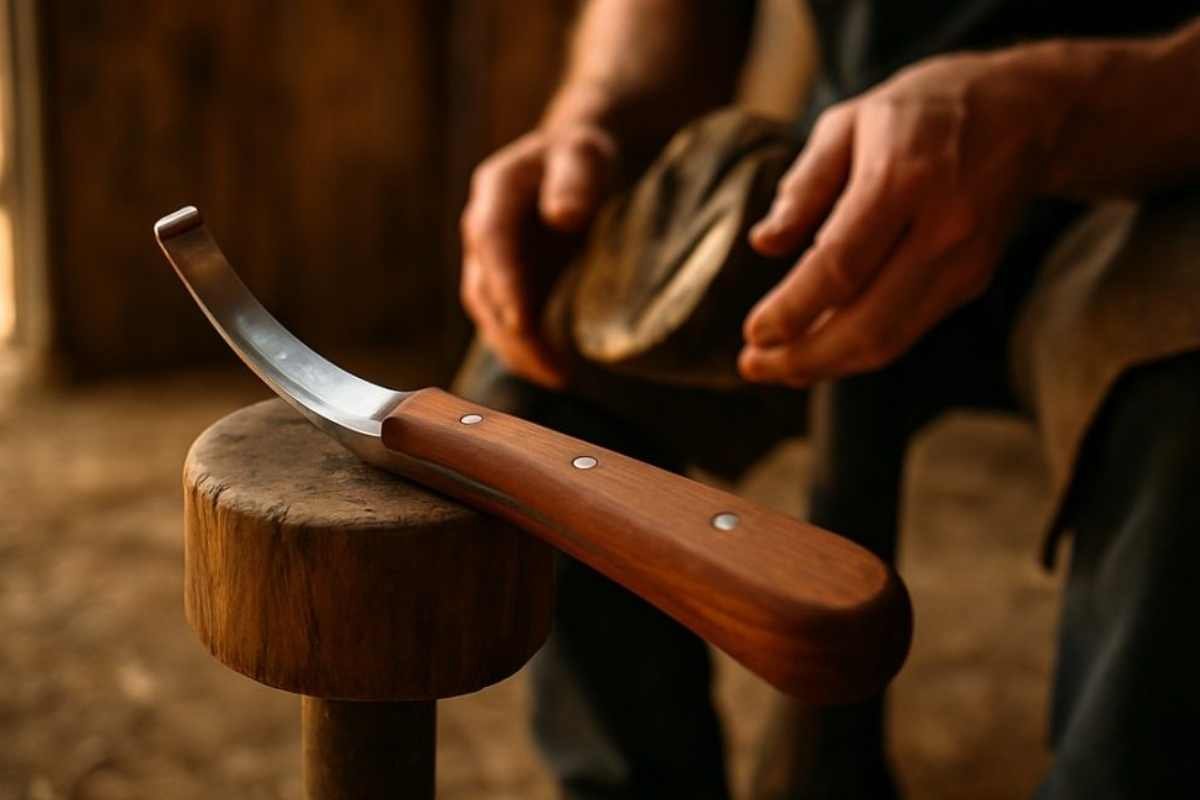
Proper hoof care significantly influences the overall health, mobility, and performance of horses. Central to this essential care routine is the hoof knife—a specialized tool utilized by professional farriers and dedicated horse owners alike. The quality and effectiveness of a hoof knife are largely determined by its blade, particularly whether it’s heat-treated or non-heat-treated. This guide aims to clearly outline the key differences between these blade types, providing valuable insights that help readers make informed decisions for optimal equine hoof health, ensuring greater efficiency, safety, and long-term savings.
The Importance of Blade Quality
Selecting the right hoof knife can dramatically influence hoof care outcomes. While non-heat-treated blades may initially appear attractive due to affordability, their limitations quickly become apparent in practical settings. These softer blades tend to lose their sharpness rapidly, bend easily under stress, and can even become safety hazards during use. Hoof material, often containing abrasive elements like silica, quickly wears down blades not enhanced through heat treatment, resulting in frequent maintenance and replacement.
Innovative Science of Heat Treatment
Heat treatment involves precisely heating steel blades to specified temperatures, followed by controlled cooling—a process designed to alter the metal’s molecular structure. This metallurgical transformation significantly enhances properties such as hardness, flexibility, and durability. The process typically includes careful temperature control, soaking at targeted heat levels, rapid cooling or quenching, and subsequent tempering. This intricate treatment produces blades capable of withstanding rigorous use while maintaining optimal performance.
When properly heat-treated, the steel transforms into martensite—a hardened structure with superior wear resistance. Subsequent tempering reduces brittleness, ensuring the blade retains both strength and sufficient flexibility, a critical combination for enduring frequent, demanding use without breaking or deforming.
Non-Heat-Treated Blades: Practical Considerations
Blades lacking heat treatment generally consist of softer steel types like annealed or as-rolled steel, making them easy to produce and initially cost-effective. However, this softness leads to rapid dulling and frequent sharpening, significantly disrupting efficiency during hoof trimming. The blades’ reduced durability under heavy usage increases the risk of deformation and failure, which can compromise both safety and effectiveness, especially when trimming tough or overgrown hooves.
Some manufacturers design softer blades specifically targeting novice users, aiming for improved safety through blade flexibility. However, while flexible blades reduce the immediate risk of snapping, they significantly impair precision and performance for regular or professional use.
Exceptional Benefits of Heat-Treated Blades
Heat-treated blades stand out due to their significantly improved durability and prolonged sharpness retention. Enhanced through controlled heat treatment, these blades endure frequent and rigorous use with minimal wear, offering a longer lifespan and less downtime for maintenance.
Cost Efficiency: Investing in Quality
Though heat-treated blades often involve a higher initial investment, their enhanced longevity and reduced maintenance requirements offer considerable economic advantages over time. Professionals and regular users find these savings compelling, as fewer replacements and reduced sharpening translate into greater productivity and lower long-term operational costs.
Industry Expert Insights
Veteran farriers and industry specialists strongly advocate for heat-treated blades. John Doe, a professional farrier with over 20 years of experience, states, “Investing in heat-treated blades transformed my workflow—they stay sharper much longer, significantly reducing maintenance time and improving trimming efficiency.” Renowned brands such as Hall Knives and Icar are frequently cited for their consistently high-quality blades made from carefully selected and precisely heat-treated steel, including popular steels like 5160 and 1084. These blades are renowned for delivering unmatched reliability, sharpness, and durability in professional hoof care. For more insights, you can explore detailed studies and expert opinions available from the American Farrier’s Association.
Common Questions Answered
How frequently should heat-treated hoof knives be sharpened?
Typically, a properly heat-treated blade requires sharpening only after several trimming sessions, unlike non-heat-treated blades, which often demand sharpening after each use.
Are heat-treated blades suitable for all users, including beginners?
Yes, their superior durability and ease of use make heat-treated blades suitable for users at all skill levels, promoting safer and more efficient hoof care.
Durability and Edge Retention: The Clear Winner
Recent industry research underscores the clear advantage of heat-treated blades: according to a recent study by the American Farrier’s Association, heat-treated blades retained their sharpness up to 40% longer compared to non-heat-treated alternatives. This notable improvement significantly reduces the time and physical effort spent on sharpening and replacing tools. Moreover, blades with higher Rockwell hardness ratings (typically Rc 57-59) displayed improved wear resistance, directly enhancing trimming efficiency and providing tangible operational cost savings over time.

Conclusion: Making the Best Choice
Choosing between heat-treated and non-heat-treated hoof knives significantly impacts hoof care effectiveness and operational efficiency. Heat-treated blades clearly surpass their non-heat-treated counterparts in terms of performance, durability, and overall value. Invest in superior quality—browse our premium collection of heat-treated hoof knives today, and elevate your equine hoof care practice.