Executive Summary
Free Fecal Water Syndrome (FFWS), also referred to as fecal water syndrome in horses or free fecal liquid syndrome, is a chronic equine digestive issue in which horses pass watery fecal fluid alongside normally formed manure balls. This presentation—often described by owners as watery poop but normal manure in horses—clearly distinguishes FFWS from diarrhea. Current veterinary literature increasingly classifies FFWS as a hindgut-driven functional disorder, linked to hindgut fermentation imbalance, impaired water resorption in the large colon, disrupted short-chain fatty acid (SCFA) signaling, and low-grade colonic mucosal irritation (Laustsen et al., 2021; Schoster et al., 2020).
FFWS in horses is frequently associated with forage transitions, starch overflow into the hindgut, stress-related gut issues, NSAID exposure, dehydration-related motility changes, and winter digestive problems. Although rarely life-threatening, FFWS is clinically important because it often reflects ongoing hindgut instability rather than a superficial manure problem. This article provides a hindgut-focused, forage-first, science-based framework to support long-term management and digestive stability.
Introduction
A familiar and frustrating situation plays out in barns worldwide. A horse produces normal manure balls, yet brown watery fluid leaks around defecation, leaving the hind legs wet from manure water and causing persistent tail staining and skin scald. Owners frequently search for answers using phrases like horse fecal water problem or why does my horse have watery poop but solid manure, often unsure whether the condition is serious or simply cosmetic.
This presentation is typical of Free Fecal Water Syndrome in horses. FFWS is not diarrhea, and it is not simply a hygiene issue. Modern equine gut health research demonstrates that FFWS is best understood through hindgut physiology, specifically the interaction between microbial metabolism, SCFA production, epithelial barrier function, and water balance in the cecum and colon.
The goal of this article is to explain FFWS in horses from a hindgut-health perspective, clarify what causes free fecal water syndrome in horses, and outline practical, evidence-based management strategies. When addressed correctly, many horses experience improved digestive stability, reduced episodes, and clearer identification of individual triggers.
What Is Free Fecal Water Syndrome (FFWS)?
Free Fecal Water Syndrome refers to the separation of liquid and solid manure components during defecation. Horses affected by FFWS pass formed or near-formed fecal balls while simultaneously releasing watery fecal discharge, often described as fecal water leakage or manure water separation.
This pattern indicates that small-intestinal digestion is usually adequate, while hindgut water absorption and motility coordination are impaired. As a result, FFWS is typically chronic or intermittent rather than acute, and systemic dehydration is uncommon (Laustsen et al., 2021).
Free Fecal Water vs Diarrhea in Horses
Understanding the difference between diarrhea and free fecal water in horses is critical. Diarrhea involves loss of fecal structure and is commonly associated with infection, inflammation, or malabsorption. FFWS, by contrast, preserves fecal structure and reflects hindgut dysfunction rather than intestinal disease (The Horse, 2023).
Why the Hindgut Matters
Hindgut Fermentation & Water Balance
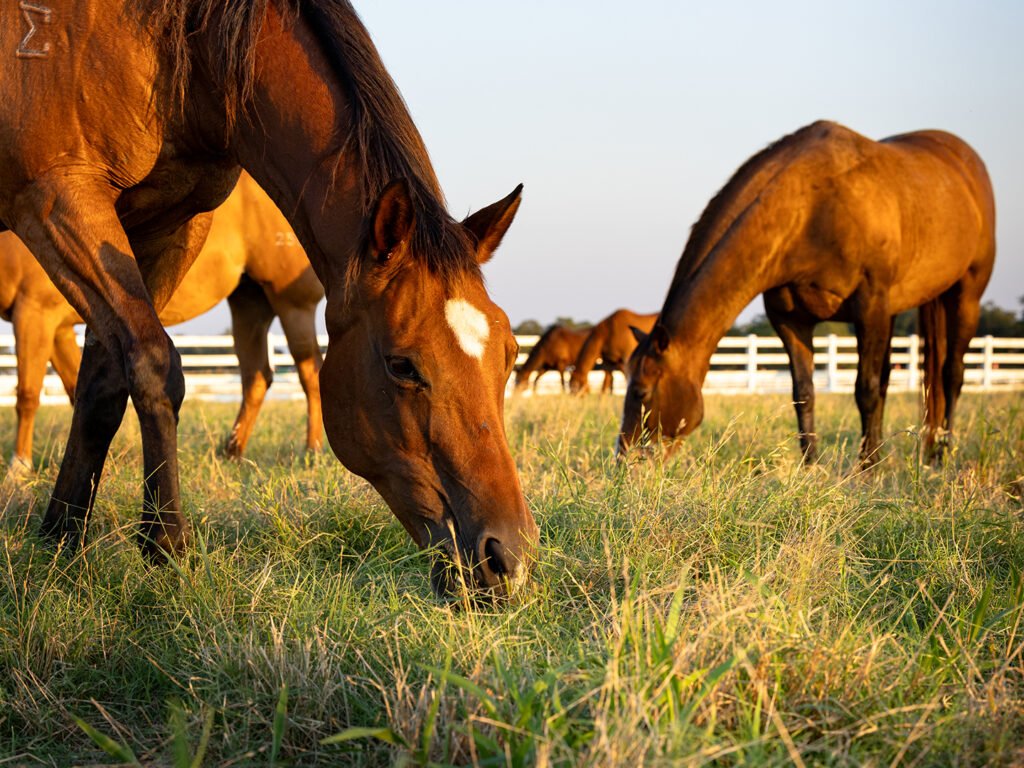
The equine hindgut—comprising the cecum and large colon—is both a fermentation chamber and a regulatory system. Structural carbohydrates from forage undergo fiber fermentation, producing short-chain fatty acids (SCFAs) such as acetate, propionate, and butyrate. These metabolites regulate large colon health, epithelial turnover, inflammatory balance, neuromuscular signaling, and hindgut water absorption (Whitfield-Cargile et al., 2018).
Common Causes of FFWS
Diet & Forage Quality
Across clinical practice, forage transitions in horses are the most consistently reported trigger. Sudden hay changes, pasture-to-hay transitions, or variations in fiber quality can disrupt hindgut fermentation before microbial populations adapt. Questions such as can hay change cause free fecal water in horses are therefore highly relevant. Gradual forage transitions over 10–14 days are widely recommended to support digestive stability (UF/IFAS Extension, 2024).
High-starch feeding strategies further increase risk. When grain intake exceeds digestive capacity, starch overflow into the hindgut promotes lactic acid production, leading to hindgut acidosis in horses and impaired water absorption without obvious colic (Whitfield-Cargile et al., 2018).
Stress, Environment, & Social Dynamics
Stress and gut health in horses are closely linked. Transport, training intensity, confinement, herd changes, and routine disruption alter hindgut motility and microbial signaling via the gut–brain axis. FFWS frequently worsens during winter, when dehydration and hindgut motility changes are common (The Horse, 2023).
Parasites & Low-Grade Inflammation
Although heavy parasite burdens are not a primary cause, low-grade parasitism or chronic inflammation can reduce hindgut resilience. Repeated NSAID exposure, including phenylbutazone-related hindgut damage, may further compromise mucosal repair, increasing susceptibility to fecal water syndrome (Whitfield-Cargile et al., 2018).
Management Strategies
Nutrition Adjustments
Effective management of FFWS in horses begins with reducing dietary variability. Moderating grain feeding, controlling starch intake, and shifting calories toward fiber-based equine diets and fermentable fiber sources support hindgut-safe feeding strategies and SCFA production.
Forage-First Planning
Forage-first feeding remains the cornerstone of long-term FFWS control. Horses receiving 1.5–2 % of body weight per day in forage, distributed to minimize fasting, demonstrate improved digestive stability. Slow-feeding systems support consistent fermentation and reduce hindgut instability.
Microbial Shifts & Dysbiosis
A key finding in recent FFWS research is that classic dysbiosis is not consistently present. Controlled studies show minimal differences in fecal microbiota between horses with chronic fecal water and healthy controls (Schoster et al., 2020; Wester et al., 2024).
This has shifted scientific understanding away from a simple “bad bacteria” explanation toward a functional hindgut instability model, where microbial activity, metabolite output, epithelial response, and motility synchronization are more relevant than microbial composition alone. This explains why probiotics alone often fail when broader hindgut issues are not addressed.
Supplements & Probiotics
While many owners ask can probiotics help free fecal water horses, evidence suggests microbial supplements are most effective only after diet and forage consistency are achieved. Targeted strategies supporting gut barrier function, SCFA metabolism, and epithelial repair produce more reliable outcomes than microbiota manipulation alone (Schoster et al., 2020; Cavallini et al., 2022).
Environmental Management
Environmental stability is often decisive. Consistent routines, adequate turnout, reliable water access, and minimizing stress-related gut issues allow nutritional strategies to succeed. In many real-world cases, FFWS resolves only after environmental factors are addressed alongside diet.
Conclusion
Free Fecal Water Syndrome in horses is best understood as a hindgut-driven condition rooted in diet, microbial metabolism, water imbalance, and environmental stressors. It is not simply abnormal manure and rarely responds to isolated interventions. Sustainable improvement requires forage consistency, low-starch feeding, fermentation stability, and holistic hindgut management.
Frequently Asked Questions (FAQs)
Q1: What causes free fecal water syndrome in horses?
A: FFWS is most often caused by hindgut instability linked to forage transitions, starch overflow, and stress-related motility changes.
Q2: Is free fecal water serious in horses?
A: While rarely dangerous, FFWS can indicate underlying hindgut dysfunction and may be associated with increased colic risk if unmanaged.
Q3: How long does free fecal water take to resolve?
A: With appropriate forage management and hindgut-focused strategies, improvement often occurs within several weeks.
Call-to-Action (CTA)
If your horse shows signs of FFWS, evaluate forage changes, grain intake, and daily routines. Consulting an equine veterinarian or nutritionist can help identify hindgut-specific triggers and design an effective plan. Sharing this guide with caretakers and barn staff improves consistency, which is critical for long-term success.
References
- Cavallini, D., et al. (2022). Dietary modulation of hindgut fermentation and mucosal health in horses. Journal of Equine Veterinary Science, 110, 103851.
- Laustsen, L., et al. (2021). Free faecal water in horses is associated with altered faecal microbiota and metabolite profiles. BMC Veterinary Research, 17(1), 1–12.
- Schoster, A., et al. (2020). Dysbiosis is not present in horses with free fecal water syndrome. Equine Veterinary Journal, 52(4), 567–574.
- The Horse. (2023). Free fecal water syndrome explained. The Horse: Your Guide to Equine Health Care.
- UF/IFAS Extension. (2024). Forage transitions and free fecal water syndrome in horses. University of Florida Institute of Food and Agricultural Sciences.
- Wester, A., et al. (2024). Dysbiosis not observed in Canadian horses with free fecal liquid syndrome. Scientific Reports, 14(1), 1–10.
- Whitfield-Cargile, C. M., et al. (2018). Intestinal injury, inflammation, and repair in horses: Implications for hindgut health. Journal of Veterinary Internal Medicine, 32(2), 1–14.