Executive Summary
Feeding alfalfa before exercise is widely applied as a management-based strategy to reduce gastric acid exposure in horses, particularly those at risk of equine gastric ulcer syndrome (EGUS). Horses secrete stomach acid continuously, meaning alfalfa does not inhibit acid production. Instead, its effects are mediated through temporary buffering of gastric contents, saliva-driven bicarbonate delivery, and physical stratification of stomach contents, which together can reduce acid splash during exercise (Nadeau et al., 2000; Lybbert et al., 2007; Sykes et al., 2015). When used within a forage-first feeding system that minimizes fasting intervals, alfalfa before exercise functions as a risk-reduction strategy, not a treatment or cure for gastric ulcers.
Introduction
Subtle indicators of gastric discomfort are common in working horses and often present as resistance during warm-up, girth sensitivity, reduced focus, or inconsistent appetite. These signs frequently intensify when exercise follows prolonged fasting periods, such as overnight forage gaps. Because gastric ulcers in horses are highly prevalent in performance populations, feeding alfalfa before exercise is commonly recommended to help buffer stomach acid in horses.
This article examines whether alfalfa for horses truly acts as a stomach acid buffer, how it influences equine stomach acid dynamics during exercise, and how feeding timing affects ulcer risk. The goal is to provide an evidence-based explanation that supports informed feeding decisions and improved gastric health outcomes.
Why Exercise Increases Gastric Ulcer Risk in Horses
Gastric ulceration is widely reported in managed horses, with prevalence estimates ranging from moderate to very high in performance populations (Vatistas et al., 1999; Sykes et al., 2015). The primary mechanism linking exercise to ulcer development is mechanical rather than dietary.
Because continuous acid secretion in horses occurs regardless of feeding status, exercise-induced increases in intra-abdominal pressure allow acidic gastric fluid to move upward within the stomach. This process, commonly referred to as acid splash, exposes the squamous mucosa to acid and explains why exercise and gastric ulcers in horses are closely associated (Lorenzo-Figueras & Merritt, 2002). The risk is substantially higher when exercise occurs after fasting, as limited stomach fill provides minimal buffering or physical restraint of acid movement.
EGUS Explained: ESGD vs EGGD
Equine gastric ulcer syndrome (EGUS) encompasses two distinct disease processes that differ in pathophysiology and response to management.
Equine squamous gastric disease (ESGD) affects the non-glandular portion of the stomach and is strongly associated with acid exposure, fasting, and exercise intensity. Feeding strategies that improve stomach fill and reduce acid splash are therefore most effective for ESGD management (Sykes et al., 2015).
Equine glandular gastric disease (EGGD) involves the glandular mucosa and is associated with impaired mucosal defense rather than acid exposure alone. While feeding consistency supports overall gastric health, buffering strategies such as alfalfa feeding should not be expected to reliably prevent or resolve EGGD (Sykes et al., 2015).
How Alfalfa Affects Stomach Acid and Gastric pH in Horses
Nutritional buffering and gastric pH
Alfalfa hay for horses contains higher levels of calcium and protein than most grass hays. Calcium can bind hydrogen ions within gastric contents, contributing to nutritional buffering of gastric acid. Controlled studies have shown that horses fed alfalfa-based forage exhibit higher gastric juice pH during the early post-feeding period, typically lasting several hours (Nadeau et al., 2000).
This effect is temporary, emphasizing that alfalfa before exercise is most effective when feeding is timed to coincide with exercise-related risk windows.
Chewing, saliva, and buffering gastric acidity
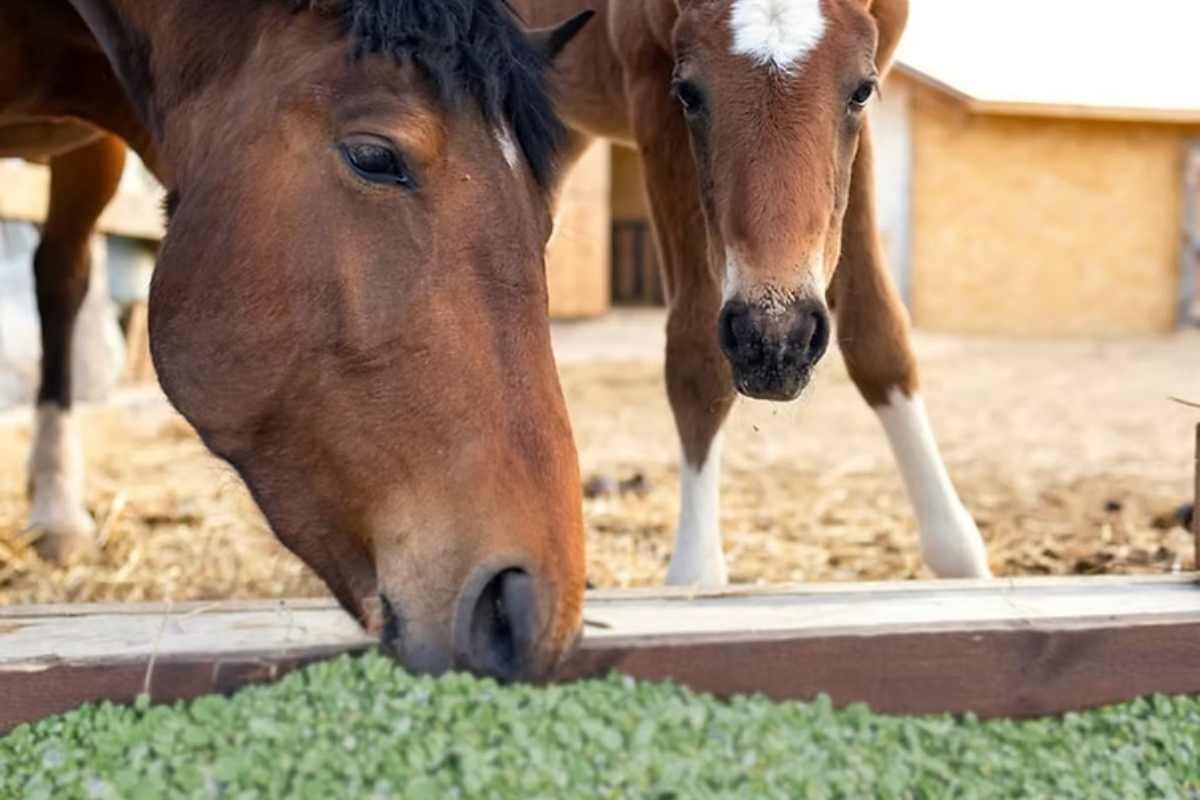
Long-stem alfalfa requires extended mastication, stimulating saliva production. Equine saliva contains bicarbonate, which moderates acidity at the surface of stomach contents and contributes to buffering gastric acidity in horses (Merritt, 2009).
This mechanism explains why alfalfa pellets vs hay in horses are not physiologically equivalent. Pellets provide nutrients but do not replicate the chewing-driven saliva response critical for effective buffering.
Alfalfa vs Grass Hay in Feeding Management for Horses
When comparing grass hay vs alfalfa horses, the distinction is functional rather than absolute. Grass hay provides bulk and chewing time that support baseline gastric protection. Alfalfa adds a targeted buffering advantage through its mineral profile and physical properties.
In professional feeding programs, alfalfa is most effective when used strategically, particularly for horses exposed to early exercise schedules or those with a history of horse gastric ulcers. The strongest outcomes occur when alfalfa complements a forage-first feeding horses approach rather than replacing grass hay entirely.
Timing Alfalfa Before Exercise
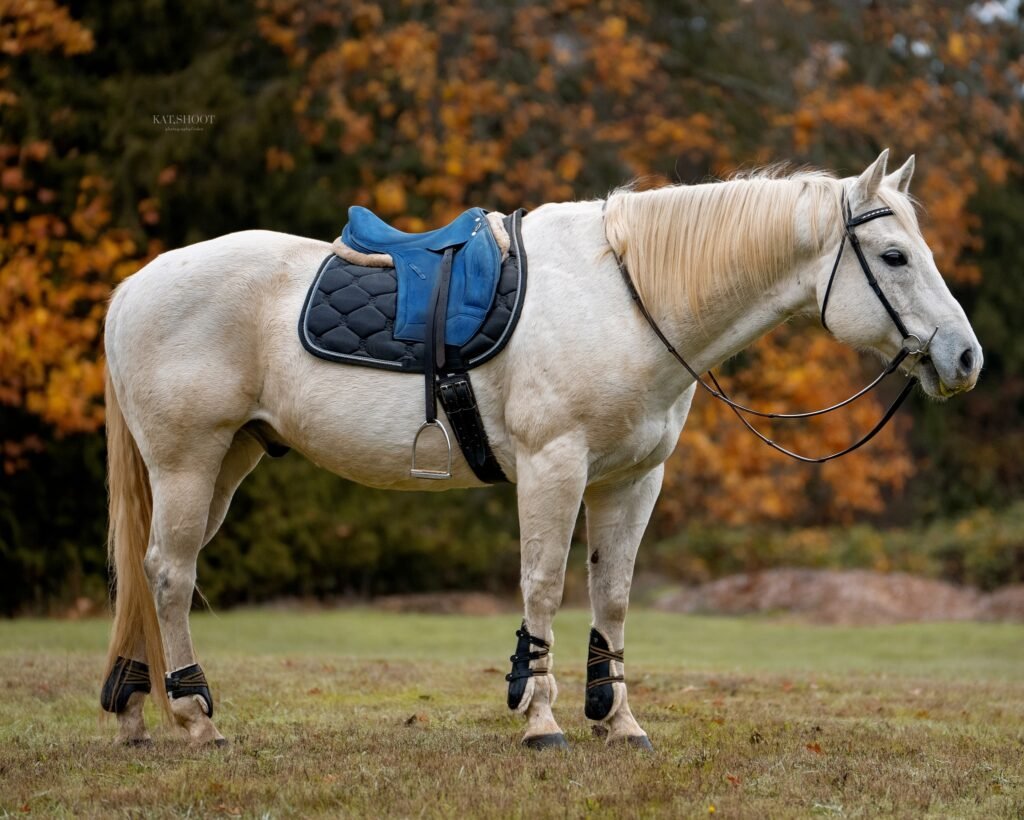
Research and field experience support feeding alfalfa approximately 30–60 minutes before exercise. This timing aligns with the post-feeding buffering window and ensures adequate stomach fill during work (Nadeau et al., 2000).
Reducing fasting intervals before exercise directly addresses why horses get ulcers when exercised on an empty stomach and remains one of the most effective management strategies for ulcer prevention in horses (Sykes et al., 2015).
Feeding Strategies for Ulcer-Prone Horses Before Exercise
Effective feeding management for horses focuses on system design rather than single feed additions. Consistent forage access should form the foundation, with alfalfa used strategically when exercise timing creates vulnerability. Long-stem hay remains the preferred form for maximizing chewing and physical buffering, while pellets may be used when hay is impractical but offer less protection (Merritt, 2009).
Observed improvements in comfort and rideability often follow the introduction of feeding alfalfa before riding, particularly when combined with reduced overnight fasting. Persistent or severe signs should prompt veterinary evaluation, as feeding strategies support management but do not replace diagnosis.
Physical stratification and reduced acid splash
Long-stem forage contributes to a fibrous mat within the stomach, supporting stratification of gastric contents. Studies involving exercised horses demonstrate reduced severity of stomach ulcers in horses when alfalfa hay is incorporated into feeding systems, consistent with reduced gastric acid exposure in horses (Lybbert et al., 2007).
References
- Lorenzo-Figueras, M., & Merritt, A. M. (2002). Effects of exercise on gastric volume and pH in the horse. American Journal of Veterinary Research, 63(10), 1481–1487.
- Lybbert, T., Gibbs, P. G., Cohen, N. D., Scott, B. D., & Sigler, D. (2007). Feeding alfalfa hay to exercising horses reduces the severity of gastric squamous mucosal ulceration. Proceedings of the American Association of Equine Practitioners, 53, 379–382.
- Merritt, A. M. (2009). Normal equine gastrointestinal physiology. Veterinary Clinics of North America: Equine Practice, 25(1), 1–17.
- Nadeau, J. A., Andrews, F. M., Mathew, A. G., Argenzio, R. A., Blackford, J. T., Sohtell, M., & Saxton, A. M. (2000). Evaluation of diet as a cause of gastric ulcers in horses. American Journal of Veterinary Research, 61(7), 784–790.
- Sykes, B. W., Hewetson, M., Hepburn, R. J., Luthersson, N., & Tamzali, Y. (2015). European College of Equine Internal Medicine consensus statement—Equine gastric ulcer syndrome. Journal of Veterinary Internal Medicine, 29(5), 1288–1299.
- Vatistas, N. J., Snyder, J. R., Carlson, G., Johnson, B., Arthur, R. M., Thurmond, M., Zhou, H., & Lloyd, K. C. (1999). Cross-sectional study of gastric ulcers of the squamous mucosa in thoroughbred racehorses. Equine Veterinary Journal, 31(1), 34–39.
- Whitfield-Cargile, C. M., Cohen, N. D., & Suchodolski, J. S. (2018). Effects of diet on the equine gut microbiome and implications for health and disease. Journal of Animal Science, 96(3), 1161–1175.