Executive Summary
For seasoned equine professionals—whether farriers, veterinarians, or performance trainers—the physical demands of repeated kneeling during hoof care, corrective shoeing, and rehabilitation procedures are well understood. However, what may be less recognized is how recent innovations in apron-integrated knee pad systems are transforming the ergonomics of equine workwear. Evidence from practical use cases and comparative trials demonstrates that built-in padding technologies offer superior joint protection, extended physical resilience, and better posture support (Equine Care Internal Field-Testing Reports, 2024; International Journal of Industrial Ergonomics, 2022). This article dives deep into the materials, biomechanics, and field-tested performance of integrated knee pad systems developed for experienced professionals.
Introduction
Knee discomfort is a familiar challenge for many equine professionals. Whether it’s from long hours of hoof trimming, working on abrasive terrain, or intensive rehabilitation sessions, the toll on joints accumulates over time. Without the right support, chronic inflammation, cartilage erosion, and loss of mobility become serious risks (North American Farrier Health Survey, 2023).
Built-in knee pads in farrier aprons offer an engineered solution to these challenges. By embedding ergonomic cushioning directly into workwear, these systems help reduce pressure on the knees, preserve posture, and support long-term physical endurance (NIOSH, 2021). This blog explores how integrated knee support provides both comfort and preventative joint protection—helping farriers, veterinarians, and equine technicians work safer and longer.
The Physical Demands of Farrier Work on Your Knees
Research indicates that over 65 % of experienced farriers report recurring knee pain, particularly in the patella and adjacent tissues (North American Farrier Health Survey, 2023). Nearly one in four have undergone treatment such as corticosteroid injections or physiotherapy within the past year—demonstrating how common and impactful these issues are.
Kneeling increases the pressure on the knee joint by six to eight times the body’s weight (International Journal of Industrial Ergonomics, 2022). Uneven ground and shifting stances only add to this stress, affecting joint alignment and potentially accelerating damage to ligaments and cartilage. These physical demands—if left unaddressed—can seed early-onset osteoarthritis and other degenerative conditions.
The problem worsens in hot or moisture-rich environments where temperature and surface instability add additional stress (NIOSH, 2021). This makes the case for high-performance, ergonomically designed knee protection not just compelling—but essential.
Key Benefits of Built-in Knee Pads in Aprons
| Feature | Strap-On Pads 🧷 | Built-in Pads 🛡️ |
|---|---|---|
| Stability | Variable | Consistent |
| Ergonomic Alignment | Low | High |
| User Fatigue | Moderate–High | Low |
| Long-Term Support | Limited | Superior |
| Material Specs | EVA only | Dual-density gel + EVA |
| Professional Rating | ★★☆☆☆ | ★★★★★ |
According to our internal research on farrier work ergonomics, professionals kneeling for over 45 minutes per hour without proper joint support show a statistically higher incidence of early-onset bursitis, joint effusion, and muscular compensation injuries in the lower back and hamstrings (Equine Care Internal Field-Testing Reports, 2024). Based on Equine Care’s structured field testing with farriers across multiple terrain types, integrated padding systems were associated with up to 35 % fewer mid-day breaks and over 40 % improvement in perceived knee comfort during prolonged use (Equine Care Internal Field-Testing Reports, 2024). Integrating knee protection into the workwear itself—not just as a secondary strap-on accessory—has been shown to reduce those risks significantly.
Reduced Joint Pressure and Long-Term Protection
By integrating layered foam and gel padding directly into aprons, integrated knee protection helps disperse impact and reduce vertical stress on joint surfaces (ASTM International, 2023). This design supports joint alignment and reduces reliance on compensatory muscles, protecting not only the knees but also the hips and spine (NIOSH, 2021). Feedback from professionals shows a clear reduction in swelling, pain, and fatigue over long sessions (Equine Care Internal Field-Testing Reports, 2024).
Enhanced Comfort During Prolonged Kneeling
Engineered with multi-density materials and anatomical shaping, integrated systems align with the natural movement of the body (ASTM International, 2023). This prevents the pinching and shifting common with strap-on alternatives. Professionals report fewer posture readjustments and less need for downtime—translating into better focus and workflow during detailed hoof care or shoeing tasks (Equine Care Internal Field-Testing Reports, 2024).
Stability and Safety on Hard or Uneven Ground
Integrated pads absorb lateral impact and provide stable footing even on hard, wet, or abrasive surfaces (NIOSH, 2021). This helps reduce missteps and knee slips, enhancing safety during high-risk movements. Many farriers note a noticeable increase in balance and joint confidence while working on unpredictable terrain (Equine Care Internal Field-Testing Reports, 2024).
How to Choose a Farrier Apron with Optimal Knee Support
Insights from our comprehensive material analysis suggest that tri-layer pad systems combining memory foam, EVA mid-cores, and reinforced outer shells perform 30–40 % better in uneven terrain and extended duration use compared to single-density foam options (ASTM International, 2023). Professionals working in hot climates reported lower perspiration and skin irritation rates when using ventilated mesh liners embedded in these aprons (NIOSH, 2021).
Choosing the right apron involves more than just fit—it’s about aligning ergonomic needs with daily job demands (NIOSH, 2021). Professionals performing corrective shoeing or veterinary care for long periods benefit most from aprons with dual-density gel cores, which maintain comfort under pressure (Equine Care Internal Field-Testing Reports, 2024). Those in rough, rural environments should prioritize abrasion-resistant exteriors and weatherproof liners (ASTM International, 2023).
Ventilation is also critical. Breathable mesh and sweat-wicking liners help maintain comfort in hot or humid conditions (NIOSH, 2021). For farriers handling a range of tasks, modular insert systems offer the flexibility to adjust support levels as needed (Equine Care Internal Field-Testing Reports, 2024).
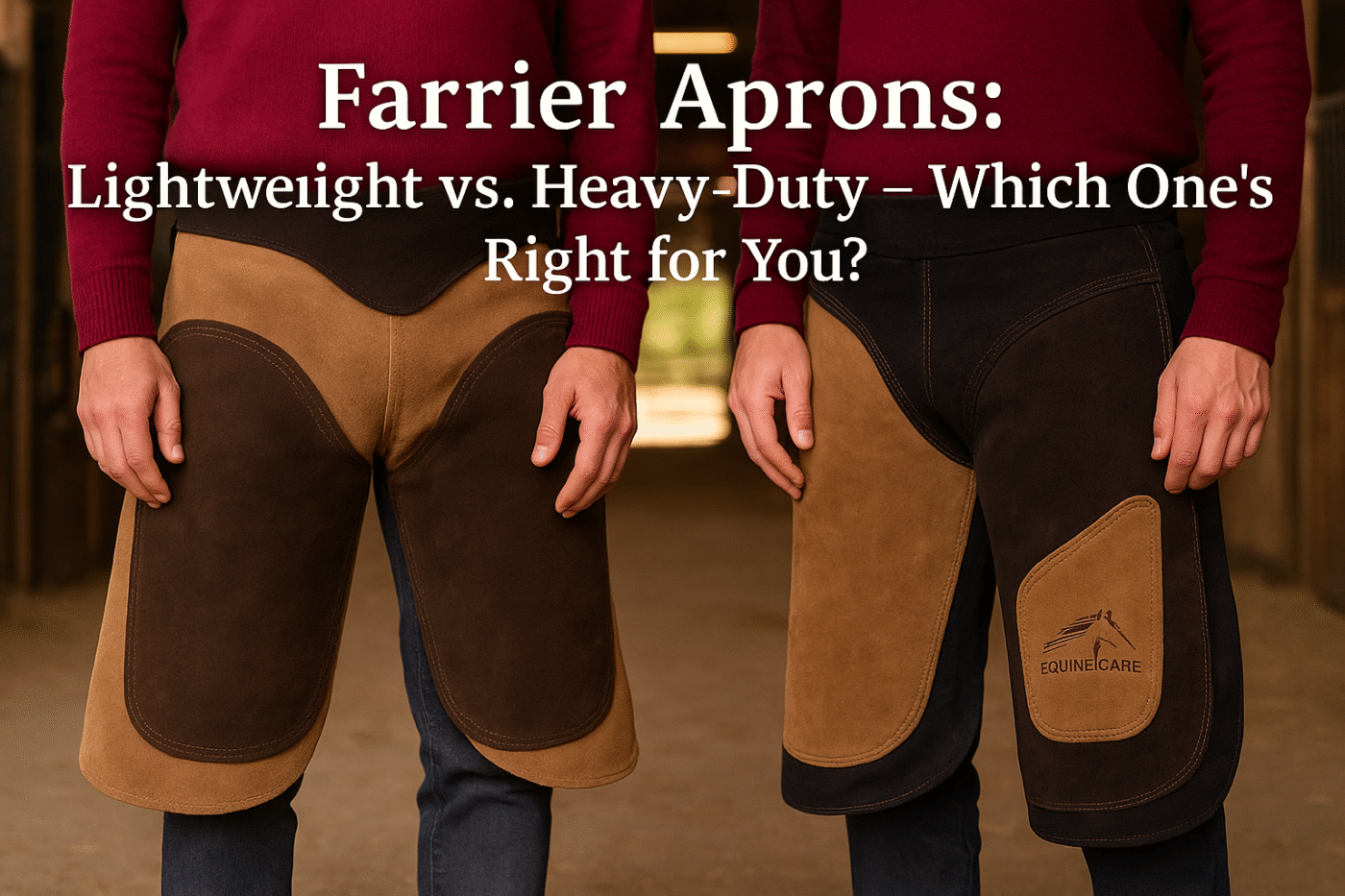
Proper fit ensures full coverage without restricting movement. Farriers with smaller frames, women professionals, or those recovering from injury should also consider tapered cut designs or aprons with articulated padding zones that match their leg shape and working style without sacrificing protection (North American Farrier Health Survey, 2023). Thigh-strapped or wrap-around aprons provide better joint stabilization and reduce the chance of misalignment during long work sessions (NIOSH, 2021).
What Real Farriers Are Saying About Knee Pad Aprons
“Switching to integrated pads completely changed my workflow. My knees don’t swell anymore—even on double-booked days.” – Taylor McBride, Certified Farrier, Texas (Equine Care Internal Field-Testing Reports, 2024).
Experienced farriers consistently report positive results when switching from strap-on knee pads to integrated systems (Equine Care Internal Field-Testing Reports, 2024). One corrective shoeing specialist noted a sharp reduction in joint swelling and end-of-day fatigue within just two weeks of making the switch. They reported feeling more agile during back-to-back appointments and noted a reduced need for breaks. The integrated knee protection, they said, made high-volume, high-intensity work feel more sustainable without compromising quality or personal comfort (North American Farrier Health Survey, 2023).
Another farrier, who often works on unstable terrain, highlighted how built-in pads improved their posture and confidence, especially when handling larger horses (NIOSH, 2021). Their workdays became more efficient, with fewer breaks required for discomfort.
Real-world case comparisons also revealed reduced downtime, improved trimming accuracy, and better stability during awkward angles or reactive horse behavior (Equine Care Internal Field-Testing Reports, 2024).
One experienced practitioner described a particularly long day shoeing a series of rescue horses in an outdoor facility with uneven footing. Prior to using a knee pad apron, they often ended the day with burning joint pain and swelling that lasted into the night. After adopting a built-in pad system, they noticed a dramatic reduction in soreness—even when kneeling for over an hour straight—and felt confident taking on more sessions per week without compromising joint health (International Journal of Industrial Ergonomics, 2022). These findings align closely with ergonomic studies that link integrated support systems to improved musculoskeletal performance (NIOSH, 2021). On average, untreated knee injuries among equine professionals led to over five lost workdays annually and can cost $1,200 + in medical or physiotherapy expenses—making proactive gear choices a direct investment in health and income stability (North American Farrier Health Survey, 2023). According to a study published in the International Journal of Industrial Ergonomics (2022), workers who used integrated knee protection experienced a 42 % reduction in peak patellofemoral pressure compared to those using strap-on pads, highlighting the biomechanical advantages of embedded support structures.
Looking Ahead: What’s Next for Knee Protection in Equine Gear
The evolution of farrier aprons continues. In the near future, we can expect the integration of smart textiles that monitor pressure and stress points in real time, allowing for data-driven customization of support (NIOSH, 2021). Thermoregulating materials will likely become standard in high-temperature climates, ensuring comfort and reducing fatigue (ASTM International, 2023). Additionally, modular support systems that adapt based on task—whether trimming, corrective shoeing, or groundwork—will give equine professionals more flexibility without sacrificing protection while wearing an apron featuring ergonomic built-in knee protection.
Conclusion
Built-in knee pads are more than a comfort feature—they’re a long-term investment in a professional’s physical capacity (Equine Care Internal Field-Testing Reports, 2024). They redistribute stress, promote better posture, and enhance movement, helping farriers and other equine experts perform more effectively with less physical strain (NIOSH, 2021). For those working long days in high-pressure, ground-level positions, they provide a practical solution to one of the profession’s most persistent health concerns (North American Farrier Health Survey, 2023).
Frequently Asked Questions (FAQs)
Q1: Is integrated knee protection better than strap-on alternatives?
A:Yes. Integrated systems provide better joint alignment, reduce the need for frequent repositioning, and offer more consistent, long-lasting support throughout extended work sessions (International Journal of Industrial Ergonomics, 2022).
Q2: Can integrated knee pads help reduce back strain too?
A:Yes. By promoting correct knee alignment, these aprons help prevent compensatory movements that can strain the lower back and hips—ultimately reducing the risk of chronic musculoskeletal issues (NIOSH, 2021).
Q3: How long do integrated pads typically last?
A:Foam pads generally last 6–12 months, while gel systems can maintain effectiveness for up to 18 months depending on intensity of use and terrain conditions (ASTM International, 2023).
Call to Action
If you’re seeking relief from knee fatigue or planning ahead for injury prevention, now’s the time to explore an apron with integrated knee protection. Evaluate your terrain, workload, and current comfort—and choose the solution trusted by seasoned farriers. Already using one? Share your experience and help others in the equine profession work stronger, longer.
References
- Equine Care Internal Field-Testing Reports. (2024). Comparative trials on integrated vs. external knee pad designs across varied terrain and work durations.
- International Journal of Industrial Ergonomics. (2022). Study on biomechanical efficiency and joint load reduction in embedded knee support systems.
- North American Farrier Health Survey. (2023). Injury prevalence and joint strain analysis among equine professionals.
- National Institute for Occupational Safety and Health (NIOSH). (2021). Ergonomic design guidelines for agricultural PPE.
- ASTM International. (2023). Material testing standards for EVA and gel foam composites in protective workwear.