Introduction
For aspiring farriers, mastering hoof nippers is a foundational skill—but it often comes with uncertainty. These powerful tools demand control, confidence, and experience. This guide is designed to help novice farriers or students develop steady hands and sharp instincts, focusing on techniques to start slow, trim accurately, and gradually increase efficiency.
Understanding the Tool – What Hoof Nippers Actually Do
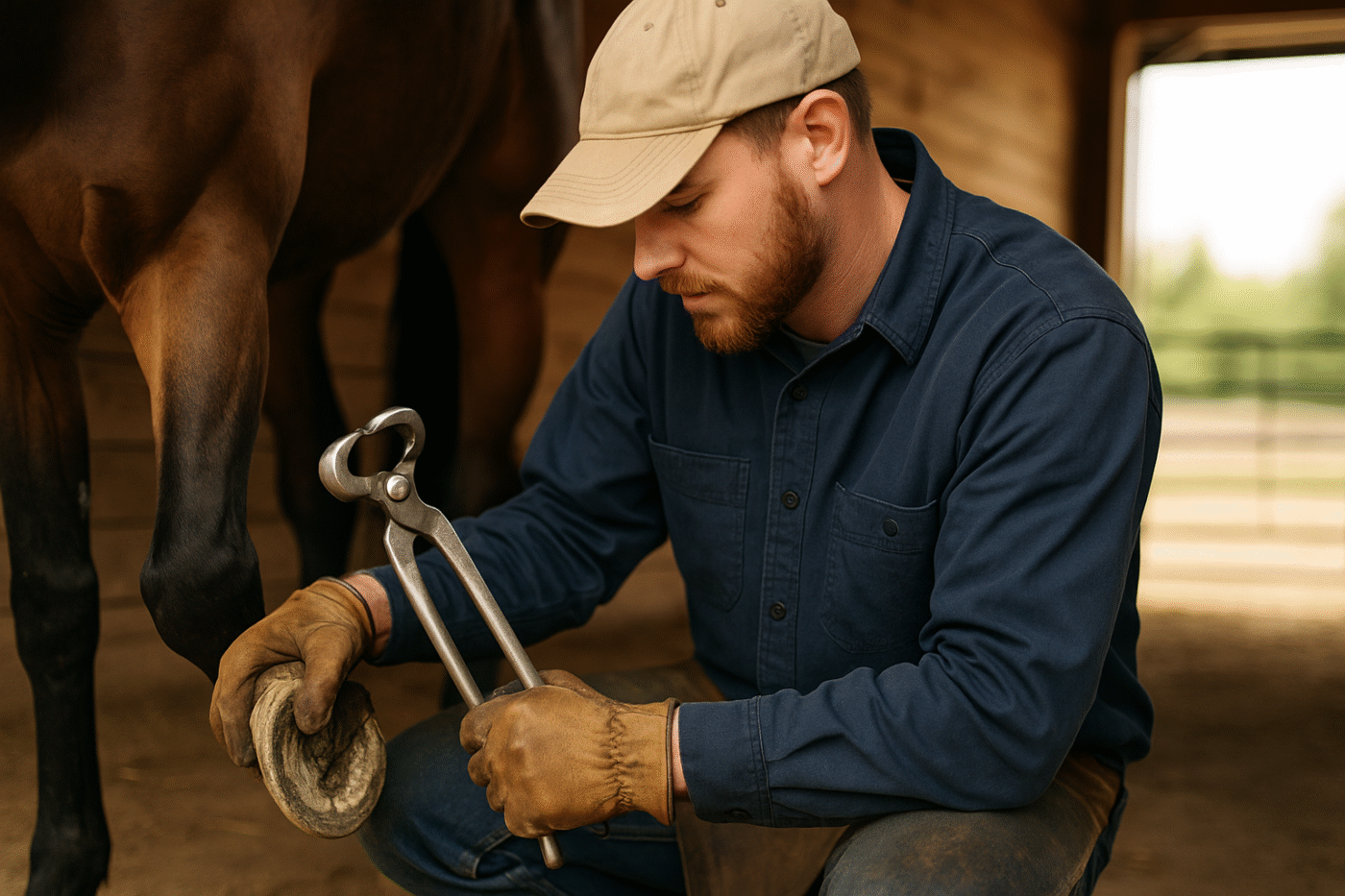
Hoof nippers are precision instruments used to remove excess hoof wall during trimming. Unlike rasps or hoof knives, nippers are responsible for the bulk removal and require measured, deliberate cuts. New farriers must understand the hoof’s anatomy—differentiating the wall, sole, and frog—to avoid over-trimming and ensure a balanced, healthy hoof.
Start Slow – Accuracy Over Speed
Speed should never be a beginner’s goal. Focus on clean, even cuts made at the proper angle. Pay attention to how the hoof responds to pressure. Practicing on cadaver hooves or trimming blocks helps new farriers become familiar with hoof density and resistance. Precision will naturally lead to speed over time.
Perfecting Grip and Body Position
Your grip and posture directly impact the quality of each trim. Use both hands to maintain control and reduce strain. Keep your elbows slightly bent to absorb shock, and align your body with the horse’s limb to stay balanced. This setup reduces fatigue and keeps both horse and farrier safe.
Practice in Stages – Build a Routine
Confidence grows with structure and consistency. Begin by using cadaver hooves or synthetic training blocks to develop your feel and technique. Next, transition to live hooves under supervision, ideally starting with calm and cooperative horses. Set manageable goals—such as trimming two hooves per day—and gradually increase your pace and difficulty.
Learn from Observation and Feedback
As one experienced farrier shared, “You don’t need to be fast—you need to be accurate. Speed comes when your hands know what your eyes are seeing.”
Spend time observing seasoned farriers. Note their trimming rhythm, how they handle difficult hooves, and their interactions with horses. Record your own practice sessions to identify areas for improvement. Mentors and instructors can provide invaluable feedback to accelerate your progress. Spend time observing seasoned farriers. Note their trimming rhythm, how they handle difficult hooves, and their interactions with horses. Record your own practice sessions to identify areas for improvement. Mentors and instructors can provide invaluable feedback to accelerate your progress.
Tools Matter – Start with the Right Equipment
Choosing beginner-friendly tools can ease the learning curve. Mid-weight hoof nippers offer a good balance between strength and control. Ergonomic grips help reduce hand fatigue. Sharp, well-maintained blades make your cuts smoother and safer. Don’t forget to oil joints and inspect alignment regularly.
Troubleshooting: Common Beginner Mistakes
All farriers make mistakes early on. Be cautious of trimming too much hoof at once, especially if you’re still developing a feel for the tool. Dull blades can crush rather than cut, causing discomfort to the horse. Always assess hoof balance before and after trimming to ensure evenness.
Confidence Is a Skill – Not Just a Feeling
True confidence comes from repetition and reflection. Each hoof teaches a lesson. Don’t aim for perfection immediately—focus on steady progress. Rather than comparing yourself to experienced farriers, watch and learn from them. Over time, your muscle memory and judgment will improve naturally.
Conclusion
If you’re a new farrier learning to use hoof nippers, know that every expert once stood where you are. Start slow, trim smart, and build trust with both your tools and the horse. With time, your accuracy and speed will come together naturally. Keep learning, keep trimming, and you’ll soon move with the calm confidence of a seasoned professional.
Take Home Message
Ready to take your first confident step as a farrier? Explore Equine Care’s premium hoof nippers and farrier tools, trusted by professionals and designed for learners. Visit our store today and start building your skillset with tools that grow with you.
FAQs:
Building Confidence with Hoof Nippers
Q1. How long does it take to become proficient with hoof nippers?
Most new farriers begin to feel confident after several weeks of regular practice, especially when guided by a mentor. True proficiency can take months of hands-on trimming experience.
Q2. What are the best practice tools for beginners?
Cadaver hooves, synthetic hoof blocks, and dummy hooves are great for beginners to practice trimming angles and grip without stressing a live horse.
Q3. Should I trim the hoof wall in one cut or multiple cuts?
Always use multiple, small cuts. This allows better control, reduces the chance of over-trimming, and makes it easier to maintain hoof balance.
Q4. What signs show I’m using hoof nippers incorrectly?
Cracking, crushing instead of clean cutting, horse discomfort, or uneven hoof shape are signs you may need to adjust your technique or sharpen your tools.
Q5. What size hoof nippers are best for beginners?
Start with a mid-size (10″–12″) ergonomic nipper. They’re easier to control and less fatiguing, helping you build muscle memory and hand confidence.