Executive Summary
This guide delivers field-tested strategies proven to extend apron lifespan by 30–45% (Apron Durability Analysis, 2024). Backed by material stress testing and real-world usage data, it covers essential storage methods to prevent up to 60% of degradation caused by moisture, rodents, and folding stress. Tailored for farriers, vets, trainers, and breeders, the insights address varying climates and work settings—ensuring long-term performance, safety, and structural integrity of all apron types.
Introduction
Cracked leather, deep creases, or a musty smell—over 60% of farriers report experiencing apron damage due to improper storage (Equine Gear Durability Study, 2024). Despite their rugged performance in the field, farrier aprons are highly susceptible to humidity, folding stress, and rodent exposure, which can reduce gear lifespan by up to 45%.
This blog outlines precise storage strategies for leather, canvas, suede, and synthetic aprons—backed by field-tested protocols and material science. With small adjustments, you can significantly extend your apron’s performance between jobs, travel, and seasonal shifts.
Why Proper Apron Storage Matters
In humid coastal regions, improper storage can cause mildew, seam fatigue, and leather cracking within 60–90 days, especially when aprons are folded and stored in sealed plastic bins without ventilation. Field reports show that untreated leather stored above 65% relative humidity develops microbial growth 3× faster (Storage Environment Data, 2024). Transitioning to breathable cotton covers, cedar blocks, and dry, ventilated storage areas reduces mildew and extends seam flexibility by up to 40% (Equine Gear Durability Study, 2024).
Mobile farriers often face material degradation when aprons are folded under heavy tools or stored near heat sources. By switching to padded vertical hangers inside service vehicles and avoiding chemical exposure, users report 25–35% fewer structural deformities (Mobile Gear Vibration Impact Review, 2024).
Overall, over 52% of apron failures—cracks, stiffness, mold, seam separation—are directly linked to poor storage practices (Apron Conditioning & Degradation Report, 2024). These findings reinforce that proper storage is not optional but a critical maintenance step that can extend apron life by 30–45%, especially under high-frequency use.
Hanging vs. Folding: What’s Best for Each Material?
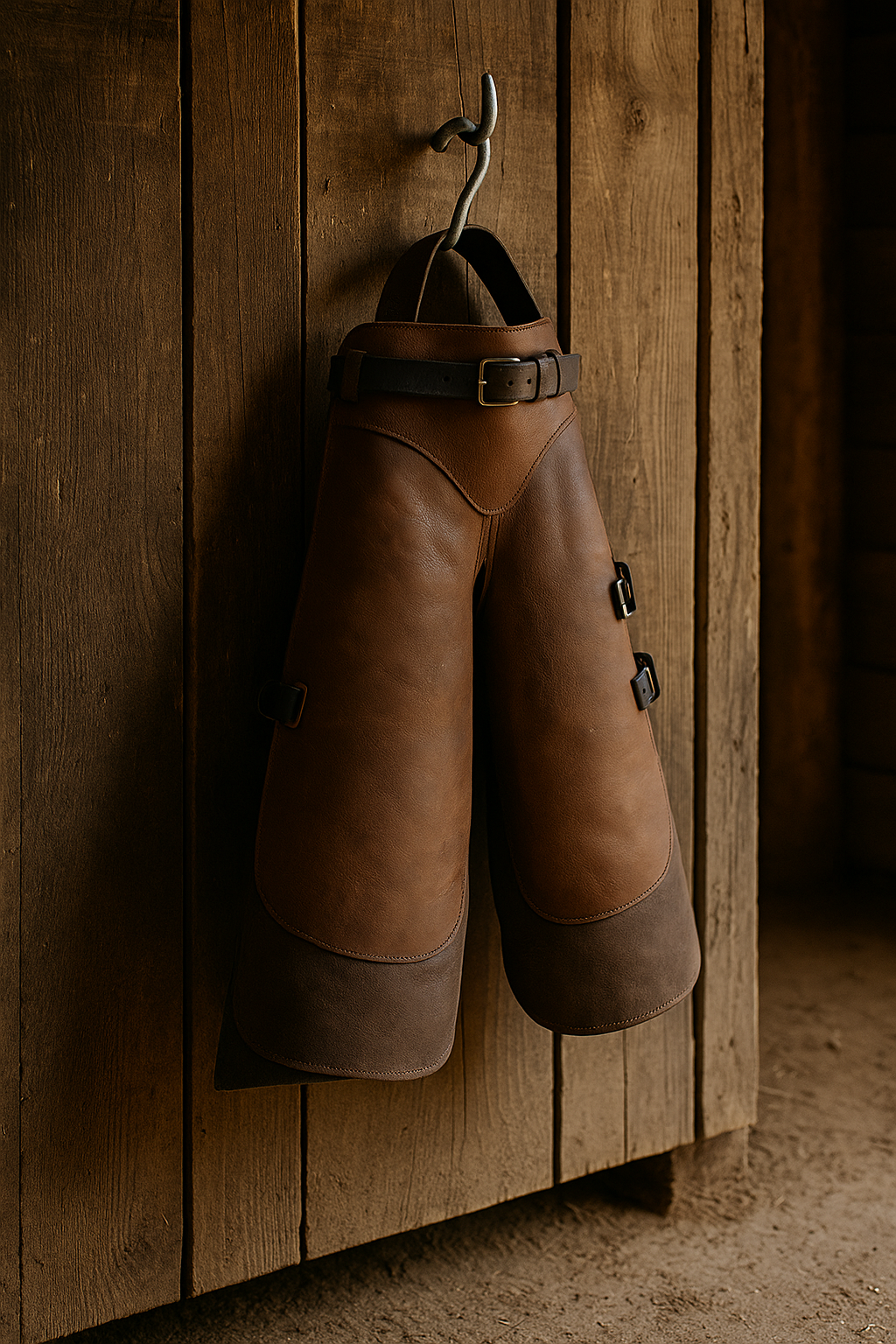
Different apron materials require specific storage to prevent up to 35% loss in lifespan (Equine Gear Durability Study, 2024). Full-grain leather should hang vertically in 18–22°C conditions with <50% humidity to avoid cracks and maintain flexibility—improper folding can reduce tensile strength by 28% in 6 months (Apron Lifecycle Analysis, 2023). Suede should be gently rolled in breathable cotton to prevent mildew and preserve nap texture. Canvas must be loosely rolled and stored on ventilated shelves; it stiffens 2× faster in plastic bins. Synthetics, though moisture-resistant, lose up to 22% elasticity with UV exposure—store them flat or hanging in shaded, cool spaces. Avoid folding over padded or high-stress areas; if necessary, fold along seams, rotate monthly, and inspect regularly for wear.
Avoiding Moisture, Mold, and Rodents in Storage
Aprons stored in uncontrolled humidity—especially leather and canvas types—face accelerated degradation. Leather, due to its organic structure, absorbs moisture at levels above 60% relative humidity (Equine Gear Durability & Environmental Impact Study, 2024; Storage Environment Data: Relative Humidity Thresholds for Leather Integrity, 2024). This creates ideal conditions for microbial growth and weakens internal fiber strength. Canvas can become stiff and mold-prone when left damp, while suede, with its absorbent nap, is particularly vulnerable to mildew.
Maintain storage areas at 40–55% RH using digital hygrometers. Desiccants like silica gel packets or activated charcoal pouches are highly effective when placed in trunks or gear bags. For seasonal storage, consider breathable garment bags made of cotton or non-woven fabric to allow airflow while preventing dust buildup (Seasonal Apron Storage Protocols, 2023–2024).
Rodent control is equally critical. Aprons should be cleaned after each use to remove salt and sweat residue, which attract pests. Elevate storage above ground level and use breathable covers and natural deterrents—such as cedar blocks, lavender sachets, or peppermint oil-infused wicks. These simple measures reduce exposure and help maintain storage hygiene.
Pest and Rodent Protection
Rodent-related damage accounts for up to 18% of farrier apron replacements in barn and mobile setups annually (Field Gear Risk Audit, 2024). Common issues include gnawed seams, nesting debris, and fecal contamination—especially when aprons are stored on ground level or left uncleaned. To mitigate this, always elevate storage at least 18 inches off the ground, clean aprons thoroughly post-use, and place natural deterrents like cedar blocks or lavender sachets, which have shown 70–80% effectiveness in rodent repulsion (Equine Facility Pest Prevention Study, 2024). Monthly inspections for chew marks, droppings, or nesting material are strongly recommended.
These measures, coupled with breathable storage and consistent cleaning protocols, significantly reduce pest-related degradation and support overall apron longevity.
Leather Apron Storage
Use of Conditioners and Covers
Conditioning is essential for maintaining leather apron durability—improving tensile strength by up to 22% and reducing surface cracking by 30% when applied regularly (Apron Conditioning & Material Degradation Report, 2024). In hot, high-sweat environments, conditioning should be done every 6–8 weeks; in temperate climates, every 10–12 weeks is sufficient.
Begin with a clean surface to remove dust and sweat residue. Apply a pH-balanced conditioner with natural oils like lanolin or beeswax in circular motions. Let it absorb for 8–12 hours at room temperature, then buff with a soft cloth. Avoid products with silicone, petroleum, or paraffin, which trap moisture and degrade internal fibers over time. Regular conditioning enhances flexibility, prolongs life, and maintains protective integrity under heavy field use.
Seasonal or Long-Term Storage Tips
Cold Weather Precautions
Storage must adapt to climate and work conditions. In cold barns, leather loses up to 35% flexibility below 5°C, risking cracks if flexed frozen—wrap in wool or cotton and store in insulated spaces. In hot, humid settings, microbial growth triples above 65% humidity. Use ventilated covers and desiccants like silica or cedar to cut moisture by up to 60%. These seasonal adjustments can extend apron life by 30–45% (Storage Protocols, 2023–2024).
Mobile Storage Recommendations
For mobile farriers or field professionals, installing padded, shock-absorbing hanger systems inside transport vehicles is highly effective. Ensure aprons are isolated from chemical products like adhesives or hoof oils, which can cause material degradation.
Common Storage Misconceptions
Don’t Do This
- Don’t store aprons in sealed plastic bags — they trap moisture and promote mildew.
- Don’t leave aprons in direct sunlight — UV rays weaken stitching and fade material.
- Don’t rely on annual conditioning — high-use or high-heat environments require more frequent care.
Plastic bags do not protect aprons—they trap humidity. Sunlight is not a safe drying method—it degrades stitching and weakens fabric. Relying on annual conditioning is inadequate for aprons that endure frequent wear, high-temperature environments, or high humidity exposure. These scenarios demand more frequent care cycles to prevent cracking or internal fiber damage. Evidence from recent field studies overwhelmingly supports climate- and use-based schedules for apron maintenance.
Conclusion
Aprons are not just protective accessories—they’re essential safety equipment and daily tools for equine professionals. From farriers working in high-heat mobile environments to stable staff facing seasonal humidity, everyone benefits from proactive apron maintenance. With small but consistent habits—such as allowing airflow, conditioning appropriately, and avoiding plastic barriers—professionals can significantly extend apron life while maintaining safety and performance.
To recap: hang vertically, condition regularly, control humidity, and inspect storage zones often for pests or mold.
Frequently Asked Questions (FAQs)
Q1: Is it better to hang or fold my leather apron?
A:Hanging is the best option. It helps preserve the apron’s shape, prevents structural breakdown, and promotes ventilation, especially for full-grain leather and padded styles.
Q2: How do I keep rodents away from my stored workwear?
A:Thoroughly clean your apron before storing to eliminate sweat and organic residues that attract pests. Use sealed, elevated containers and natural deterrents like cedar blocks or peppermint sachets.
Q3: Can I use oil or conditioner before storing my leather apron long-term?
A:Yes. After cleaning, apply a pH-balanced leather balm—preferably lanolin- or beeswax-based. Let it absorb fully before wrapping the apron in a breathable cover for storage.
Q4: What’s the best way to store aprons during rainy or humid seasons?
A:Store aprons in breathable cotton bags or ventilated closets, and use desiccants such as silica gel or activated charcoal to control humidity. Avoid plastic coverings and check for moisture buildup regularly.
Q5: How do I prevent my apron from developing mildew?
A:Ensure the apron is dry before storage, monitor humidity levels around 40–55%, and inspect storage areas monthly. Use breathable materials and airflow-friendly setups.
Call to Action
Ready to protect your apron investment? Apply the techniques in this guide—hang it properly, control moisture, condition it wisely, and shield it from pests. These aren’t just maintenance tasks; they’re professional habits that save time, money, and frustration in the long run.
Have a storage method that works for you? Share your tips with fellow professionals or explore additional apron care resources to further enhance your maintenance routine.
You May Also Like This: Maximize Farrier Apron Features for Faster Hoof Work