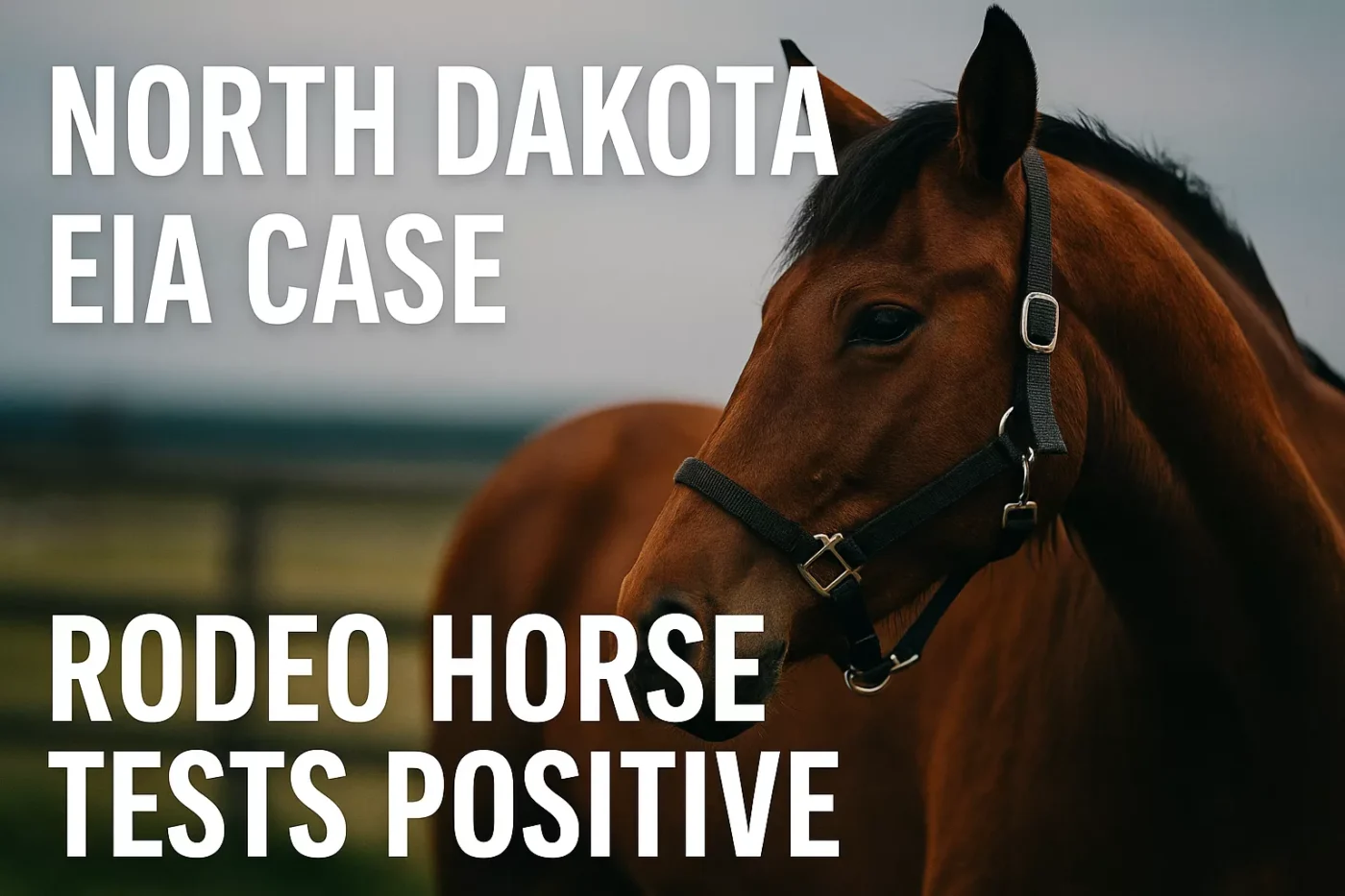
A confirmed North Dakota EIA case has been reported involving a rodeo horse in McKenzie County.
This brief overview covers what happened, how EIA spreads, clinical signs, testing requirements, and why the disease remains a major welfare concern.
On September 11, a 2-year-old draft-cross filly used for rodeo tested positive for equine infectious anemia (EIA) during routine pre-sale testing in McKenzie County, North Dakota. The horse showed no clinical signs at the time of testing but was euthanized in accordance with state disease-control guidelines.
This report was issued through EDCC Health Watch, a communications program supported by the Equine Disease Communication Center (EDCC). The EDCC is an independent nonprofit organization funded by industry donations to provide verified, publicly accessible equine disease information.
About Equine Infectious Anemia (EIA)
EIA is a viral disease that compromises a horse’s immune system. Transmission occurs primarily through:
- Blood-feeding insects such as horseflies
- Contaminated equipment, needles or instruments
- Transfer of infected blood or body fluids
Once infected, a horse becomes a lifelong carrier, capable of spreading the virus even if outwardly healthy.
The Role of the Coggins Test
A Coggins test detects antibodies to the EIA virus and remains the primary diagnostic tool for controlling the disease. Most states require a negative Coggins for:
- Interstate travel
- Sales
- Competitions
- Boarding or events
Routine testing is essential because many infected horses appear clinically normal.
Clinical Signs of EIA
Although some horses remain asymptomatic, those showing illness may experience:
- Progressive weight loss
- Muscle weakness
- Poor stamina
- Fever
- Depression
- Anemia
These signs worsen over time as the immune system declines.
No Cure, No Vaccine
There is no vaccine or cure for equine infectious anemia. Under national guidelines, infected horses must be:
- Euthanized, or
- Isolated under strict lifelong quarantine at least 200 yards from all other equids
These measures protect surrounding farms, events, and traveling horses from exposure.