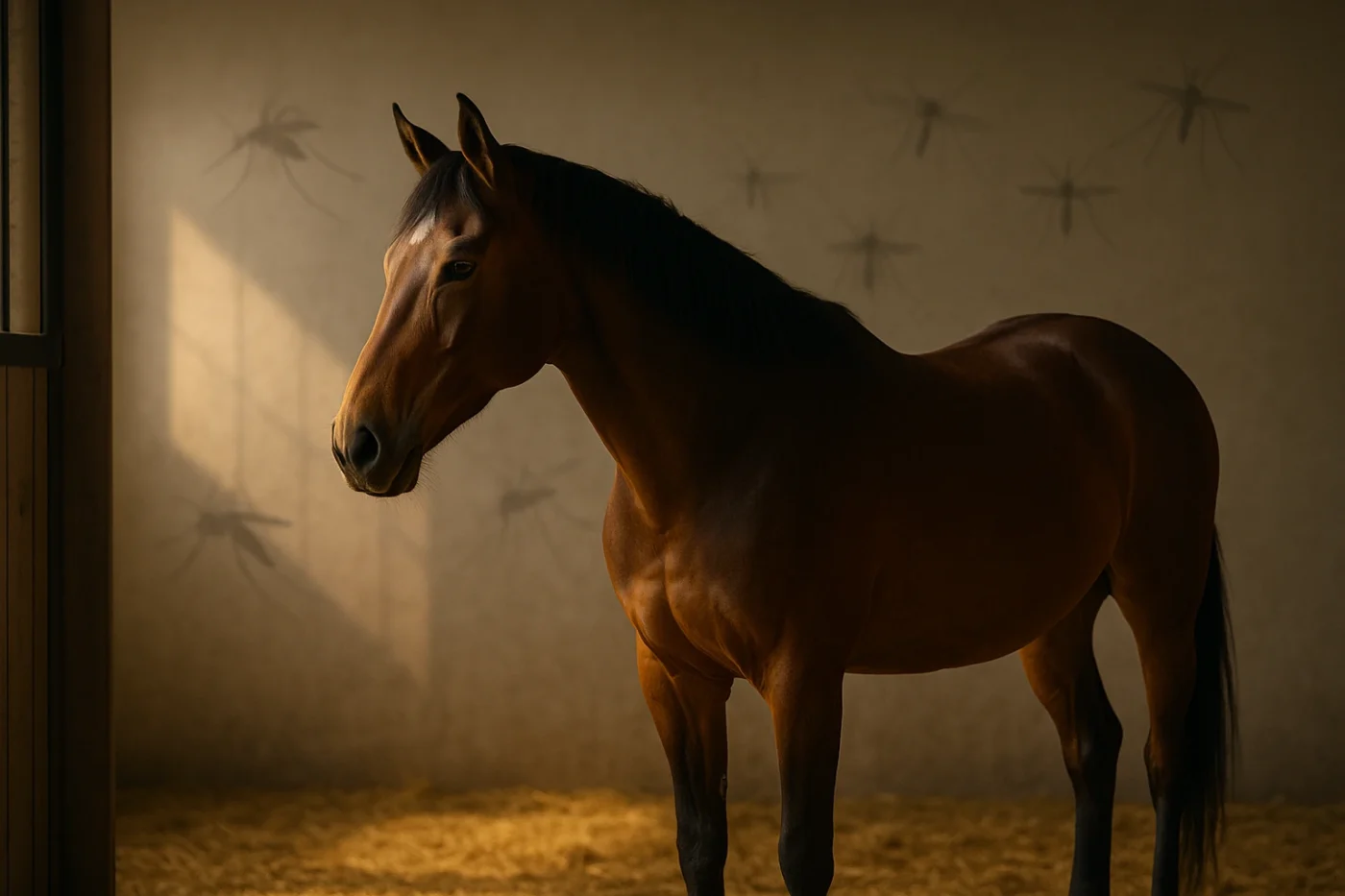
A 2-year-old Standardbred filly in Missauee County, Michigan, tested positive for West Nile Virus (WNV) after experiencing acute neurological symptoms. The filly began exhibiting symptoms on August 29, including weakness, loss of coordination, and trouble standing. Despite veterinary attention, her condition worsened, and she was eventually euthanized to avoid further suffering.
The case was formally reported through the Equine illness Communication Center (EDCC) Health Watch, a reputable nationwide network that collects and disseminates information about equine illness epidemics. The EDCC tries to notify owners, trainers, and veterinarians of new instances so that they can take prompt steps to protect other horses in the area.
Michigan filly tests positive for WNV : WNV Definition
West Nile Virus is a mosquito-borne disease that affects horses’ central nervous systems. Not all infected horses exhibit serious sickness, but those that do may exhibit a variety of symptoms such as:
- Fever, decreased appetite, and depression.
- Stumbling, poor balance, or lack of coordination (ataxia).
- Muscle twitching, tremors, and partial paralysis.
- Difficulties swallowing and unusual head posture.
- Severe cases may develop into recumbency (inability to rise).
According to veterinary studies, the mortality rate for horses exhibiting neurological symptoms can be as high as 30-40%, making it one of the most dangerous mosquito-transmitted diseases in equines.
How Horses Get Infected
WNV is mostly transmitted when a horse is bitten by an infected mosquito. The virus naturally cycles between mosquitos and wild birds, but horses and people are classified as “dead-end hosts,” which means they can become ill but do not propagate the disease. This makes mosquito control methods very important in managing outbreaks.
Prevention Strategies for Horse Owners
Veterinarians strongly believe that vaccination is the most effective approach for minimizing the danger of West Nile Virus in horses. Horses that receive annual or biannual booster vaccinations are much less likely to acquire serious illness.
Along with immunization, horse owners should follow strong biosecurity and mosquito-control techniques, which include:
- Eliminate standing water in buckets, ponds, and pastures where mosquitos breed.
- Regular cleaning of water troughs and stables
- Stabling horses inside during peak mosquito activity at morning and twilight.
- Using insect repellents and protective blankets for horses
- Closely monitor all horses for early signs of fever or neurological disorders.
Why Awareness Matters
Cases like this one in Michigan demonstrate the necessity of knowledge and prevention. With mosquito numbers increasing in late summer and fall, the risk of WNV increases dramatically. Educating horse owners on the need of vaccination and mosquito control can help to minimize future losses in the equestrian community.
You can jump to our other news also.
📌 Reference: Equine Disease Communication Center (EDCC)