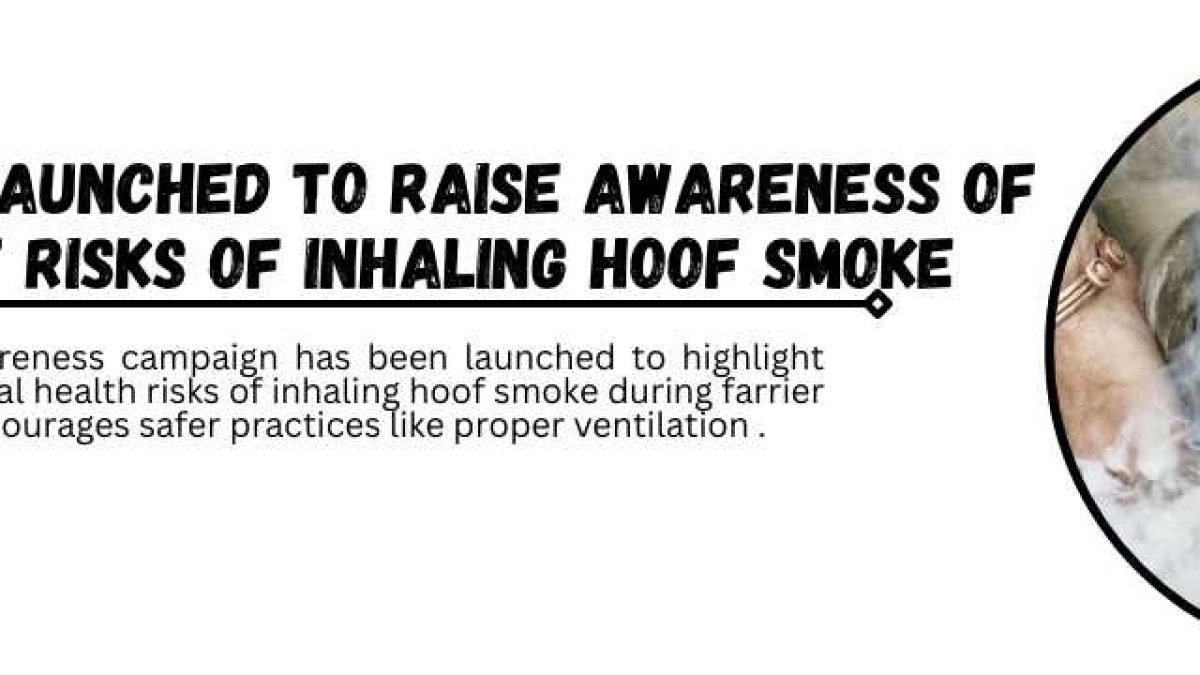
A new awareness campaign has been launched to highlight the potential health risks associated with inhaling hoof smoke — the fumes produced during hot shoeing when a farrier applies a heated horseshoe to the hoof.
While hot shoeing remains a traditional and widely practiced method in equine hoof care, experts say more education is needed about the respiratory exposure risks for farriers, yard staff and horse owners present during the process.
What Is Hoof Smoke?
Hoof smoke is created during hot shoeing when a heated metal shoe is briefly placed onto the horse’s hoof to create a level, balanced fit. The smoke is produced from burning keratin — the same protein that makes up human hair and nails.
Professional bodies such as the British Farriers and Blacksmiths Association recognise hot shoeing as a skilled farriery technique. However, campaigners stress that like any trade involving fumes, awareness of occupational health considerations is important.
Why the Concern?
Campaign organisers point to studies in other industries involving burnt keratin and organic smoke exposure, suggesting prolonged inhalation of certain fumes may irritate the respiratory system.
Possible short-term effects may include:
- Throat irritation
- Coughing
- Headaches
- Eye irritation
Long-term exposure in poorly ventilated environments may pose increased occupational risks, particularly for professionals performing hot shoeing multiple times daily.
It is important to note that research specific to equine hoof smoke is still limited, and the campaign focuses on precaution rather than alarm.
Advice for Farriers and Yard Owners
The campaign recommends simple risk-reduction strategies:
- Ensure good ventilation in shoeing areas
- Avoid enclosed stable blocks without airflow
- Step back from direct smoke exposure when possible
- Use respiratory protection in enclosed environments
- Educate staff about occupational hygiene
Farriers are trained professionals, and many already adopt practical ventilation measures. The goal is to formalise awareness rather than discourage established practices.
Balancing Tradition and Safety
Hot shoeing has been used for generations and offers advantages such as improved shoe fit and hoof balance. Many experienced farriers prefer it for performance horses.
However, modern workplace standards increasingly emphasise respiratory protection across trades — from welding to hairdressing — and equine professionals are no exception.
Industry Response
Reactions within the equestrian sector have been mixed. Some professionals say the issue has long been understood and managed through common sense ventilation. Others welcome formal guidance to ensure younger farriers and apprentices adopt best practices early in their careers.
Occupational health experts argue that proactive education is preferable to reactive regulation.
Why This Matters
Farriery is physically demanding and highly skilled work. Supporting farriers with updated health guidance demonstrates respect for their profession and long-term wellbeing.
As awareness grows across all equine disciplines — from rider safety to stable management — respiratory health during routine procedures is becoming part of the broader welfare conversation.
Final Thoughts
The newly launched campaign is not about eliminating hot shoeing. It is about encouraging informed choices and safe working environments.
By promoting ventilation, protective awareness and open discussion, the equestrian industry continues evolving toward higher professional standards — protecting both horses and the people who care for them.
FAQs
Is hoof smoke dangerous?
There is limited research specific to hoof smoke, but like other organic fumes, prolonged inhalation in poorly ventilated spaces may irritate the respiratory system.
Should hot shoeing be avoided?
Not necessarily. Hot shoeing remains a widely accepted and effective farriery method when performed safely.
How can exposure be reduced?
Improving ventilation and maintaining distance from direct smoke are simple protective measures.