Executive Summary
Correctly handling a hoof knife isn’t just about grip—it’s about safety, control, and minimizing fatigue. Whether you’re a professional farrier or a dedicated horse owner, how you hold and guide the knife dramatically affects your trimming precision and injury risk. This blog delivers expert tips on hoof knife grip, control, and ergonomic technique—ideal for improving hoof care performance and farrier safety.
Introduction
Every farrier or hoof care provider quickly learns that hoof knives are essential tools for maintaining equine health—but also potentially dangerous when used improperly. How you hold it determines everything from the smoothness of your cuts to how much strain your hands and wrists endure over time.
In this guide, you’ll discover farrier-tested tips for gripping, angling, and maneuvering the knife like a pro—with fewer mistakes, less strain, and better results.
Body Content
Understand the Basics of Grip
Your grip should be firm but not tense. Overgripping causes fatigue and reduces knife sensitivity, while a loose grip risks slippage. Hold the handle like you would a paring knife in a kitchen—secure, but controlled.
Tip: Let your fingers wrap around the handle naturally. Avoid using just your fingertips or clenching with your whole palm.
Use Your Opposite Thumb for Control
Place the thumb of your non-dominant hand on the dull spine of the blade. This bracing technique adds stability and lets you push with precision instead of relying solely on pulling. This technique is commonly taught in certified farrier programs like those recognized by the American Farrier’s Association (AFA).
Why it matters: This method improves control over depth and direction—especially in sensitive areas like frog clefts or white line seams.
Maintain a Neutral Wrist Angle
Avoid excessive bending or flexing of your wrist. A neutral angle reduces strain and supports smoother motion. Most farriers use their elbow and shoulder to guide movement while keeping the wrist steady and aligned.
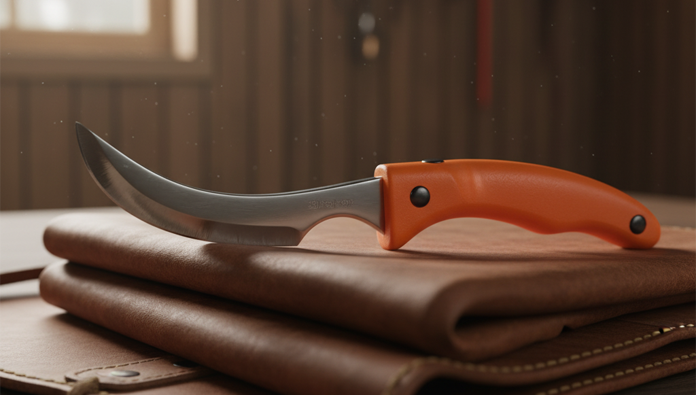
Bonus: Ergonomic handles and loop knives can help reduce wrist torque during repetitive use.
Always Cut Away From Your Body
A common cause of injury is cutting toward the leg or hand. Even experienced farriers get nicked this way. Instead, always trim in a motion that moves the blade away from your limbs.
Setup tip: Use a hoof stand to position the foot safely, especially for hinds. Keep your legs outside the line of the knife stroke.
Position the Hoof Securely
Whether the hoof is between your knees or on a stand, it should be stable. Wobbling hooves increase the chance of accidental slips. For hind feet, use a cradle-style stand so the hoof stays still while you cut.
Note: Horses that fidget can throw off your balance. Take breaks and reposition rather than fighting the hoof.
Adjust Based on Hoof Shape and Tool Type
Wide blades require broader strokes, while narrow or loop blades allow fine control in tighter areas. Adapt your grip and arm movement based on the tool and hoof.
Pro Insight: Some farriers even modify handles with grip tape or custom contours to match their hand shape for better knife handling.
Don’t Rush—Feel the Hoof
A good cut is more about feel than force. Rushing leads to uneven paring or gouging. Take thin slices and frequently check the hoof texture and response. Let the blade do the work—glide it gently as if shaving thin wood. You’re shaping the hoof, not hacking at it.
Conclusion
Proper hoof knife handling is a balance of safety, precision, and technique. With the right grip, wrist posture, and bracing habits, farriers can trim more accurately while reducing fatigue and the risk of injury. Master these tips, and your hoof work will become smoother and safer over time. As with all farrier skills, proper knife handling improves with repetition, mentorship, and attention to detail. Reducing hand and wrist strain is essential, as repetitive stress injuries are among the most common challenges faced by full-time farriers.
Call to Action
Looking for a hoof knife that feels like an extension of your hand? Shop Equine Care’s ergonomic, farrier-tested knives—designed for better control and long-lasting comfort. Trim smarter, not harder.
FAQs
What’s the best grip for a hoof knife? A full-hand grip with the opposite thumb braced on the blade spine offers the best mix of control and safety.
Is it okay to cut toward yourself if you’re careful? No. Even if experienced, cutting toward your body increases injury risk. Always cut outward.
Can I use both hands on the knife? Yes. Using both hands—one to hold, one to push—offers more control and is recommended for difficult areas.
How can I prevent wrist pain? Use a neutral wrist angle and let your shoulder guide motion. Also, consider ergonomic or loop-handle knives.