Introduction: Simplify Farrier Apron Terms & Build Your Confidence
Choosing the right farrier apron can seem daunting, particularly if you’re new to equine care. Whether you’re a beginner farrier, horse owner, trainer, or equine enthusiast, terms like “split-leg,” “yoke,” or “reinforced thigh patch” might seem overly technical. Misunderstanding these terms can lead to choosing gear that leaves you uncomfortable, inadequately protected, or less efficient. This practical glossary simplifies essential apron terms, helping you confidently select the right equipment. With this guide, you’ll effortlessly understand product descriptions, make informed decisions, and communicate clearly within the equine community.
Why Understanding Apron Terms Matters
The correct apron significantly impacts safety, comfort, and efficiency during hoof trimming and shoeing tasks. Understanding apron terminology helps prevent discomfort and reduces injury risks, ensuring your equipment precisely matches your needs. Clear knowledge of apron features benefits both beginners and experienced professionals.
Farrier Apron Glossary
Chaps (Thigh Protection)
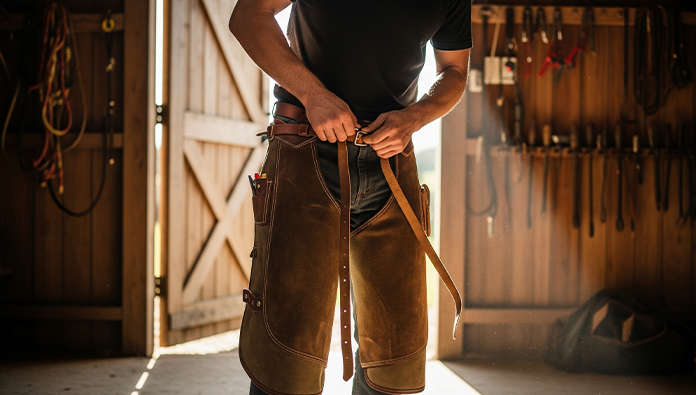
Farrier chaps protect thighs without restricting movement. Typically made from durable leather or synthetic materials, chaps include reinforced patches for added protection against sharp tools, hot metals, and hoof strikes. Experienced farriers appreciate these features for reducing injuries and ensuring comfort during extended workdays.
Yoke (Waist Connector)
The yoke connects the apron’s leg panels at the waist, distributing apron weight evenly to reduce back and hip strain. Modern aprons often feature padded or memory foam yokes for added comfort. Farriers regularly report improved posture and reduced fatigue thanks to ergonomic yokes.
Split-Leg Apron (Flexibility)
Split-leg aprons feature two separate leg panels, providing greater flexibility than single-panel designs. Studies confirm they significantly reduce physical strain, allowing farriers to react swiftly and safely in unpredictable situations.
Knee Pads (Joint Support)
Built-in knee pads protect knees from stress due to frequent kneeling. Typically made of high-density foam or gel, these pads effectively absorb impacts. Farriers emphasize knee pads as essential for sustained comfort and joint health.
Tool Pockets & Knife Loops (Storage)
Tool pockets and knife loops offer convenient access to tools like hoof knives, rasps, and clinchers. Reinforced stitching and durable materials extend their lifespan, significantly boosting efficiency. Farriers frequently praise these storage features for enhancing productivity.
Quick-Release Buckle (Adjustment)
Quick-release buckles allow fast apron adjustments for secure, comfortable fits during dynamic tasks. This feature provides stability and uninterrupted comfort, enabling precise movements without constant adjustments.
Adjustable Straps (Fit Customization)
Adjustable waist and leg straps ensure a customized fit for various body types and clothing layers. Ergonomic studies confirm adjustable straps significantly enhance comfort and safety. Experienced farriers recommend them for consistent comfort and secure fitting.
Reinforced Stitching & Rivets (Durability)
Reinforced stitching and strategically placed rivets enhance apron durability, enabling it to withstand daily wear. Industry tests confirm reinforced aprons outlast conventional models, offering reliable protection for heavy workloads.
Fire-Resistant Materials (Heat Safety)
Fire-resistant aprons made from treated leather or synthetic fabrics are essential near open flames or hot metals. These materials greatly reduce burn risks, enhancing safety during forge work.
Real-World Case Studies
A farrier experienced ongoing back pain from inadequate yoke padding. Switching to an apron with memory foam padding significantly reduced discomfort, enabling longer work periods and improving overall efficiency.
Another farrier faced persistent knee discomfort due to frequent kneeling. Changing to an apron with high-density foam knee pads reduced knee strain, enhancing comfort and productivity.
Conclusion
Understanding apron terminology equips you to make informed, confident decisions tailored to your specific needs, significantly enhancing safety, comfort, and efficiency.
Frequently Asked Questions (FAQs)
- Difference between farrier and regular aprons? Farrier aprons provide specialized protection tailored for hoof care tasks.
- Can aprons protect against sharp tools and hot metal? Yes, quality farrier aprons offer effective protection.
- Typical apron lifespan? Usually 2–5 years with proper maintenance.
- Are knee pads necessary for beginners? Yes, they prevent long-term joint damage.
- Female-specific apron designs? Many designs cater specifically to women for improved fit and comfort.
- Maintenance and cleaning? Regularly inspect for damage, clean with mild detergent, and air-dry thoroughly.
Call to Action
- Download our infographic summarizing key apron features.
- Follow us on social media for regular equine care tips and updates.
- Join our online equine community to connect with enthusiasts and professionals.