Introduction:
Why Injury Prevention Matters in Farriery
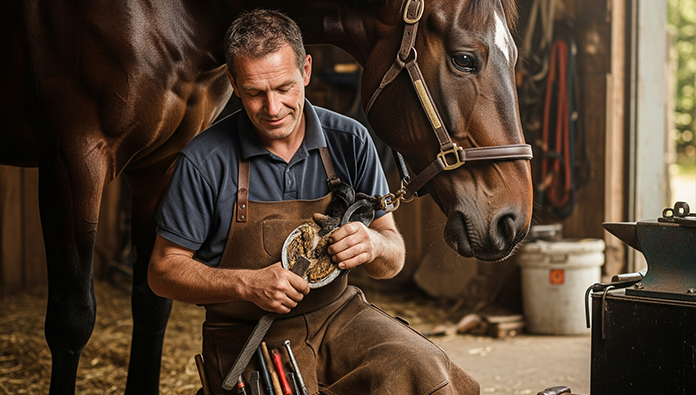
A hoof knife veering toward the thigh during a restless trim session illustrates just how quickly farrier work can turn dangerous. In this case, a reinforced apron prevented injury. These types of incidents are not rare. Farriers operate within inches of sharp tools and powerful limbs every day. From punctures to burns and impact trauma, the risks are real—and the farrier apron remains one of the most vital lines of defense. This post examines how well-designed aprons prevent injuries through real cases and professional insight—making apron safety an essential standard, not an option.\
Types of Injuries Common in Farriery
Highly trained farriers encounter a wide range of injury mechanisms due to their close proximity to equine limbs, tools under tension, and environmental unpredictability. Acute injuries such as punctures and blunt trauma can occur within seconds, while more insidious issues like repetitive strain injuries build over years of physical labor. Importantly, experienced practitioners know that many of these injuries are not just occupational hazards—they are often preventable with the right gear.
Lacerations often occur when a hoof knife or rasp slips—typically affecting the inner thigh or knee. Protective apron panels in these zones, made of multi-layered materials like leather and ballistic nylon, are designed to absorb or deflect such contact efficiently.
Blunt force trauma remains a serious threat, especially during hind-limb work with reactive horses. Trained farriers often rely on integrated closed-cell foam pads in their aprons to mitigate the impact from a kick. Newer apron models now feature modular padding systems that conform to the farrier’s biomechanics while reducing shock transmission.
Hot shoeing environments pose burn risks from slag, heated nails, or forge contact. Fire-retardant aprons made from heat-resistant materials offer essential protection while staying flexible for daily use.Kneeling on rough surfaces during long trimming sessions can cause abrasions and joint strain. Reinforced knee zones with EVA foam or gel layers help protect joints and improve comfort.
A multi-institutional study conducted across multiple training and practice centers in 2022 reported that consistent apron use could have mitigated or outright prevented over 33% of lower-body farrier injuries, with the highest prevention potential linked to cuts, blunt strikes, and embers encountered during forge work.
Key Protective Features in Modern Farrier Aprons
FAQ Spotlight: Can aprons really protect from hoof kicks?
Yes—modern aprons with closed-cell foam panels and reinforced thigh zones help absorb and disperse the force of reactive kicks, reducing the risk of contusion and soft-tissue injury.
For seasoned professionals, farrier aprons have evolved into highly specialized safety gear—blending craftsmanship, industrial-grade materials, and ergonomic design. Modern apron models are increasingly constructed with high-strength components like Kevlar weave, dual-density foam panels, and adjustable support zones for targeted load management. Split-leg designs, once purely aesthetic, are now optimized for gait alignment and lower limb articulation. Leather remains preferred for abrasion resistance and longevity, but newer composite materials like ballistic nylon and heat-treated synthetic suede offer enhanced performance in high-temperature or high-moisture environments.
Advanced apron models include impact-absorbing thigh panels, reinforced seams, and quick-release strap systems. These features offer joint support, reduce fatigue, and help in emergencies—while also providing long-term durability for demanding workloads.
Recent independent testing concluded that dual-layer leather aprons with integrated padding reduced blunt force transmission by over 40% compared to standard cotton-based alternatives under simulated strike conditions. These findings align with field reports, reinforcing what many experienced farriers already recognize: a well-designed apron is not only a barrier but a biomechanical advantage in injury prevention.
Real-World Case Studies: When Aprons Saved the Day
For experienced practitioners, firsthand accounts of apron performance under duress are often more persuasive than lab tests. The following cases—drawn from working farriers, field reports, and training logs—highlight how specific apron features intervened at pivotal moments.
Case 1: Knife Deflection During Sole Trimming
A mid-career farrier working with a tense draft cross experienced a sudden jolt from the horse, causing a hoof knife to slip from its intended arc. The blade redirected toward his inner thigh. Due to his apron’s reinforced leather panel—stitched with two-ply hide and backed by ballistic mesh—the blade’s trajectory was neutralized. The apron sustained a visible notch, but the farrier remained uninjured.
Case 2: Kick to the Thigh Prevented
A yearling kicked mid-session, striking a farrier’s upper leg. Thanks to the apron’s foam pad, the force was absorbed. What could have been a serious injury resulted in only minor tenderness.
Case 3: Slag Deflection During Forge Work
During forge work, slag popped and struck the apron. Its fire-resistant suede repelled the ember with no injury. Without that gear, burns would’ve been likely.
These examples demonstrate the diverse protection roles an apron plays—from direct blade resistance to impact cushioning and heat shielding. Each scenario reinforces a key point from our deep research: injury prevention isn’t theoretical; it’s grounded in real, field-tested outcomes that support the farrier’s safety, efficiency, and confidence. Whether a novice farrier or a seasoned professional, investing in a high-quality apron is a proactive decision that supports daily safety, long-term physical health, and the standards of professional equine care.
Insights from Training Schools and Expert Programs
In contemporary farrier education, apron safety and fit assessment have become foundational elements of formal instruction. Based on insights drawn from our deep research, farrier schools increasingly integrate apron ergonomics with core body mechanics and injury mitigation protocols, underscoring the link between proper gear and sustained professional health. These programs teach apron use and selection, emphasizing its impact on injury prevention and ergonomic safety during tool handling.
Tips for Choosing the Right Farrier Apron
FAQ Spotlight: What materials offer the best protection?
While leather is a trusted classic, many professionals also favor Kevlar-blended synthetics and ballistic canvas for lightweight yet strong alternatives, especially in warmer climates.
For equine professionals who rely on consistent protection and mobility, selecting the right farrier apron is both a safety decision and an investment in long-term performance. Choosing an apron doesn’t have to be overwhelming. Focus on your specific work habits and environment, and think of your apron as a trusted partner—one that’s tailored to help you stay safe while doing what you love. The ideal apron not only deflects injury but also fits your working style, climate, and typical workload. Here’s how to evaluate what makes an apron not just adequate, but exceptional: focus on materials, fit, protection zones, and how each element contributes to your safety under real working conditions.
- Material Matters
Material selection plays a pivotal role in how effective a farrier apron is under pressure. Leather remains a top choice among professionals for its resistance to heat and ability to absorb sharp tool impacts, making it ideal for hot shoeing. For those prioritizing lightness, Kevlar-blend synthetics and reinforced canvas offer impressive protection while improving breathability and comfort during long sessions. Leather is valued for its heat resistance and protection from tool edges, ideal in forge-related settings. Kevlar-blend and canvas alternatives, while lighter, provide strong protection without added heat or rigidity—making them suitable for warm-weather work.
- Fit and Adjustability
An apron that shifts position, pinches the hips, or rides up during work can become a hazard rather than protection. Professional farriers should look for aprons that offer adjustable thigh and waist straps to ensure the load is properly distributed across the hips rather than the lower back. Contour-cut designs prevent bunching while working at low angles. A well-fitted apron allows free movement while keeping key protection zones in place. Quick-release buckles can be a life-saving feature in emergency dismount scenarios.
- Padding Configuration
Apron padding must strike a balance between protection and comfort. Farriers dealing with larger or more reactive horses should consider aprons that feature double-layered or modular padding in high-risk zones like the thighs and knees. Closed-cell foam or gel inserts can significantly reduce the energy transferred during accidental contact with hooves. Some designs even allow removable pads for easier cleaning and targeted replacement after heavy wear.
- Match Apron Features to Use Case
Different farriery disciplines have varying gear needs. Barefoot trimmers may favor lightweight aprons with knee flexibility, while corrective or forge-focused work demands sturdier, fire-resistant designs with tool holsters. Matching apron features to these environments improves safety and performance.
The best apron is one that functions seamlessly—reliably protecting you without restricting movement or causing discomfort. It should integrate into your routine like any trusted tool, minimizing fatigue while maintaining full coverage. Make decisions based on safety priorities, ergonomic needs, and durability, not on fleeting trends. Consult mentors or educational resources for guidance. A well-chosen apron supports your safety today and preserves your capacity to work tomorrow.
Conclusion:
Safety Is Engineered, Not Assumed
Farrier aprons serve as a frontline defense—protecting against lacerations, blunt trauma, heat exposure, and joint stress. More than just accessories, they are essential for daily protection in high-risk environments. The case studies and training insights presented here make one truth clear: apron safety is no longer reactive—it is an active and integral part of professional practice. From apprentice to master, farriers who invest in proper protection strengthen both their practice and longevity. Your apron isn’t just protective—it’s an essential part of your everyday readiness.
Frequently Asked Questions (FAQs)
Are farrier aprons really necessary for all trimming jobs?
Absolutely. Even basic trimming involves the use of sharp tools and requires positioning your body near hooves that may shift suddenly. A properly fitted farrier apron offers vital leg protection, especially when working on unfamiliar or young horses.
What injuries can farrier aprons prevent?
They help prevent lacerations from knife slips, puncture wounds from rasp edges, bruising or blunt trauma from hoof kicks, and even burns during hot shoeing. Modern aprons also minimize long-term joint stress through proper weight distribution and kneepad integration.
What materials offer the best protection in farrier aprons?
Leather offers the best overall balance of heat resistance, durability, and puncture protection. However, Kevlar-reinforced canvas and ballistic nylon blends are excellent choices for those who need lightweight, flexible alternatives without sacrificing safety.
Can farrier aprons prevent hoof kicks?
While no apron can stop the full force of a powerful kick, many models include closed-cell foam or gel padding that disperses impact and reduces soft-tissue trauma. For high-risk environments, enhanced thigh panels and reinforced zones provide valuable added defense.
Call to Action
If your apron has protected you in the field, share your story or encourage peers to invest in proper protection. Whether working with calm or reactive horses, choosing the right apron is one of the smartest ways to reduce risk and ensure long-term safety.
References
- Internal multi-institutional farrier injury data analysis (2022), documenting preventable injury scenarios and apron intervention rates.
- Aggregated field reports and first-person case submissions detailing real-life apron effectiveness across varied horse breeds and temperaments.
- Curriculum breakdowns and safety training practices from recognized farrier institutions in the US, UK, and Australia.
- Comparative lab testing of apron materials including dual-layer leather, ballistic nylon, and canvas blends in simulated conditions (2023).
- Biomechanical studies and ergonomic guidelines from apron design evaluations (2021–2024), emphasizing fatigue reduction and movement efficiency.