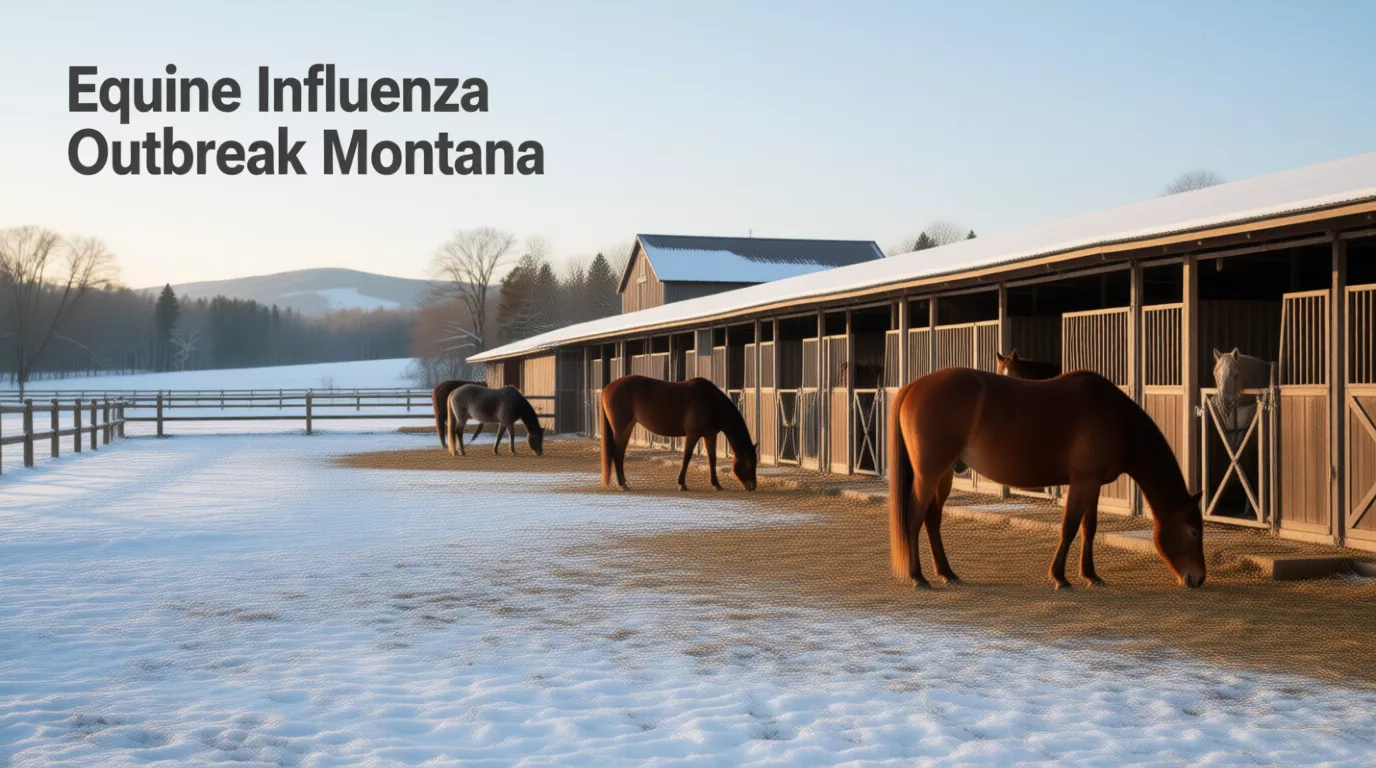
Veterinarians have confirmed multiple cases of equine herpesvirus (EHV) and equine influenza at a facility in Beaverhead County, Montana. Five horses tested positive for EHV, with four also infected with influenza. Ten additional horses are suspected to be sick, and approximately 75 others have been exposed.
This situation emphasizes the critical need for vaccination, early detection, and strict biosecurity practices to protect your horses from highly contagious respiratory diseases.
EHV and Influenza Cases in Montana
According to the attending veterinarian, five horses at the affected facility tested positive for the respiratory form of EHV, and four of these horses are also infected with equine influenza.
The Equine Disease Communication Center (EDCC) confirmed the outbreak and is providing updates to help horse owners implement preventive measures quickly.
Understanding EHV in Horses
Equine herpesvirus (EHV) is highly contagious and spreads through:
- Direct contact with infected horses (nose-to-nose)
- Contaminated equipment, buckets, or tack
- Humans carrying the virus on hands, clothing, or shoes
Common EHV-1 symptoms:
- Fever (often the first or only sign)
- Cough, nasal discharge, and reduced appetite
- Depression or lethargy
- Abortions in pregnant mares (usually late gestation)
- In severe cases, neurologic signs (EHM): ataxia, weakness, paralysis, loss of tail tone, urine retention
Understanding Equine Influenza
Equine influenza is another highly contagious respiratory disease affecting horses, ponies, donkeys, mules, and zebras. The virus spreads via:
- Saliva and nasal secretions from infected horses
- Aerosolized droplets from coughing and sneezing
- Contaminated hands, clothing, or tack
Common signs of influenza infection:
- High fever (up to 106°F)
- Dry, hacking cough
- Depression, weakness, and reduced appetite
- Watery nasal discharge
- Slightly enlarged lymph nodes
Early detection is essential, especially during shows and events. Monitoring your horse’s temperature daily can help identify infections early.
Prevention and Biosecurity Measures
To reduce the risk of infection during an outbreak, horse owners should implement the following:
- Vaccinate Regularly:
- Ensure influenza vaccinations are up to date, especially before competitions or events.
- Consult your veterinarian for EHV booster recommendations.
- Quarantine New Horses:
- Isolate new or returning horses for at least 14 days before introducing them to your main herd.
- Disinfect Equipment and Tack:
- Clean buckets, grooming tools, and tack between uses.
- Avoid Nose-to-Nose Contact:
- Keep horses from sharing water, feed, or paddock space during outbreaks.
- Monitor Horse Health:
- Take daily temperatures and watch for early signs of respiratory illness.
- Isolate sick horses immediately to prevent virus spread.
Take-Home Message
The Equine Influenza Outbreak in Montana underscores how quickly contagious respiratory diseases can spread in equine facilities.
The best defense is a combination of:
- Routine vaccination for EHV and influenza
- Strict biosecurity measures
- Close monitoring of horse health
By following these practices, horse owners can minimize the risk of infection and protect the health of their horses.