Introduction
Imagine kneeling beside a horse, rasp in hand, when suddenly the horse shifts unexpectedly. Just last month, an experienced farrier narrowly avoided severe injury when his protective apron deflected a rasp slip, turning a potentially devastating accident into a minor inconvenience. Without proper protection, that simple slip could have ended his career. Professional farrier Jake Thompson from Texas emphasizes this clearly, stating his apron has saved him from serious injury numerous times, reinforcing why protective gear is essential rather than optional.
Why Farrier Aprons Are Non-Negotiable in Hoof Care
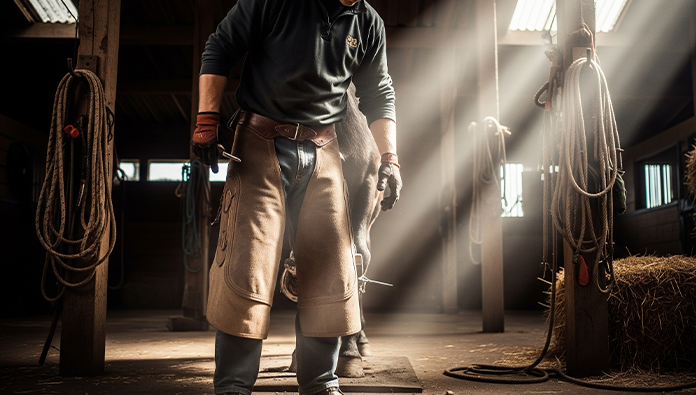
Farrier aprons have evolved significantly, transforming from basic leather coverings to highly engineered protective gear. Modern aprons utilize ballistic nylon, ventilated fabrics, and ergonomic designs to minimize fatigue, prevent injuries, and promote efficient movement. Research shows farriers using high-quality aprons report fewer musculoskeletal complaints and fewer tool-related injuries.
Common Myths about Farrier Aprons
Myth 1: “Any Shop Apron Will Do”
Generic shop aprons lack essential puncture resistance and ergonomic shaping required for hoof care. Studies report nearly 30% more lower-body injuries among farriers who rely on ordinary aprons. Maria Sanders, a professional farrier from Kentucky, shared how switching to a professional-grade apron drastically reduced her chronic knee and back pain.
Myth 2: “Aprons Get in the Way During Work”
Modern aprons feature adjustable waistbands, split-leg designs, and breathable fabrics for maximum flexibility. Farrier instructor Liam Hall from Florida initially avoided aprons but now finds his ergonomic apron essential, noting significant improvements in comfort and efficiency.
Myth 3: “Farrier Aprons Are Only for Big Jobs Like Shoeing”
Over 55% of hoof care-related injuries occur during routine trimming. Tasks like trimming and rasping expose farriers to sharp tools and unpredictable hoof movements. Apprentice Amber Liu learned early that even quick trims require protective gear, emphasizing consistent apron use for safety.
Myth 4: “Farrier Aprons Are Heavy and Too Hot”
Today’s aprons feature moisture-wicking liners and ventilated panels, ensuring lightweight comfort even in hot weather. Farrier Juan Martinez from Arizona reported improved endurance and comfort after switching to a ventilated apron.
Myth 5: “Beginners Don’t Need a High-Quality Apron”
Beginners face higher injury risks due to inexperience. Using quality gear from the start builds safer habits and confidence. Mentor Sarah Conway insists her apprentices start their careers with professional-grade aprons, reinforcing safety as fundamental
Myth 6: “High-Quality Aprons Are Too Expensive”
High-quality aprons offer lasting protection, reducing medical bills and downtime. Farrier Mike Peterson initially hesitated due to cost but found his apron quickly paid for itself by preventing severe injury.
Key Features of a Professional Farrier Apron
Look for aprons with reinforced knee zones and memory-foam inserts to reduce knee strain. Ergonomic split-leg designs reduce musculoskeletal fatigue, and magnetic tool holders enhance workflow efficiency. Choose abrasion-resistant materials for durability and breathable, antimicrobial linings for comfort and hygiene.
Common Injuries Prevented by High-Quality Farrier Aprons
Professional-grade aprons significantly reduce risks like deep lacerations from hoof knives and rasps, bruises and fractures from hoof strikes, puncture wounds from misplaced nails, and burns from heated horseshoes.
Conclusion
Choosing the right farrier apron isn’t optional—it’s a professional responsibility grounded in ergonomics, safety science, and practical wisdom. Modern aprons effectively combine protection and comfort, enabling farriers to deliver their best work safely and efficiently.
Frequently Asked Questions (FAQs)
- Why wear a farrier apron for regular trims?
A: Aprons protect against unexpected slips, hoof strikes, and tool injuries even during routine tasks.
- How can I ensure my apron fits properly?
A: Ensure a snug waist fit, full thigh coverage, and unrestricted bending and reaching movements.
- How often should I replace my farrier apron?
A: Replace aprons every 18–24 months, or earlier if materials thin, knee pads degrade, or stitching fails.
Call to Action
Are you wearing the right protection for your career? Don’t fall for outdated myths. Upgrade your gear, elevate your standards, and invest in your long-term success. Share this article with colleagues and raise safety standards across the profession.